Question: write in words Question 3 (1 point) Post a short video (less than 2 minutes) answering this question: What is the role of business in
write in words

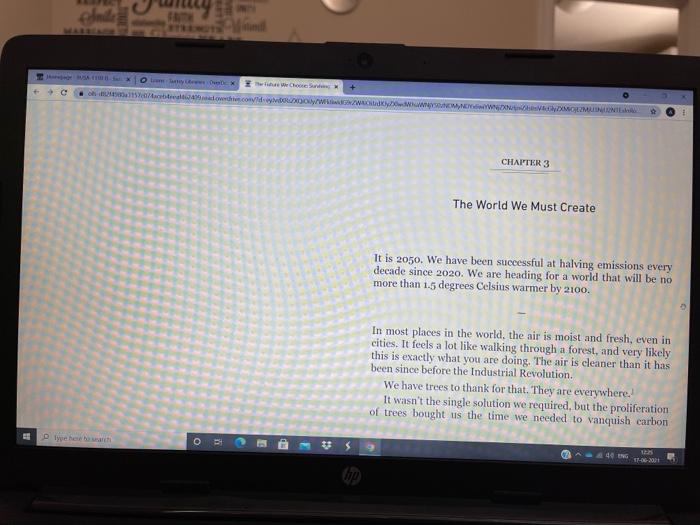
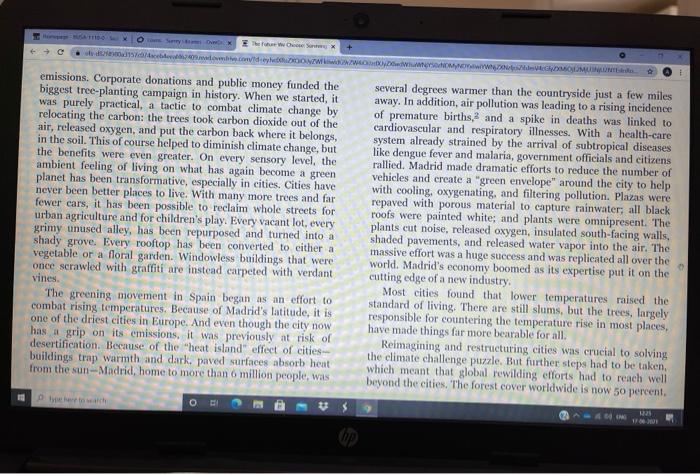
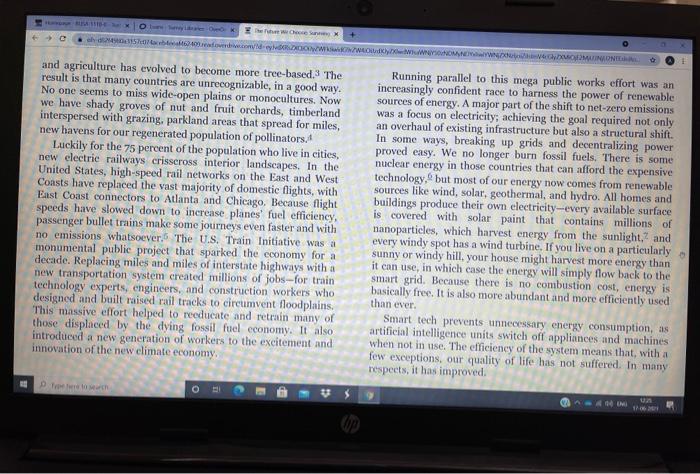
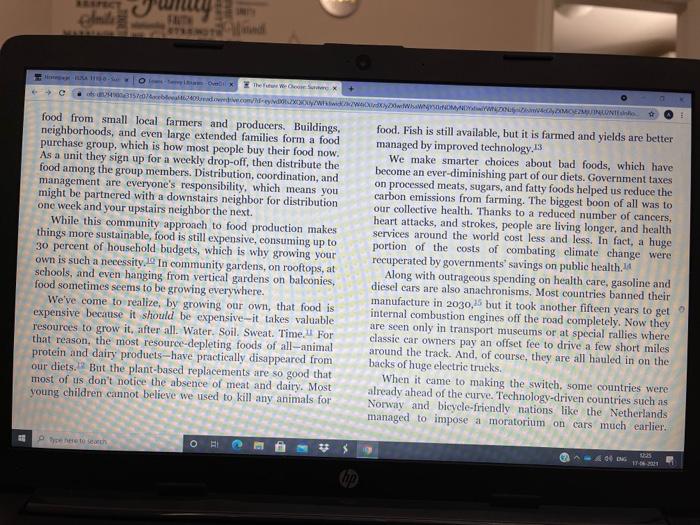
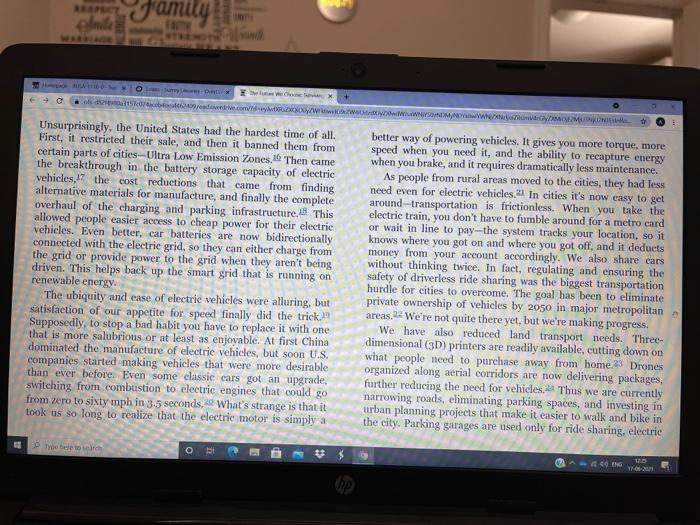
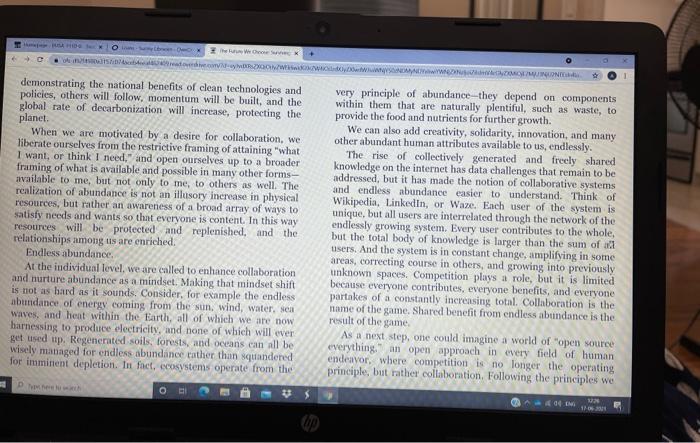
Question 3 (1 point) Post a short video (less than 2 minutes) answering this question: What is the role of business in the future described in "Chapter 3: The World We Must Create"? elade ODD C . 15/ ab.com LIMIT CHAPTER 3 The World We Must Create It is 2050. We have been successful at halving emissions every decade since 2020. We are heading for a world that will be no more than 1.5 degrees Celsius warmer by 2100. In most places in the world, the air is moist and fresh, even in cities. It feels a lot like walking through a forest, and very likely this is exactly what you are doing. The air is cleaner than it has been since before the Industrial Revolution. We have trees to thank for that. They are everywhere. It wasn't the single solution we required, but the proliferation of trees bought us the time we needed to vanquish carbon ye herba o E 35 GAA40 TES 17-00-2001 EWS ...we W emissions Corporate donations and public money funded the biggest tree-planting campaign in history. When we started, it was purely practical, a tactic to combat climate change by relocating the carbon: the trees took carbon dioxide out of the air, released oxygen, and put the carbon back where it belongs, in the soil. This of course helped to diminish climate change, but the benefits were even greater. On every sensory level, the ambient feeling of living on what has again become a green planet has been transformative, especially in cities. Cities have never been better places to live. With many more trees and far fewer cars, it has been possible to reclaim whole streets for urban agriculture and for children's play. Every vacant lot, every grimy unused alley, has been repurposed and turned into a shady grove. Every rooftop has been converted to either a vegetable or a floral garden. Windowless buildings that were once scrawled with graffiti are instead carpeted with verdant vines The greening movement in Spain began as an effort to combat rising temperatures. Because of Madrid's latitude, it is one of the driest cities in Europe. And even though the city now has a grip on its emissions. it was previously at risk of desertification. Because of the heat island" effect of cities buildings trap warmth and dark, paved surfaces absorb heat from the sun- Madrid, home to more than 6 million people, was several degrees warmer than the countryside just a few miles away. In addition, air pollution was leading to a rising incidence of premature births, and a spike in deaths was linked to cardiovascular and respiratory illnesses. With a health-care system already strained by the arrival of subtropical diseases like dengue fever and malaria, government officials and citizens rallied. Madrid made dramatic efforts to reduce the number of vehicles and create a "green envelope" around the city to help with cooling, oxygenating, and filtering pollution. Plazas were repaved with porous material to capture rainwater; all black roofs were painted white; and plants were omnipresent. The plants cut noise, released oxygen, insulated south-facing walls, shaded pavements, and released water vapor into the air. The massive effort was a huge success and was replicated all over the world. Madrid's economy boomed as its expertise put it on the cutting edge of a new industry. Most cities found that lower temperatures raised the standard of living. There are still slums, but the trees, largely responsible for countering the temperature rise in most places, have made things far more bearable for all. Reimagining and restructuring cities was crucial to solving the climate challenge puzzle. But further steps had to be taken, which meant that global rewilding efforts had to reach well beyond the cities. The forest cover worldwide is now 50 percent. Othe AM 125 where - 0 62. MOX WIADNE 1 and agriculture has evolved to become more tree-based. The result is that many countries are unrecognizable, in a good way. No one seems to miss wide-open plains or monocultures. Now we have shady groves of nut and fruit orchards, timberland interspersed with grazing, parkland areas that spread for miles, new havens for our regenerated population of pollinators. Luckily for the 75 percent of the population who live in cities, new electrie railways crisscross interior landscapes. In the United States, high-speed rail networks on the East and West Coasts have replaced the vast majority of domestic flights, with East Coast connectors to Atlanta and Chicago. Because flight speeds have slowed down to increase planes' fuel efficiency, passenger bullet trains make some journeys even faster and with no emissions whatsoever. The U.S. Train Initiative was a monumental public project that sparked the economy for a decade. Replacing miles and miles of interstate highways with a new transportation system created millions of jobs--for train technology experts, engineers, and construction workers who designed and built raised rail tracks to circumvent floodplains. This massive effort helped to reeducate and retrain many of those displaced by the dying fossil fuel economy. It also introduced a new generation of workers to the excitement and innovation of the new climate economy. Running parallel to this mega public works effort was an increasingly confident race to harness the power of renewable sources of energy. A major part of the shift to net-zero emissions was a focus on electricity, achieving the goal required not only an overhaul of existing infrastructure but also a structural shift. In some ways, breaking up grids and decentralizing power proved easy. We no longer burn fossil fuels. There is some nuclear energy in those countries that can afford the expensive technology, but most of our energy now comes from renewable sources like wind, solar, geothermal, and hydro. All homes and buildings produce their own electricity-every available surface is covered with solar paint that contains millions of nanoparticles, which harvest energy from the sunlight, and every windy spot has a wind turbine. If you live on a particularly sunny or windy hill, your house might harvest more energy than it can use, in which case the energy will simply flow back to the smart grid. Because there is no combustion cost, energy is basically free. It is also more abundant and more efficiently used than ever. Smart tech prevents unnecessary energy consumption, as artificial intelligence units switch off appliances and machines when not in use. The efficiency of the system means that, with a few exceptions, our quality of life has not suffered. In many respects, it has improved. EL AI ella The Se e INLUNI food from small local farmers and producers. Buildings, neighborhoods, and even large extended families form a food purchase group, which is how most people buy their food now, As a unit they sign up for a weekly drop-off, then distribute the food among the group members. Distribution, coordination, and management are everyone's responsibility, which means you might be partnered with a downstairs neighbor for distribution one week and your upstairs neighbor the next. While this community approach to food production makes things more sustainable, food is still expensive, consuming up to 30 percent of household budgets, which is why growing your own is such a necessity. In community gardens, on rooftops, at schools, and even hanging from vertical gardens on balconies, food sometimes seems to be growing everywhere. We've come to realize, by growing our own, that food is expensive because it should be expensive-it takes valuable resources to grow it, after all. Water. Soil. Sweat. Time For that reason, the most resource-depleting foods of all-animal protein and dairy produets-have practically disappeared from our diets. But the plant-based replacements are so good that most of us don't notice the absence of meat and dairy. Most young children cannot believe we used to kill any animals for food. Fish is still available, but it is farmed and yields are better managed by improved technology. 13. We make smarter choices about bad foods, which have become an ever-diminishing part of our diets. Government taxes on processed meats, sugars, and fatty foods helped us reduce the carbon emissions from farming. The biggest boon of all was to our collective health. Thanks to a reduced number of cancers, heart attacks, and strokes, people are living longer, and health services around the world cost less and less. In fact, a huge portion of the costs of combating climate change were recuperated by governments' savings on public health. Along with outrageous spending on health care, gasoline and diesel cars are also anachronisms. Most countries banned their manufacture in 2030,15 but it took another fifteen years to get internal combustion engines off the road completely. Now they are seen only in transport museums or at special rallies where classic car owners pay an offset fee to drive a few short miles around the track. And, of course, they are all hauled in on the backs of huge electric trucks. When it came to making the switch, some countries were already ahead of the curve. Technology-driven countries such as Norway and bicycle-friendly nations like the Netherlands managed to impose a moratorium on cars much earlier. Othere to O FI - MG 02:25 11- Ande gamulys an YSO BV ON Unsurprisingly, the United States had the hardest time of all. First, it restricted their sale, and then it banned them from certain parts of cities-Ultra Low Emission Zones. Then came the breakthrough in the battery storage capacity of electric vehicles, the cost reductions that came from finding alternative materials for manufacture, and finally the complete overhaul of the charging and parking infrastructure. This allowed people easier access to cheap power for their electric vehicles. Even better, car batteries are now bidirectionally connected with the electrie grid, so they can either charge from the grid or provide power to the grid when they aren't being driven. This helps back up the smart grid that is running on renewable energy. The ubiquity and ease of electric vehicles were alluring, but satisfaction of our appetite for speed finally did the trick.19 Supposedly, to stop a bad habit you have to replace it with one that is more salubrious or at least as enjoyable. At first China dominated the manufacture of electric vehicles, but soon U.S. companies started making vehicles that were more desirable than ever before. Even some elassie cars got an upgrade, switching from combustion to electric engines that could go from zero to sixty mph in 3.5 seconds, a What's strange is that it took us so long to realize that the electric motor is simply a better way of powering vehicles. It gives you more torque, more speed when you need it, and the ability to recapture energy when you brake, and it requires dramatically less maintenance. As people from rural areas moved to the cities, they had less need even for electric vehicles. 21 In cities it's now easy to get around-transportation is frictionless. When you take the electric train, you don't have to fumble around for a metro card or wait in line to pay--the system tracks your location, so it knows where you got on and where you got off, and it deducts money from your account accordingly. We also share cars without thinking twice. In fact, regulating and ensuring the safety of driverless ride sharing was the biggest transportation hurdle for cities to overcome. The goal has been to eliminate private ownership of vehicles by 2050 in major metropolitan areas.22 We're not quite there yet, but we're making progress. We have also reduced land transport needs. Three- dimensional (3D) printers are readily available, cutting down on what people need to purchase away from home, Drones organized along aerial corridors are now delivering packages, further reducing the need for vehicles. Thus we are currently narrowing roads, eliminating parking spaces, and investing in urban planning projects that make it easier to walk and bike in the city. Parking garages are used only for ride sharing, electrie Dobeles O BE 33 - 1 123 021 obce WOK C DOO WWWWW MONI demonstrating the national benefits of clean technologies and policies, others will follow, momentum will be built, and the global rate of decarbonization will increase, protecting the planet When we are motivated by a desire for collaboration, we liberate ourselves from the restrictive framing of attaining "what I want, or think I need." and open ourselves up to a broader framing of what is available and possible in many other forms- available to me, but not only to me, to others as well. The realization of abundance is not an illusory increase in physical resources, but rather an awareness of a broad array of ways to satisfy needs and wants so that everyone is content. In this way resources will be protected and replenished, and the relationships among us are enriched. Endless abundance At the individual level, we are called to enhance collaboration and nurture abundance as a mindset. Making that mindset shift is not as hard as it sounds. Consider, for example the endless abundance of energy coming from the sun, wind, water, se waves, and heat within the Earth, all of which we are now harnessing to produce electricity, and none of which will ever get used up. Regenerated soils, forests, and oceans can all be wisely managed for endless abundance rather than squandered for imminent depletion. In fact, ecosystems operate from the very principle of abundance-they depend on components within them that are naturally plentiful, such as waste, to provide the food and nutrients for further growth. We can also add creativity, solidarity, innovation, and many other abundant human attributes available to us, endlessly. The rise of collectively generated and freely shared knowledge on the internet has data challenges that remain to be addressed, but it has made the notion of collaborative systems and endless abundance easier to understand. Think of Wikipedia, Linkedin, or Waze. Each user of the system is unique, but all users are interrelated through the network of the endlessly growing system. Every user contributes to the whole, but the total body of knowledge is larger than the sum of a users. And the system is in constant change, amplifying in some areas, correcting course in others, and growing into previously unknown spaces. Competition plays a role, but it is limited because everyone contributes, everyone benefits, and everyone partakes of a constantly increasing total. Collaboration is the name of the game. Shared benefit from endless abundance is the result of the game As a next step, one could imagine a world of "open source everything." an open approach in every field of human endeavor, where competition is no longer the operating principle, but rather collaboration. Following the principles we De O IN w 110 Question 3 (1 point) Post a short video (less than 2 minutes) answering this question: What is the role of business in the future described in "Chapter 3: The World We Must Create"? elade ODD C . 15/ ab.com LIMIT CHAPTER 3 The World We Must Create It is 2050. We have been successful at halving emissions every decade since 2020. We are heading for a world that will be no more than 1.5 degrees Celsius warmer by 2100. In most places in the world, the air is moist and fresh, even in cities. It feels a lot like walking through a forest, and very likely this is exactly what you are doing. The air is cleaner than it has been since before the Industrial Revolution. We have trees to thank for that. They are everywhere. It wasn't the single solution we required, but the proliferation of trees bought us the time we needed to vanquish carbon ye herba o E 35 GAA40 TES 17-00-2001 EWS ...we W emissions Corporate donations and public money funded the biggest tree-planting campaign in history. When we started, it was purely practical, a tactic to combat climate change by relocating the carbon: the trees took carbon dioxide out of the air, released oxygen, and put the carbon back where it belongs, in the soil. This of course helped to diminish climate change, but the benefits were even greater. On every sensory level, the ambient feeling of living on what has again become a green planet has been transformative, especially in cities. Cities have never been better places to live. With many more trees and far fewer cars, it has been possible to reclaim whole streets for urban agriculture and for children's play. Every vacant lot, every grimy unused alley, has been repurposed and turned into a shady grove. Every rooftop has been converted to either a vegetable or a floral garden. Windowless buildings that were once scrawled with graffiti are instead carpeted with verdant vines The greening movement in Spain began as an effort to combat rising temperatures. Because of Madrid's latitude, it is one of the driest cities in Europe. And even though the city now has a grip on its emissions. it was previously at risk of desertification. Because of the heat island" effect of cities buildings trap warmth and dark, paved surfaces absorb heat from the sun- Madrid, home to more than 6 million people, was several degrees warmer than the countryside just a few miles away. In addition, air pollution was leading to a rising incidence of premature births, and a spike in deaths was linked to cardiovascular and respiratory illnesses. With a health-care system already strained by the arrival of subtropical diseases like dengue fever and malaria, government officials and citizens rallied. Madrid made dramatic efforts to reduce the number of vehicles and create a "green envelope" around the city to help with cooling, oxygenating, and filtering pollution. Plazas were repaved with porous material to capture rainwater; all black roofs were painted white; and plants were omnipresent. The plants cut noise, released oxygen, insulated south-facing walls, shaded pavements, and released water vapor into the air. The massive effort was a huge success and was replicated all over the world. Madrid's economy boomed as its expertise put it on the cutting edge of a new industry. Most cities found that lower temperatures raised the standard of living. There are still slums, but the trees, largely responsible for countering the temperature rise in most places, have made things far more bearable for all. Reimagining and restructuring cities was crucial to solving the climate challenge puzzle. But further steps had to be taken, which meant that global rewilding efforts had to reach well beyond the cities. The forest cover worldwide is now 50 percent. Othe AM 125 where - 0 62. MOX WIADNE 1 and agriculture has evolved to become more tree-based. The result is that many countries are unrecognizable, in a good way. No one seems to miss wide-open plains or monocultures. Now we have shady groves of nut and fruit orchards, timberland interspersed with grazing, parkland areas that spread for miles, new havens for our regenerated population of pollinators. Luckily for the 75 percent of the population who live in cities, new electrie railways crisscross interior landscapes. In the United States, high-speed rail networks on the East and West Coasts have replaced the vast majority of domestic flights, with East Coast connectors to Atlanta and Chicago. Because flight speeds have slowed down to increase planes' fuel efficiency, passenger bullet trains make some journeys even faster and with no emissions whatsoever. The U.S. Train Initiative was a monumental public project that sparked the economy for a decade. Replacing miles and miles of interstate highways with a new transportation system created millions of jobs--for train technology experts, engineers, and construction workers who designed and built raised rail tracks to circumvent floodplains. This massive effort helped to reeducate and retrain many of those displaced by the dying fossil fuel economy. It also introduced a new generation of workers to the excitement and innovation of the new climate economy. Running parallel to this mega public works effort was an increasingly confident race to harness the power of renewable sources of energy. A major part of the shift to net-zero emissions was a focus on electricity, achieving the goal required not only an overhaul of existing infrastructure but also a structural shift. In some ways, breaking up grids and decentralizing power proved easy. We no longer burn fossil fuels. There is some nuclear energy in those countries that can afford the expensive technology, but most of our energy now comes from renewable sources like wind, solar, geothermal, and hydro. All homes and buildings produce their own electricity-every available surface is covered with solar paint that contains millions of nanoparticles, which harvest energy from the sunlight, and every windy spot has a wind turbine. If you live on a particularly sunny or windy hill, your house might harvest more energy than it can use, in which case the energy will simply flow back to the smart grid. Because there is no combustion cost, energy is basically free. It is also more abundant and more efficiently used than ever. Smart tech prevents unnecessary energy consumption, as artificial intelligence units switch off appliances and machines when not in use. The efficiency of the system means that, with a few exceptions, our quality of life has not suffered. In many respects, it has improved. EL AI ella The Se e INLUNI food from small local farmers and producers. Buildings, neighborhoods, and even large extended families form a food purchase group, which is how most people buy their food now, As a unit they sign up for a weekly drop-off, then distribute the food among the group members. Distribution, coordination, and management are everyone's responsibility, which means you might be partnered with a downstairs neighbor for distribution one week and your upstairs neighbor the next. While this community approach to food production makes things more sustainable, food is still expensive, consuming up to 30 percent of household budgets, which is why growing your own is such a necessity. In community gardens, on rooftops, at schools, and even hanging from vertical gardens on balconies, food sometimes seems to be growing everywhere. We've come to realize, by growing our own, that food is expensive because it should be expensive-it takes valuable resources to grow it, after all. Water. Soil. Sweat. Time For that reason, the most resource-depleting foods of all-animal protein and dairy produets-have practically disappeared from our diets. But the plant-based replacements are so good that most of us don't notice the absence of meat and dairy. Most young children cannot believe we used to kill any animals for food. Fish is still available, but it is farmed and yields are better managed by improved technology. 13. We make smarter choices about bad foods, which have become an ever-diminishing part of our diets. Government taxes on processed meats, sugars, and fatty foods helped us reduce the carbon emissions from farming. The biggest boon of all was to our collective health. Thanks to a reduced number of cancers, heart attacks, and strokes, people are living longer, and health services around the world cost less and less. In fact, a huge portion of the costs of combating climate change were recuperated by governments' savings on public health. Along with outrageous spending on health care, gasoline and diesel cars are also anachronisms. Most countries banned their manufacture in 2030,15 but it took another fifteen years to get internal combustion engines off the road completely. Now they are seen only in transport museums or at special rallies where classic car owners pay an offset fee to drive a few short miles around the track. And, of course, they are all hauled in on the backs of huge electric trucks. When it came to making the switch, some countries were already ahead of the curve. Technology-driven countries such as Norway and bicycle-friendly nations like the Netherlands managed to impose a moratorium on cars much earlier. Othere to O FI - MG 02:25 11- Ande gamulys an YSO BV ON Unsurprisingly, the United States had the hardest time of all. First, it restricted their sale, and then it banned them from certain parts of cities-Ultra Low Emission Zones. Then came the breakthrough in the battery storage capacity of electric vehicles, the cost reductions that came from finding alternative materials for manufacture, and finally the complete overhaul of the charging and parking infrastructure. This allowed people easier access to cheap power for their electric vehicles. Even better, car batteries are now bidirectionally connected with the electrie grid, so they can either charge from the grid or provide power to the grid when they aren't being driven. This helps back up the smart grid that is running on renewable energy. The ubiquity and ease of electric vehicles were alluring, but satisfaction of our appetite for speed finally did the trick.19 Supposedly, to stop a bad habit you have to replace it with one that is more salubrious or at least as enjoyable. At first China dominated the manufacture of electric vehicles, but soon U.S. companies started making vehicles that were more desirable than ever before. Even some elassie cars got an upgrade, switching from combustion to electric engines that could go from zero to sixty mph in 3.5 seconds, a What's strange is that it took us so long to realize that the electric motor is simply a better way of powering vehicles. It gives you more torque, more speed when you need it, and the ability to recapture energy when you brake, and it requires dramatically less maintenance. As people from rural areas moved to the cities, they had less need even for electric vehicles. 21 In cities it's now easy to get around-transportation is frictionless. When you take the electric train, you don't have to fumble around for a metro card or wait in line to pay--the system tracks your location, so it knows where you got on and where you got off, and it deducts money from your account accordingly. We also share cars without thinking twice. In fact, regulating and ensuring the safety of driverless ride sharing was the biggest transportation hurdle for cities to overcome. The goal has been to eliminate private ownership of vehicles by 2050 in major metropolitan areas.22 We're not quite there yet, but we're making progress. We have also reduced land transport needs. Three- dimensional (3D) printers are readily available, cutting down on what people need to purchase away from home, Drones organized along aerial corridors are now delivering packages, further reducing the need for vehicles. Thus we are currently narrowing roads, eliminating parking spaces, and investing in urban planning projects that make it easier to walk and bike in the city. Parking garages are used only for ride sharing, electrie Dobeles O BE 33 - 1 123 021 obce WOK C DOO WWWWW MONI demonstrating the national benefits of clean technologies and policies, others will follow, momentum will be built, and the global rate of decarbonization will increase, protecting the planet When we are motivated by a desire for collaboration, we liberate ourselves from the restrictive framing of attaining "what I want, or think I need." and open ourselves up to a broader framing of what is available and possible in many other forms- available to me, but not only to me, to others as well. The realization of abundance is not an illusory increase in physical resources, but rather an awareness of a broad array of ways to satisfy needs and wants so that everyone is content. In this way resources will be protected and replenished, and the relationships among us are enriched. Endless abundance At the individual level, we are called to enhance collaboration and nurture abundance as a mindset. Making that mindset shift is not as hard as it sounds. Consider, for example the endless abundance of energy coming from the sun, wind, water, se waves, and heat within the Earth, all of which we are now harnessing to produce electricity, and none of which will ever get used up. Regenerated soils, forests, and oceans can all be wisely managed for endless abundance rather than squandered for imminent depletion. In fact, ecosystems operate from the very principle of abundance-they depend on components within them that are naturally plentiful, such as waste, to provide the food and nutrients for further growth. We can also add creativity, solidarity, innovation, and many other abundant human attributes available to us, endlessly. The rise of collectively generated and freely shared knowledge on the internet has data challenges that remain to be addressed, but it has made the notion of collaborative systems and endless abundance easier to understand. Think of Wikipedia, Linkedin, or Waze. Each user of the system is unique, but all users are interrelated through the network of the endlessly growing system. Every user contributes to the whole, but the total body of knowledge is larger than the sum of a users. And the system is in constant change, amplifying in some areas, correcting course in others, and growing into previously unknown spaces. Competition plays a role, but it is limited because everyone contributes, everyone benefits, and everyone partakes of a constantly increasing total. Collaboration is the name of the game. Shared benefit from endless abundance is the result of the game As a next step, one could imagine a world of "open source everything." an open approach in every field of human endeavor, where competition is no longer the operating principle, but rather collaboration. Following the principles we De O IN w 110









 Study Help