







Question: Write the following functions in Lisp: a. A function called next-day that takes one parameter that you can assume to be a symbol named after
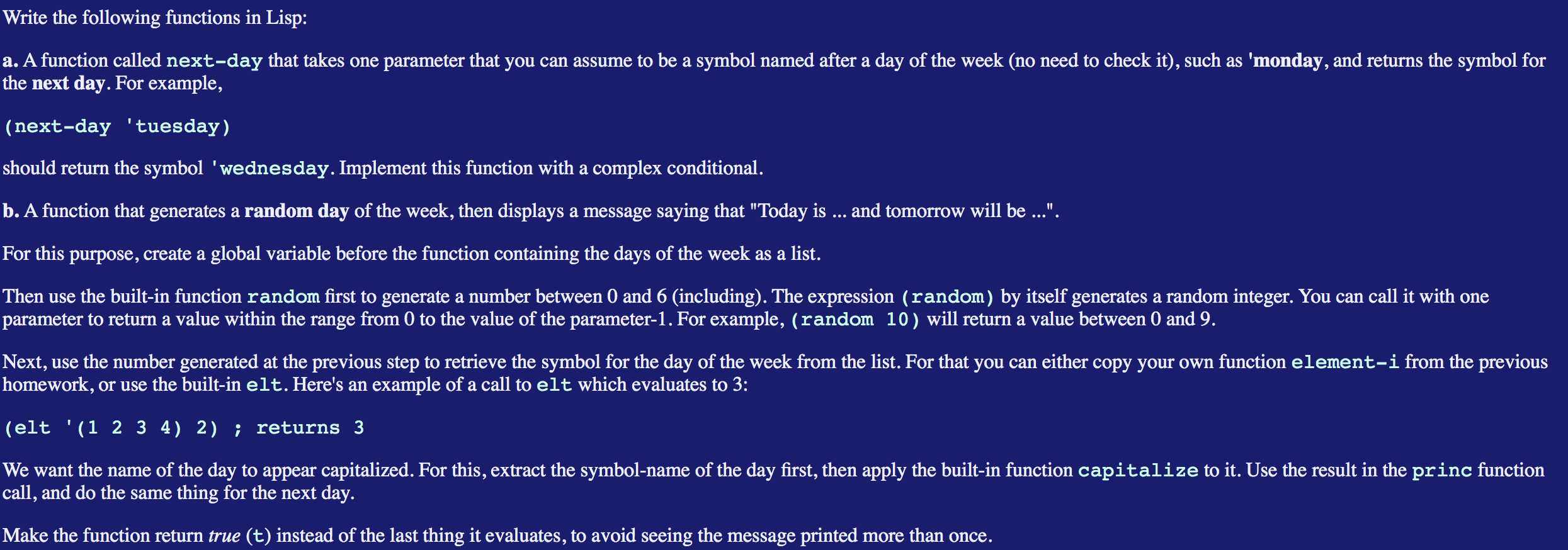
Write the following functions in Lisp: a. A function called next-day that takes one parameter that you can assume to be a symbol named after a day of the week (no need to check it), such as 'monday, and returns the symbol for the next day. For example, (next-day 'tuesday) should return the symbol 'wednesday. Implement this function with a complex conditional. b. A function that generates a random day of the week, then displays a message saying that "Today is ... and tomorrow will be ...". For this purpose, create a global variable before the function containing the days of the week as a list. Then use the built-in function random first to generate a number between 0 and 6 (including). The expression (random) by itself generates a random integer. You can call it with one parameter to return a value within the range from 0 to the value of the parameter-1. For example, (random 10) will return a value between 0 and 9. Next, use the number generated at the previous step to retrieve the symbol for the day of the week from the list. For that you can either copy your own function element-i from the previous homework, or use the built-in elt. Here's an example of a call to elt which evaluates to 3: (elt '(1 2 3 4) 2) ; returns 3 We want the name of the day to appear capitalized. For this, extract the symbol-name of the day first, then apply the built-in function capitalize to it. Use the result in the princ function call, and do the same thing for the next day. Make the function return true (t) instead of the last thing it evaluates, to avoid seeing the message printed more than once
Step by Step Solution
There are 3 Steps involved in it

Get step-by-step solutions from verified subject matter experts
 Study Help