Question: Writing a Paragraph using Paraphrasing: Short Written Exercise Skim the article The Political and Social Contexts of Global Road Safety: Challenges for the Next Decade
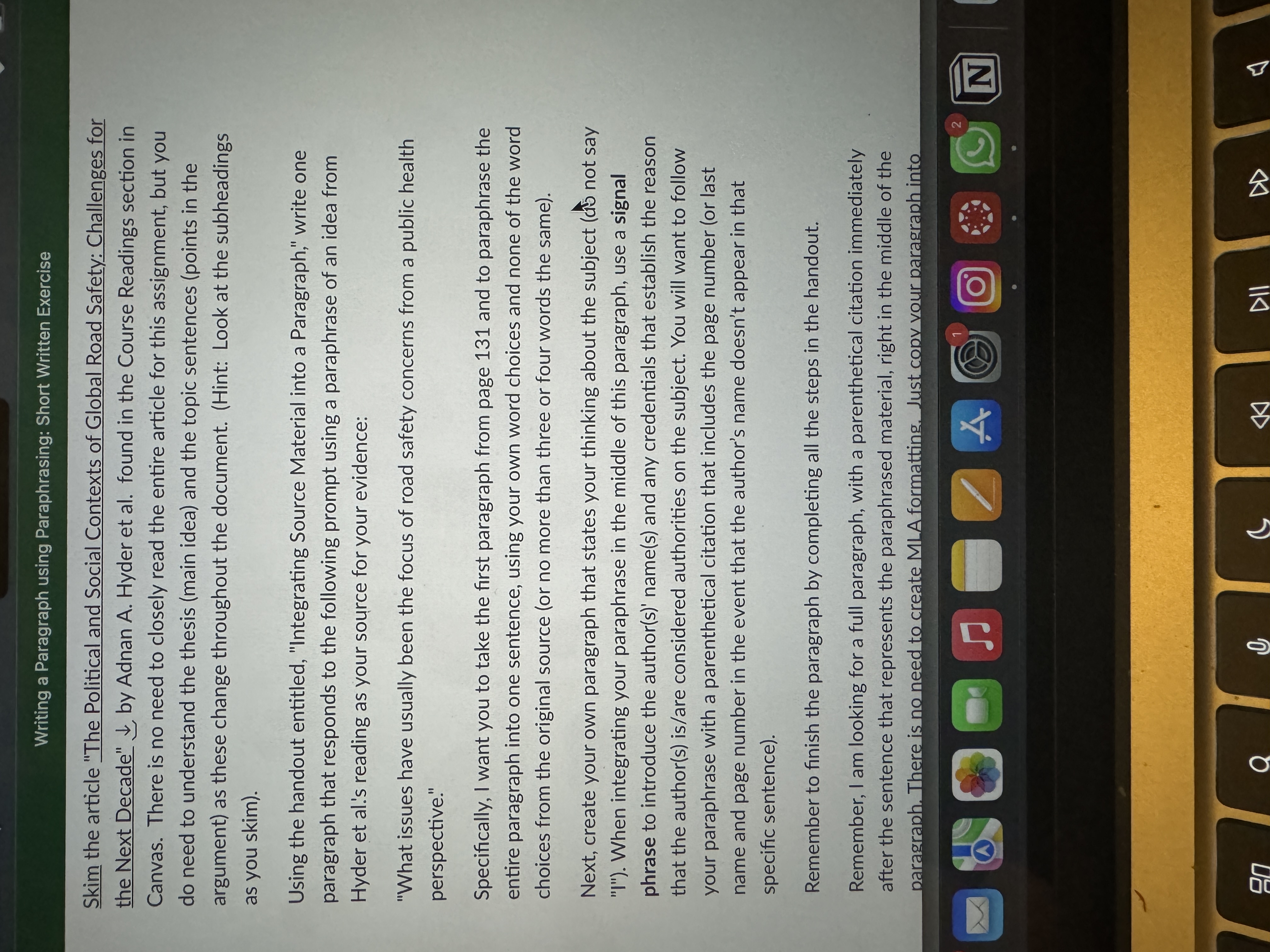
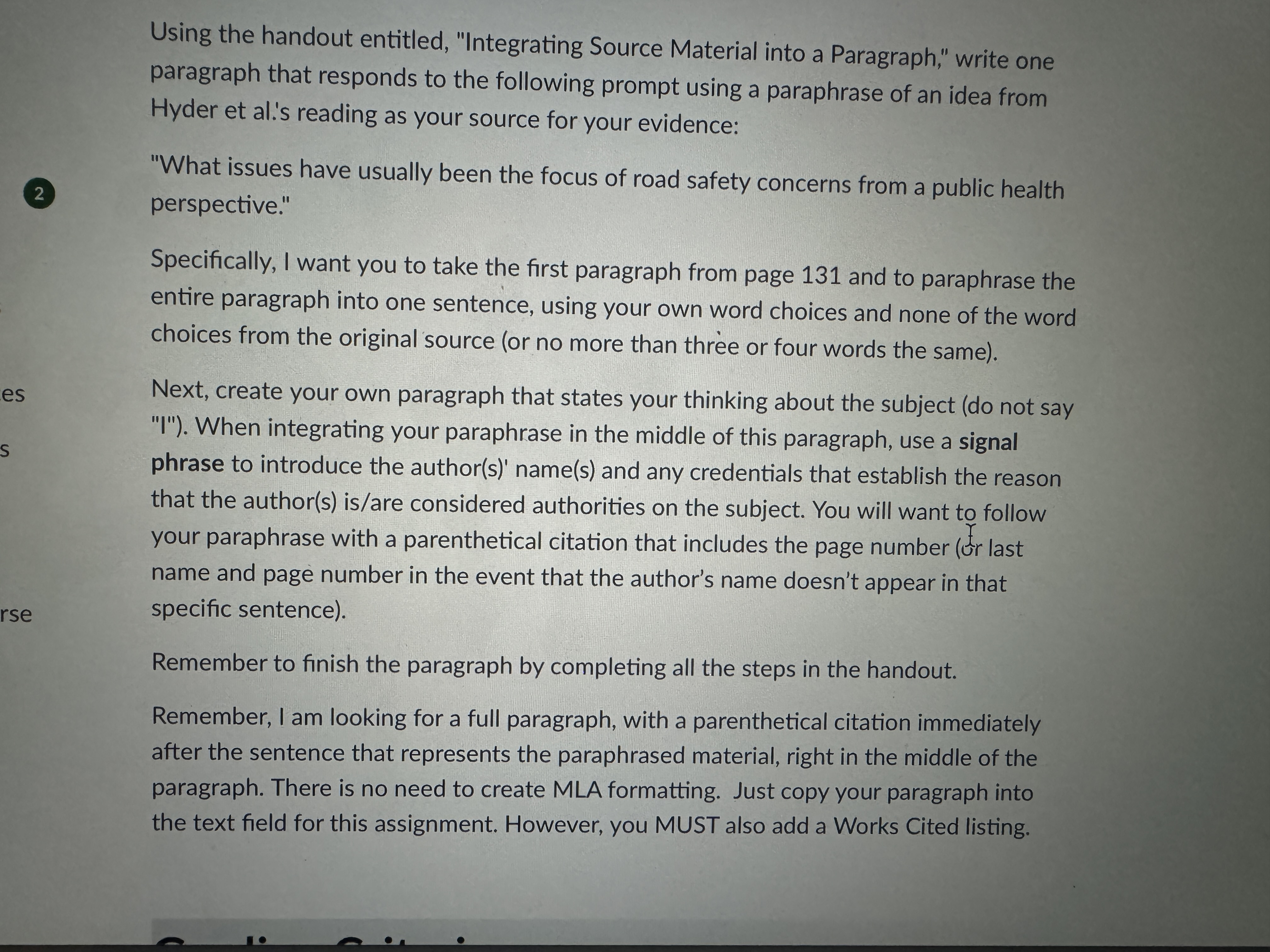
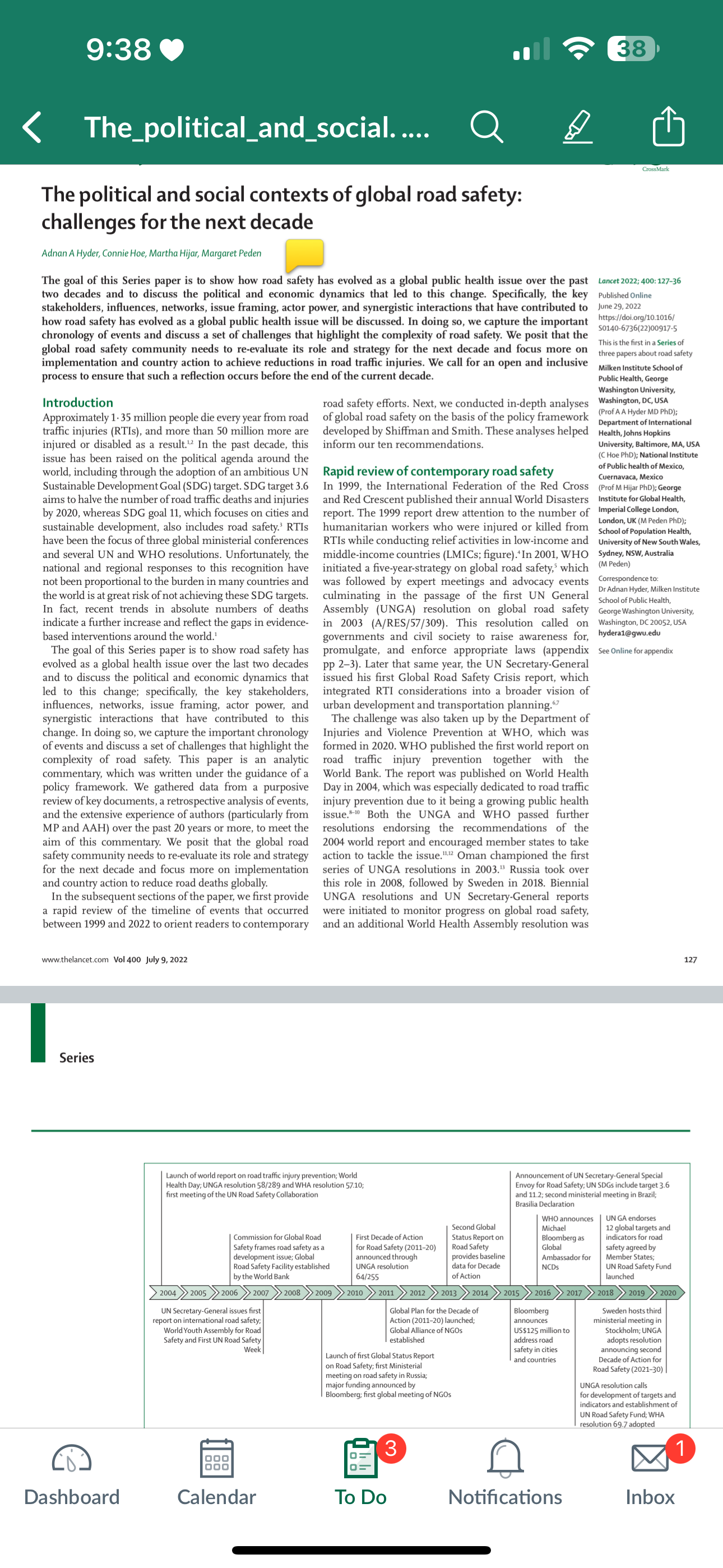
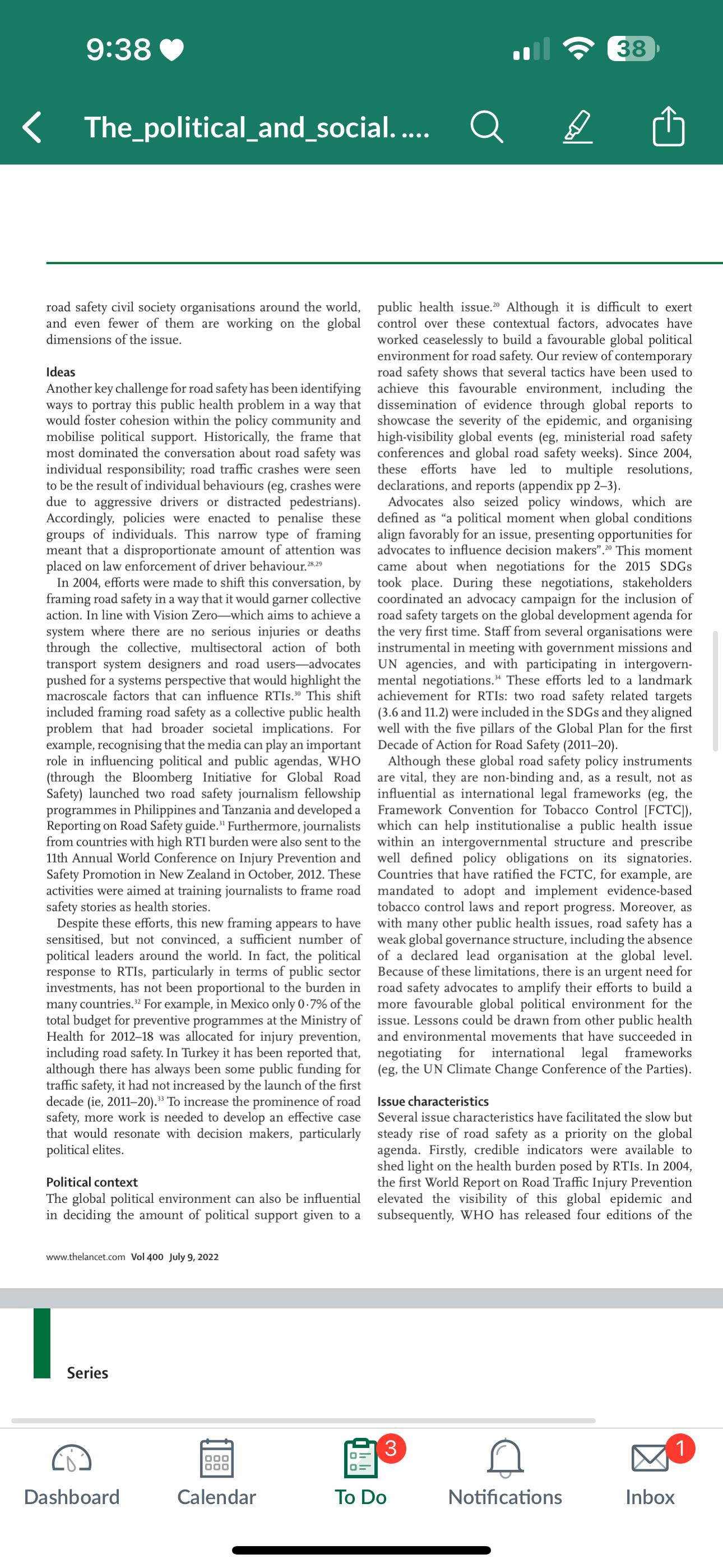
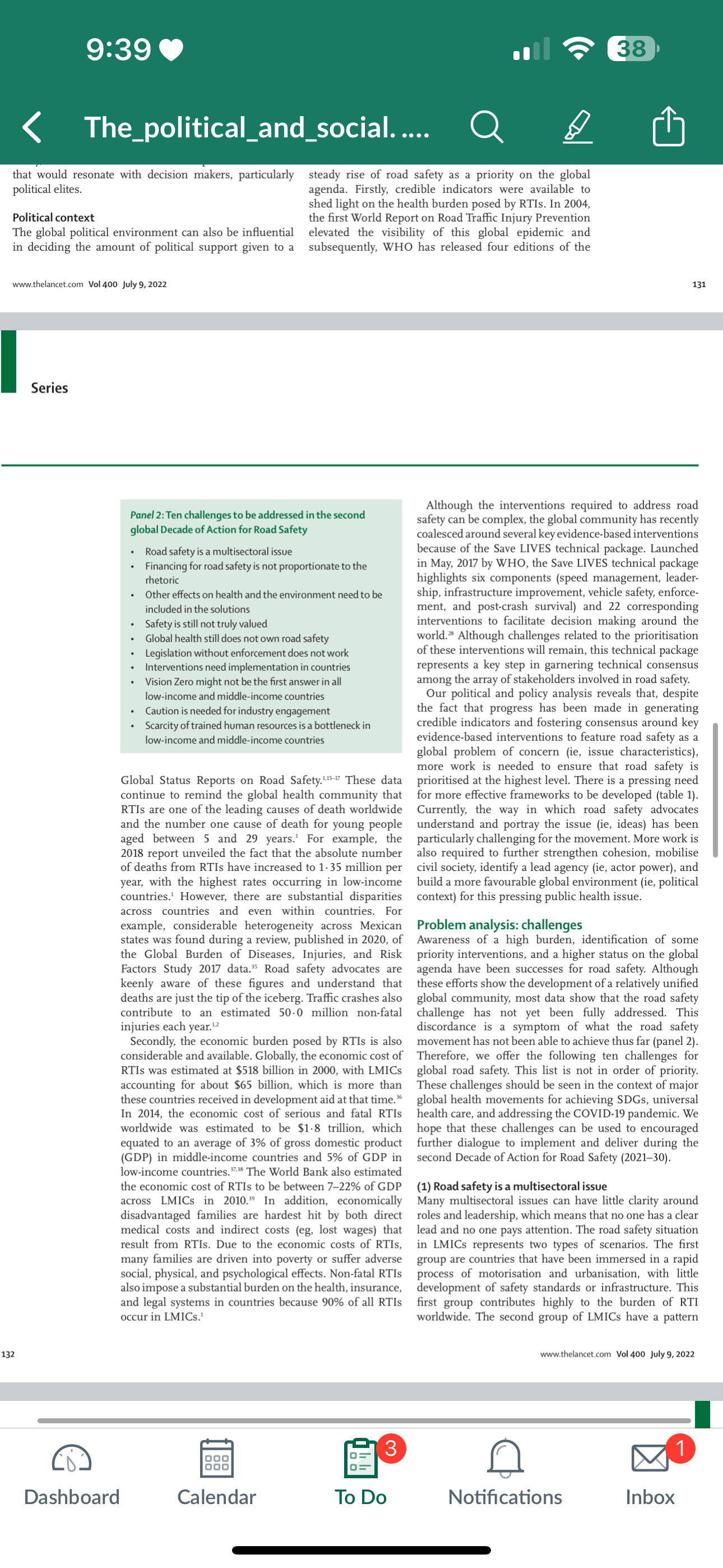
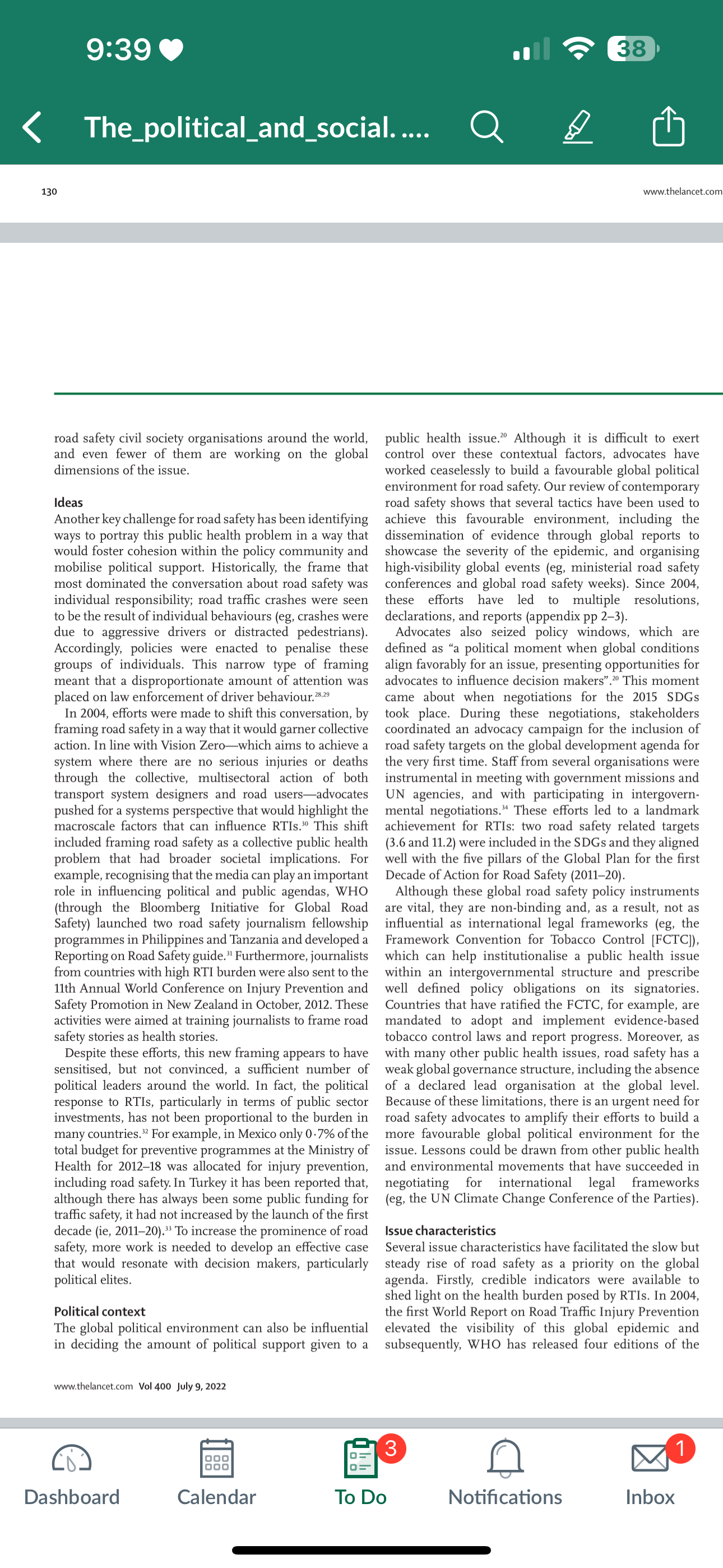
Writing a Paragraph using Paraphrasing: Short Written Exercise Skim the article "The Political and Social Contexts of Global Road Safety: Challenges for the Next Decade" & by Adnan A. Hyder et al. found in the Course Readings section in Canvas. There is no need to closely read the entire article for this assignment, but you do need to understand the thesis (main idea) and the topic sentences (points in the argument) as these change throughout the document. (Hint: Look at the subheadings as you skim). Using the handout entitled, "Integrating Source Material into a Paragraph," write one paragraph that responds to the following prompt using a paraphrase of an idea from Hyder et al's reading as your source for your evidence: "What issues have usually been the focus of road safety concerns from a public health perspective." Specifically, I want you to take the first paragraph from page 131 and to paraphrase the entire paragraph into one sentence, using your own word choices and none of the word choices from the original source (or no more than three or four words the same). Next, create your own paragraph that states your thinking about the subject (do not say "I"). When integrating your paraphrase in the middle of this paragraph, use a signal phrase to introduce the author(s)' name(s) and any credentials that establish the reason that the author(s) is/are considered authorities on the subject. You will want to follow your paraphrase with a parenthetical citation that includes the page number (or last name and page number in the event that the author's name doesn't appear in that specific sentence). Remember to finish the paragraph by completing all the steps in the handout. Remember, I am looking for a full paragraph, with a parenthetical citation immediately after the sentence that represents the paraphrased material, right in the middle of the paragraph. There is no need to create MLA formatting. Just copy your paragraph into 4 N DIL DDUsing the handout entitled, "Integrating Source Material into a Paragraph," write one paragraph that responds to the following prompt using a paraphrase of an idea from Hyder et al.'s reading as your source for your evidence: "What issues have usually been the focus of road safety concerns from a public health perspective." Specifically, I want you to take the first paragraph from page 131 and to paraphrase the entire paragraph into one sentence, using your own word choices and none of the word choices from the original source (or no more than three or four words the same). es Next, create your own paragraph that states your thinking about the subject (do not say "I"). When integrating your paraphrase in the middle of this paragraph, use a signal phrase to introduce the author(s)' name(s) and any credentials that establish the reason that the author(s) is/are considered authorities on the subject. You will want to follow your paraphrase with a parenthetical citation that includes the page number (or last name and page number in the event that the author's name doesn't appear in that rse specific sentence). Remember to finish the paragraph by completing all the steps in the handout. Remember, I am looking for a full paragraph, with a parenthetical citation immediately after the sentence that represents the paraphrased material, right in the middle of the paragraph. There is no need to create MLA formatting. Just copy your paragraph into the text field for this assignment. However, you MUST also add a Works Cited listing.9:38@ { The_political_and_social. .... Q The political and social contexts of global road safety: challenges for the next decade Adnan A Hyder, Connie Hoe, Martha Hijar, Margaret Peden The goal of this Series paper is to show how road safety has evolved as a global public health issue over the past two decades and to discuss the political and economic dynamics that led to this change. Specifically, the key stakeholders, influences, networks, issue framing, actor power, and synergistic interactions that have contributed to how road safety has evolved as a global public health issue will be discussed. In doing so, we capture the important chronology of events and discuss a set of challenges that highlight the complexity of road safety. We posit that the global road safety community needs to re-evaluate its role and strategy for the next decade and focus more on implementation and country action to achieve reductions in road traffic injuries. We call for an open and inclusive process to ensure that such a reflection occurs before the end of the current decade. Introduction Approximately 1- 35 million people die every year from road traffic injuries (RTIs), and more than 50 million more are injured or disabled as a result.\" In the past decade, this issue has been raised on the political agenda around the world, including through the adoption of an ambitious UN Sustainable Development Goal (SDG) target. SDG target 3.6 aims to halve the number of road traffic deaths and injuries by 2020, whereas SDG goal 11, which focuses on cities and sustainable development, also includes road safety.' RTIs have been the focus of three global ministerial conferences and several UN and WHO resolutions. Unfortunately, the national and regional responses to this recognition have not been proportional to the burden in many countries and the world is at great risk of not achieving these SDG targets. In fact, recent trends in absolute numbers of deaths indicate a further increase and reflect the gaps in evidence- based interventions around the world.! The goal of this Series paper is to show road safety has evolved as a global health issue over the last two decades and to discuss the political and economic dynamics that led to this change; specifically, the key stakeholders, influences, networks, issue framing, actor power, and synergistic interactions that have contributed to this change. In doing so, we capture the important chronology of events and discuss a set of challenges that highlight the complexity of road safety. This paper is an analytic commentary, which was written under the guidance of a policy framework. We gathered data from a purposive review of key documents, a retrospective analysis of events, and the extensive experience of authors (particularly from MP and AAH) over the past 20 years or more, to meet the aim of this commentary. We posit that the global road safety community needs to re-evaluate its role and strategy for the next decade and focus more on implementation and country action to reduce road deaths globally. In the subsequent sections of the paper, we first provide a rapid review of the timeline of events that occurred between 1999 and 2022 to orient readers to contemporary www.thelancet.com Vel 400 July 9,2022 Series road safety efforts. Next, we conducted in-depth analyses of global road safety on the basis of the policy framework developed by Shiffman and Smith. These analyses helped inform our ten recommendations. Rapid review of contemporary road safety In 1999, the International Federation of the Red Cross and Red Crescent published their annual World Disasters report. The 1999 report drew attention to the number of humanitarian workers who were injured or killed from RTIs while conducting relief activities in low-income and middle-income countries (LMICs; figure).'In 2001, WHO initiated a five-year-strategy on global road safety,' which was followed by expert meetings and advocacy events culminating in the passage of the first UN General Assembly (UNGA) resolution on global road safety in 2003 (A/RES/57/309). This resolution called on governments and civil society to raise awareness for, promulgate, and enforce appropriate laws (appendix pp 2-3). Later that same year, the UN Secretary-General issued his first Global Road Safety Crisis report, which integrated RTI considerations into a broader vision of urban development and transportation planning.*\" The challenge was also taken up by the Department of Injuries and Violence Prevention at WHO, which was formed in 2020. WHO published the first world report on road traffic injury prevention together with the World Bank. The report was published on World Health Day in 2004, which was especially dedicated to road traffic injury prevention due to it being a growing public health issue.\" Both the UNGA and WHO passed further resolutions endorsing the recommendations of the 2004 world report and encouraged member states to take action to tackle the issue."\" Oman championed the first series of UNGA resolutions in 2003.\" Russia took over this role in 2008, followed by Sweden in 2018. Biennial UNGA resolutions and UN Secretary-General reports were initiated to monitor progress on global road safety, and an additional World Health Assembly resolution was CrossMszk Lancet 2022; 400:127-36 Published Online June 29,2022 htpsi//doi.0rg/10.1016/ 50140-6736(22)00917-5 This is the first in a Series of three papers about road safety Milken Institute School of Public Health, George Washington University, Washington, DC, USA (Prof A A Hyder MD PhD); Department of International Health, Johns Hopkins University, Baltimore, MA, USA (C Hoe PhD); National Institute of Public health of Mexico, Cuernavaca, Mexico (Prof M Hijar PhD); George Institute for Global Health, imperial College London, London, UK (M Peden PhD); School of Papulation Health, University of New South Wales, Sydney, NSW, Australia (M Peden) Correspondence to: Dr Adnan Hyder, Milken Institute School of Public Health, George Washington University, Washington, DC 20052, USA hydera1@qwu.edu See Online for appendix 127 Launch of world report on road traffc injury prevention; Warld Health Day; UNGA resolution 58/289 and WHA resolution 57.10; first meeting of the UN Road Safety Collaboration Anneuncement of UN Secretary-General Special Envoy for Road Safety; UN SDGs include target 3.6 and 11.2; second ministerial meeting in Brazi; by the World Bank Commission for Global Road Safety frames road safety asa development issue; Global Road Safety Facilty established Brasilia Declaration Second Global Michael First Decade of Action Status Report on Bloomberg as for Road Safety (2011-20) | Road Safety Global provides baseline data for Decade of Action announced through UNGA resolution 64/255 Ambassador for NCDs. 1004> 2005 >zonG >2m7 >1ms UN Secretary-General issues first report on intemational road safety; Warld Youth Assembly for Road Safety and First UN Road Safety Week ) ooo Dashboard Calendar 2m9> 2010 >2|m >2012 >2013>;2m4 ) 2015 D> 2016 Global Plan for the Decade of Action (2011-20) launched; Global Alliance of NGOs established D273 Bloomberg announces US$125 millionto address road safety in cities WHO announces I ministerial meeting in UN GA endorses 12 global targets and indicators for road safety agreed by Member States; UN Road Safety Fund launched Sweden hosts third Stockholm; UNGA adopts resolution announcing second Launch of irst Global Status Report on Road Safety; first Ministerial meeting on road safety in Russia; major funding announced by Bloomberg; first global meeting of NGOs and countries Decade of Action for Road Safety (2021-30) UNGA resolution calls for development of targets and. indicators and establishment of UN Road Safety Fund; WHA _resolution 69.7 adopted | 0 To Do Notifications Inbox Dashboard 9:38@ { The_political_and_social. .... road safety civil society organisations around the world, and even fewer of them are working on the global dimensions of the issue. Ideas Another key challenge for road safety has been identifying ways to portray this public health problem in a way that would foster cohesion within the policy community and mobilise political support. Historically, the frame that most dominated the conversation about road safety was individual responsibility; road traffic crashes were seen to be the result of individual behaviours (eg, crashes were due to aggressive drivers or distracted pedestrians). Accordingly, policies were enacted to penalise these groups of individuals. This narrow type of framing meant that a disproportionate amount of attention was placed on law enforcement of driver behaviour.** In 2004, efforts were made to shift this conversation, by framing road safety in a way that it would garner collective action. In line with Vision Zerowhich aims to achieve a system where there are no serious injuries or deaths through the collective, multisectoral action of both transport system designers and road usersadvocates pushed for a systems perspective that would highlight the macroscale factors that can influence RTIs.\" This shift included framing road safety as a collective public health problem that had broader societal implications. For example, recognising that the media can play an important role in influencing political and public agendas, WHO (through the Bloomberg Initiative for Global Road Safety) launched two road safety journalism fellowship programmes in Philippines and Tanzania and developed a Reporting on Road Safety guide.\" Furthermore, journalists from countries with high RTI burden were also sent to the 11th Annual World Conference on Injury Prevention and Safety Promotion in New Zealand in October, 2012. These activities were aimed at training journalists to frame road safety stories as health stories. Despite these efforts, this new framing appears to have sensitised, but not convinced, a sufficient number of political leaders around the world. In fact, the political response to RTIs, particularly in terms of public sector investments, has not been proportional to the burden in many countries.* For example, in Mexico only 0-7% of the total budget for preventive programmes at the Ministry of Health for 2012-18 was allocated for injury prevention, including road safety. In Turkey it has been reported that, although there has always been some public funding for traffic safety, it had not increased by the launch of the first decade (ie, 2011-20).\" To increase the prominence of road safety, more work is needed to develop an effective case that would resonate with decision makers, particularly political elites. Political context The global political environment can also be influential in deciding the amount of political support given to a www.thelancet.com Vol 400 July 9, 2022 Series Calendar a To Do Q ra public health issue Although it is difficult to exert control over these contextual factors, advocates have worked ceaselessly to build a favourable global political environment for road safety. Our review of contemporary road safety shows that several tactics have been used to achieve this favourable environment, including the dissemination of evidence through global reports to showcase the severity of the epidemic, and organising high-visibility global events (eg, ministerial road safety conferences and global road safety weeks). Since 2004, these efforts have led to multiple resolutions, declarations, and reports (appendix pp 2-3). Advocates also seized policy windows, which are defined as \"a political moment when global conditions align favorably for an issue, presenting opportunities for advocates to influence decision makers\".\" This moment came about when negotiations for the 2015 SDGs took place. During these negotiations, stakeholders coordinated an advocacy campaign for the inclusion of road safety targets on the global development agenda for the very first time, Staff from several organisations were instrumental in meeting with government missions and UN agencies, and with participating in intergovern- mental negotiations.\" These efforts led to a landmark achievement for RTIs: two road safety related targets (3.6 and 11.2) were included in the SDGs and they aligned well with the five pillars of the Global Plan for the first Decade of Action for Road Safety (2011-20). Although these global road safety policy instruments are vital, they are non-binding and, as a result, not as influential as international legal frameworks (eg, the Framework Convention for Tobacco Control [FCTC]), which can help institutionalise a public health issue within an intergovernmental structure and prescribe well defined policy obligations on its signatories. Countries that have ratified the FCTC, for example, are mandated to adopt and implement evidence-based tobacco control laws and report progress. Moreover, as with many other public health issues, road safety has a weak global governance structure, including the absence of a declared lead organisation at the global level. Because of these limitations, there is an urgent need for road safety advocates to amplify their efforts to build a more favourable global political environment for the issue. Lessons could be drawn from other public health and environmental movements that have succeeded in negotiating for international legal frameworks (eg, the UN Climate Change Conference of the Parties). Issue characteristics Several issue characteristics have facilitated the slow but steady rise of road safety as a priority on the global agenda. Firstly, credible indicators were available to shed light on the health burden posed by RTIs. In 2004, the first World Report on Road Traffic Injury Prevention elevated the visibility of this global epidemic and subsequently, WHO has released four editions of the =0 Notifications Inbox (e RCiel { The_political_and_social. that would resonate with decision makers, particularly political elites. Political context The global political environment can also be influential in deciding the amount of political support given to a steady rise of road safety as a priority on the global agenda. Firstly, credible indicators were available to shed light on the health burden posed by RTIs. In 2004, the first World Report on Road Traffic Injury Prevention elevated the visibility of this global epidemic and subsequently, WHO has released four editions of the www.thelancet.com Vol 400 July 9, 2022 Series 131 132 Panel 2: Ten challenges to be addressed in the second global Decade of Action for Road Safety Road safety is a multisectoral issue + Financing for road safety is not proportionate to the rhetoric + Other effects on health and the environment need to be induded in the solutions + Safety s still not truly valued + Global health still does not own road safety + Legislation without enforcement does not work Interventions need implementation in countries + Vision Zero might not be the first answer in all low-income and middle-income countries + Caution is needed for industry engagement Scarcity of trained human resources is a bottleneck in low-income and middle-income countries. Global Status Reports on Road Safety.!\" These data continue to remind the global health community that RTIs are one of the leading causes of death worldwide and the number one cause of death for young people aged between 5 and 29 years.' For example, the 2018 report unveiled the fact that the absolute number of deaths from RTIs have increased to 1-35 million per year, with the highest rates occurring in low-income countries.'\" However, there are substantial disparities across countries and even within countries. For example, considerable heterogeneity across Mexican states was found during a review, published in 2020, of the Global Burden of Diseases, Injuries, and Risk Factors Study 2017 data.\" Road safety advocates are keenly aware of these figures and understand that deaths are just the tip of the iceberg. Traffic crashes also contribute to an estimated 50-0 million non-fatal injuries each year.** Secondly, the economic burden posed by RTIs is also considerable and available. Globally, the economic cost of RTIs was estimated at $518 billion in 2000, with LMICs accounting for about $65 billion, which is more than these countries received in development aid at that time.* In 2014, the economic cost of serious and fatal RTIs worldwide was estimated to be $1-8 trillion, which equated to an average of 3% of gross domestic product (GDP) in middle-income countries and 5% of GDP in low-income countries.\"* The World Bank also estimated the economic cost of RTIs to be between 7-22% of GDP across LMICs in 2010.\" In addition, economically disadvantaged families are hardest hit by both direct medical costs and indirect costs (eg, lost wages) that result from RTIs. Due to the economic costs of RTIs, many families are driven into poverty or suffer adverse social, physical, and psychological effects. Non-fatal RT1s also impose a substantial burden on the health, insurance, and legal systems in countries because 90% of all RTIs occur in LMICs.! Although the interventions required to address road safety can be complex, the global community has recently coalesced around several key evidence-based interventions because of the Save LIVES technical package. Launched in May, 2017 by WHO, the Save LIVES technical package highlights six components (speed management, leader- ship, infrastructure improvement, vehicle safety, enforce- ment, and post-crash survival) and 22 corresponding interventions to facilitate decision making around the world.\" Although challenges related to the prioritisation of these interventions will remain, this technical package represents a key step in garnering technical consensus among the array of stakeholders involved in road safety. Our political and policy analysis reveals that, despite the fact that progress has been made in generating credible indicators and fostering consensus around key evidence-based interventions to feature road safety as a global problem of concern (ie, issue characteristics), more work is needed to ensure that road safety is prioritised at the highest level. There is a pressing need for more effective frameworks to be developed (table 1). Currently, the way in which road safety advocates understand and portray the issue (ie, ideas) has been particularly challenging for the movement. More work is also required to further strengthen cohesion, mobilise civil society, identify a lead agency (ie, actor power), and build a more favourable global environment (ie, political context) for this pressing public health issue. Problem analysis: challenges Awareness of a high burden, identification of some priority interventions, and a higher status on the global agenda have been successes for road safety. Although these efforts show the development of a relatively unified global community, most data show that the road safety challenge has not yet been fully addressed. This discordance is a symptom of what the road safety movement has not been able to achieve thus far (panel 2). Therefore, we offer the following ten challenges for global road safety. This list is not in order of priority. These challenges should be seen in the context of major global health movements for achieving SDGs, universal health care, and addressing the COVID-19 pandemic. We hope that these challenges can be used to encouraged further dialogue to implement and deliver during the second Decade of Action for Road Safety (2021-30). (1) Road safety is a multisectoral issue Many multisectoral issues can have little clarity around roles and leadership, which means that no one has a clear lead and no one pays attention. The road safety situation in LMICs represents two types of scenarios. The first group are countries that have been immersed in a rapid process of motorisation and urbanisation, with little development of safety standards or infrastructure. This first group contributes highly to the burden of RTI worldwide. The second group of LMICs have a pattern wwwi.thelancet.com Vol 400 July 9, 2022 Dashboard To Do K Calendar 0 Notifications Inbox (e RCiel { The_political_and_social. .... 130 road safety civil society organisations around the world, and even fewer of them are working on the global dimensions of the issue. Ideas Another key challenge for road safety has been identifying ways to portray this public health problem in a way that would foster cohesion within the policy community and mobilise political support. Historically, the frame that most dominated the conversation about road safety was individual responsibility; road traffic crashes were seen to be the result of individual behaviours (eg, crashes were due to aggressive drivers or distracted pedestrians). Accordingly, policies were enacted to penalise these groups of individuals. This narrow type of framing meant that a disproportionate amount of attention was placed on law enforcement of driver behaviour.\"** In 2004, efforts were made to shift this conversation, by framing road safety in a way that it would garner collective action. In line with Vision Zerowhich aims to achieve a system where there are no serious injuries or deaths through the collective, multisectoral action of both transport system designers and road usersadvocates pushed for a systems perspective that would highlight the macroscale factors that can influence RTIs. This shift included framing road safety as a collective public health problem that had broader societal implications. For example, recognising that the media can play an important role in influencing political and public agendas, WHO through the Bloomberg Initiative for Global Road Safety) launched two road safety journalism fellowship programmes in Philippines and Tanzania and developed a Reporting on Road Safety guide.\" Furthermore, journalists from countries with high RTI burden were also sent to the 1th Annual World Conference on Injury Prevention and Safety Promotion in New Zealand in October, 2012. These activities were aimed at training journalists to frame road safety stories as health stories. Despite these efforts, this new framing appears to have sensitised, but not convinced, a sufficient number of political leaders around the world. In fact, the political response to RTIs, particularly in terms of public sector investments, has not been proportional to the burden in many countries.\" For example, in Mexico only 0-7% of the total budget for preventive programmes at the Ministry of Health for 2012-18 was allocated for injury prevention, including road safety. In Turkey it has been reported that, although there has always been some public funding for traffic safety, it had not increased by the launch of the first decade (ie, 2011-20).\" To increase the prominence of road safety, more work is needed to develop an effective case that would resonate with decision makers, particularly political elites. Political context The global political environment can also be influential in deciding the amount of political support given to a www.thelancet.com Vol 400 July 9,2022 www.thelancet.com public health issue.\" Although it is difficult to exert control over these contextual factors, advocates have worked ceaselessly to build a favourable global political environment for road safety. Our review of contemporary road safety shows that several tactics have been used to achieve this favourable environment, including the dissemination of evidence through global reports to showcase the severity of the epidemic, and organising high-visibility global events (eg, ministerial road safety conferences and global road safety weeks). Since 2004, these efforts have led to multiple resolutions, declarations, and reports (appendix pp 2-3). Advocates also seized policy windows, which are defined as \"a political moment when global conditions align favorably for an issue, presenting opportunities for advocates to influence decision makers\".* This moment came about when negotiations for the 2015 SDGs took place. During these negotiations, stakeholders coordinated an advocacy campaign for the inclusion of road safety targets on the global development agenda for the very first time. Staff from several organisations were instrumental in meeting with government missions and UN agencies, and with participating in intergovern- mental negotiations.\" These efforts led to a landmark achievernent for RTIs: two road safety related targets (3.6 and 11.2) were included in the SDGs and they aligned well with the five pillars of the Global Plan for the first Decade of Action for Road Safety (2011-20). Although these global road safety policy instruments are vital, they are non-binding and, as a result, not as influential as international legal frameworks (eg, the Framework Convention for Tobacco Control [FCTC]), which can help institutionalise a public health issue within an intergovernmental structure and prescribe well defined policy obligations on its signatories. Countries that have ratified the FCTC, for example, are mandated to adopt and implement evidence-based tobacco control laws and report progress. Moreover, as with many other public health issues, road safety has a weak global governance structure, including the absence of a declared lead organisation at the global level. Because of these limitations, there is an urgent need for road safety advocates to amplify their efforts to build a more favourable global political environment for the issue. Lessons could be drawn from other public health and environmental movements that have succeeded in negotiating for international legal frameworks (eg, the UN Climate Change Conference of the Parties). Issue characteristics Several issue characteristics have facilitated the slow but steady rise of road safety as a priority on the global agenda. Firstly, credible indicators were available to shed light on the health burden posed by RTIs. In 2004, the first World Report on Road Traffic Injury Prevention elevated the visibility of this global epidemic and subsequently, WHO has released four editions of the Dashboard (5 Calendar a To Do =0 Notifications Inbox
Step by Step Solution
There are 3 Steps involved in it
1 Expert Approved Answer
Step: 1 Unlock
Question Has Been Solved by an Expert!
Get step-by-step solutions from verified subject matter experts
Step: 2 Unlock
Step: 3 Unlock
Students Have Also Explored These Related Business Writing Questions!









 Study Help