







Question: Writing Functions for Future Values in python Now write two functions to compute the future value of an investment. One function will handle compounding k
Writing Functions for Future Values in python
Now write two functions to compute the future value of an investment. One function will handle compounding times per year, and the other will handle
continuous compounding.
futurevalueperiod should take four arguments: A principal, a rate, a period, and a time. It should return the future value of the investment. It
shouldn't use a print statement. Also define and test the futurevaluecontinuous
futurevaluecontinuous should take three values: A principal, a rate, and a time. It should return the future value of the investment. It shouldn't
use a print statement.
I have started the function definition for futurevalueperiod below, but have not filled in the definition, and I have not included any parameters.
The statement pass in Python means do nothing", so as the functions are defined below, they will not do anything. Replace pass with whatever
function body you need:
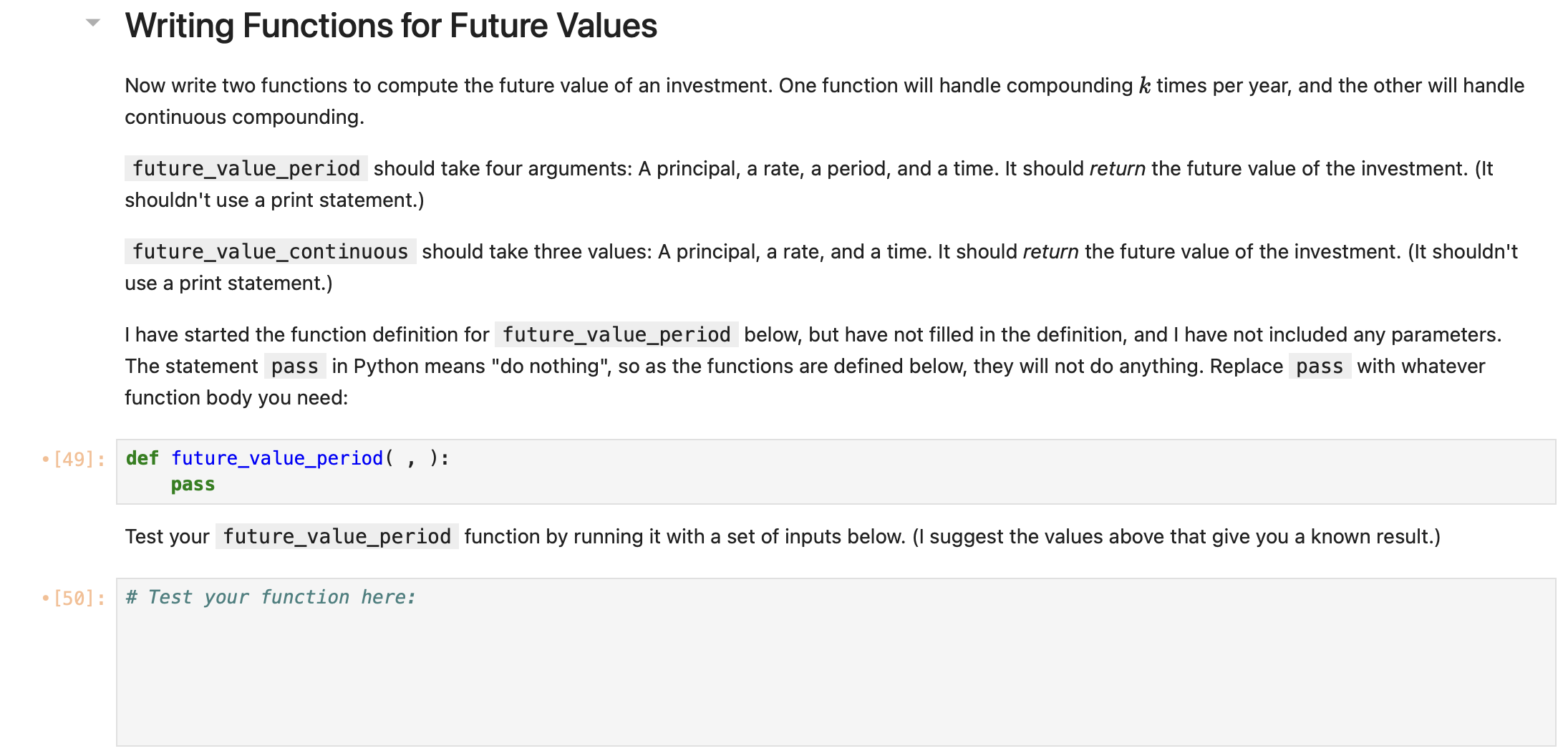
def futurevalueperiod:
pass
Test your futurevalueperiod function by running it with a set of inputs below. I suggest the values above that give you a known result.
: # Test your function here:
Step by Step Solution
There are 3 Steps involved in it
1 Expert Approved Answer
Step: 1 Unlock

Question Has Been Solved by an Expert!
Get step-by-step solutions from verified subject matter experts
Step: 2 Unlock
Step: 3 Unlock
 Study Help