







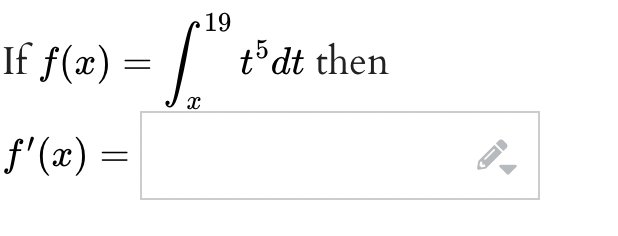
Question: x LetF(a:)=/ %dt,forw25. 5 I]. A. F'(a:) = 9 B. On what interval or intervals is F increasing? :1: E I; ( Give your answer
![x LetF(a:)=/ %dt,forw25. 5 I]. A. F'(a:) = 9" B. On](https://s3.amazonaws.com/si.experts.images/answers/2024/06/6679fc3c104f2_4596679fc3bd86df.jpg)
![your answer as an interval or a list of intervals, eg, (-infinity,8]](https://s3.amazonaws.com/si.experts.images/answers/2024/06/6679fc3d0d63d_4606679fc3cf3aa8.jpg)
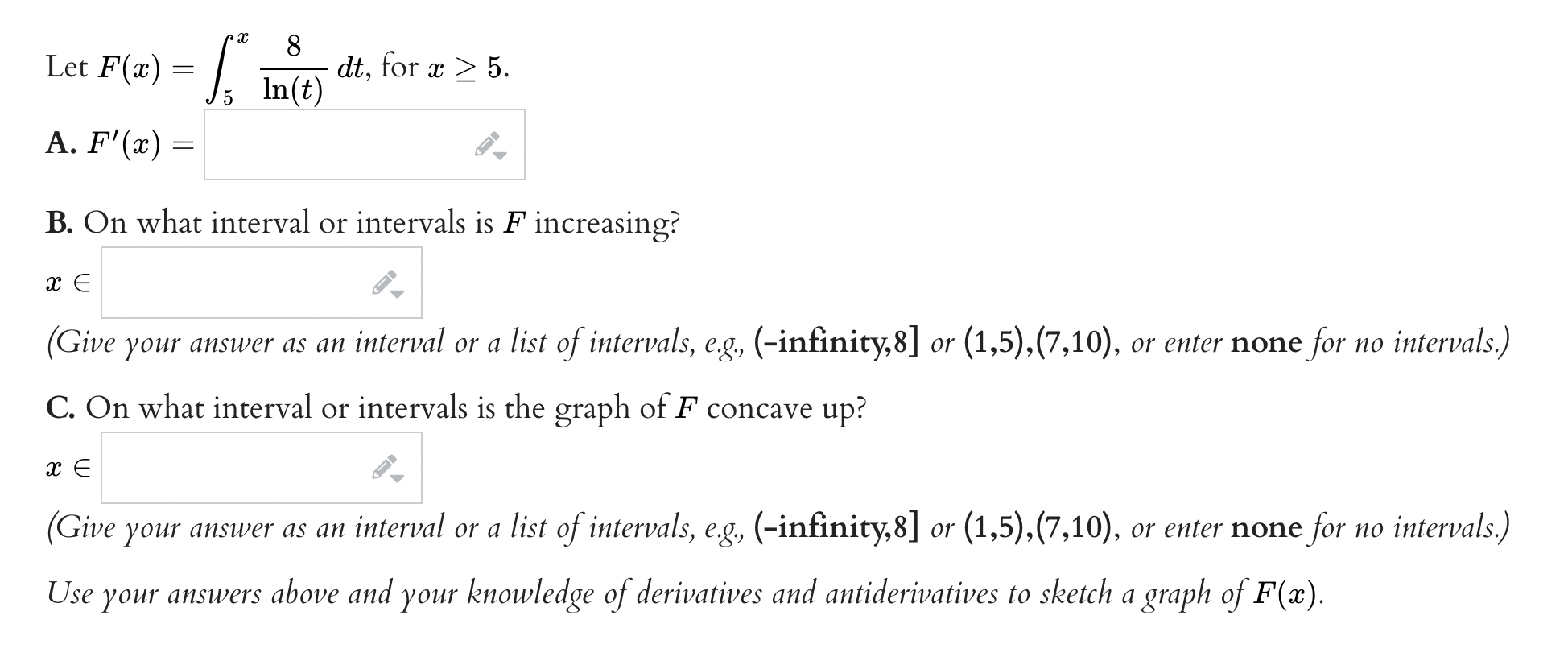
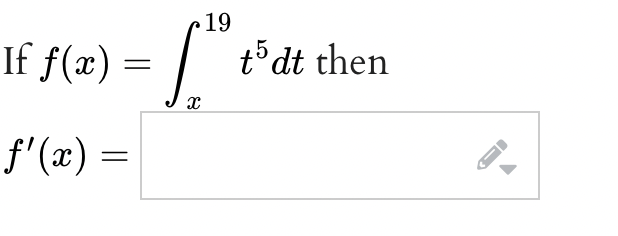
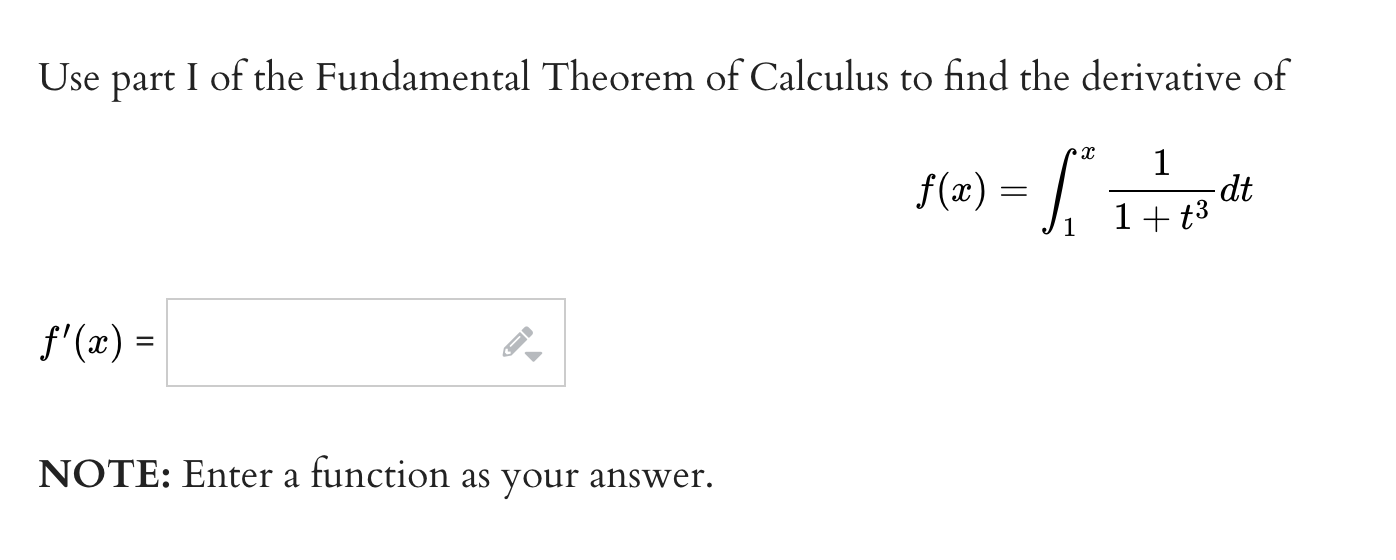
x LetF(a:)=/ %dt,forw25. 5 I]. A. F'(a:) = 9" B. On what interval or intervals is F increasing? :1: E I; ( Give your answer as an interval or a list of intervals, eg, (-infinity,8] or (1,5),(7,10), or enter none for no intervals.) C. On what interval or intervals is the graph of F concave up? :1: E y, ( Give your answer as an interval or a list of intervals, eg, (-infinity,8] or (1,5),(7,10), or enter none for no intervals.) Use your answers above and your knowledge of derivatives and antiderivatives to sketch a graph ofF(a:) \fUse part I of the Fundamental Theorem of Calculus to find the derivative of f (ac ) = dt 1 1 + +3 f' (a ) = NOTE: Enter a function as your
Step by Step Solution
There are 3 Steps involved in it

Get step-by-step solutions from verified subject matter experts
 Study Help