







Question: . X More Info Aug. 1 Aug. 3 Aug. 12 Aug. 15 Aug. 20 Aug. 28 Beginning merchandise inventory, 14 books @ $10 each Sold
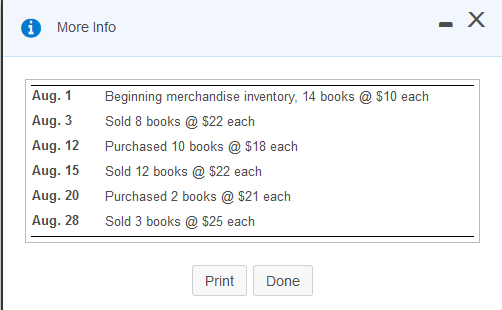
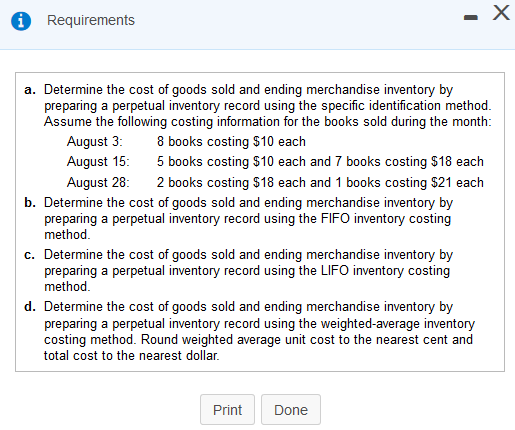
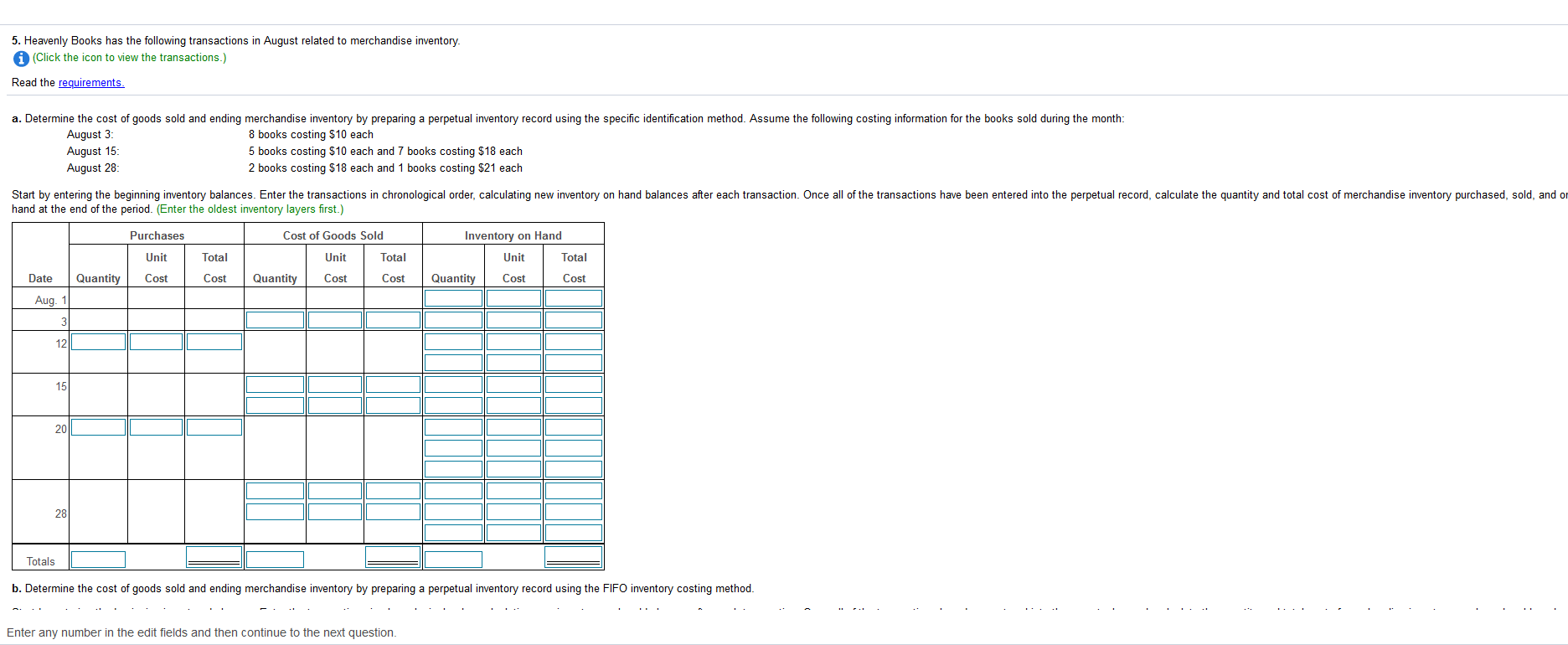
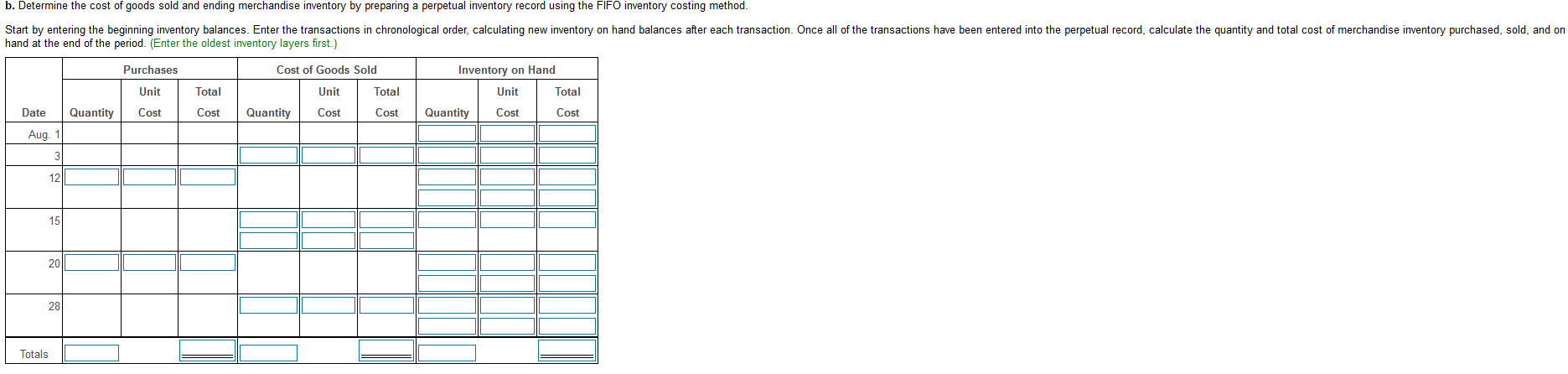
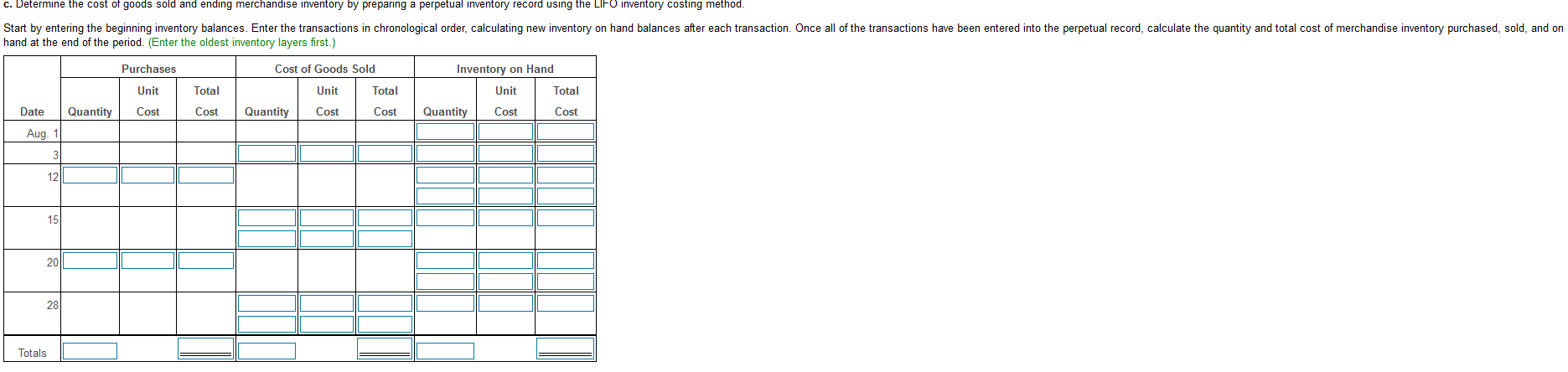
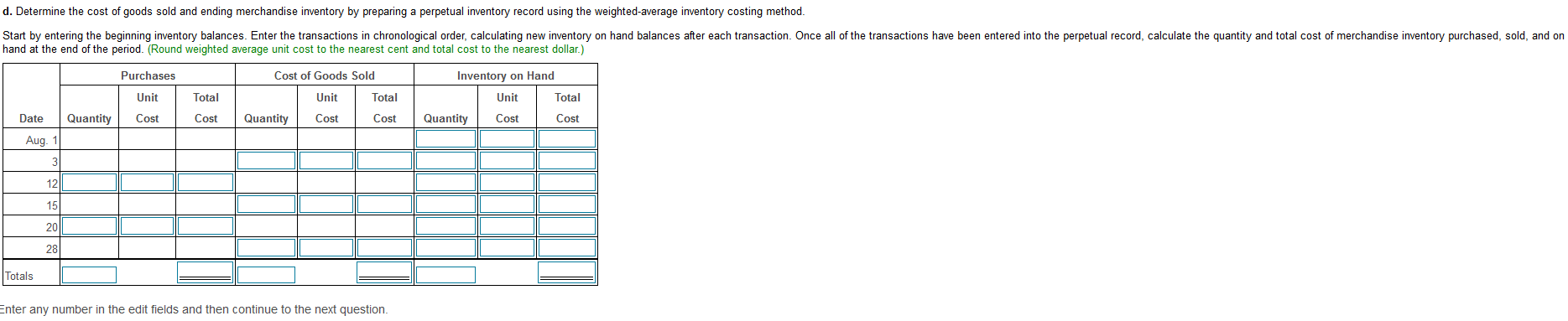
. X More Info Aug. 1 Aug. 3 Aug. 12 Aug. 15 Aug. 20 Aug. 28 Beginning merchandise inventory, 14 books @ $10 each Sold 8 books @ $22 each Purchased 10 books @ $18 each Sold 12 books @ $22 each Purchased 2 books @ $21 each Sold 3 books @ $25 each Print Done Requirements . X a. Determine the cost of goods sold and ending merchandise inventory by preparing a perpetual inventory record using the specific identification method. Assume the following costing information for the books sold during the month: August 3: 8 books costing $10 each August 15: 5 books costing $10 each and 7 books costing $18 each August 28 2 books costing $18 each and 1 books costing $21 each b. Determine the cost of goods sold and ending merchandise inventory by preparing a perpetual inventory record using the FIFO inventory costing method. c. Determine the cost of goods sold and ending merchandise inventory by preparing a perpetual inventory record using the LIFO inventory costing method. d. Determine the cost of goods sold and ending merchandise inventory by preparing a perpetual inventory record using the weighted-average inventory costing method. Round weighted average unit cost to the nearest cent and total cost to the nearest dollar. Print Done 5. Heavenly Books has the following transactions in August related to merchandise inventory. (Click the icon to view the transactions.) Read the requirements. a. Determine the cost of goods sold and ending merchandise inventory by preparing a perpetual inventory record using the specific identification method. Assume the following costing information for the books sold during the month: August 3: 8 books costing $10 each August 15 5 books costing $10 each and 7 books costing $18 each August 28 2 books costing $18 each and 1 books costing $21 each Start by entering the beginning inventory balances. Enter the transactions in chronological order, calculating new inventory on hand balances after each transaction. Once all of the transactions have been entered into the perpetual record, calculate the quantity and total cost of merchandise inventory purchased, sold, and on hand at the end of the period. (Enter the oldest inventory layers first.) Purchases Cost of Goods Sold Inventory on Hand Unit Total Unit Total Unit Total Date Quantity Cost Cost Quantity Cost Cost Quantity Cost Cost Aug. 1 121 15 20 28 Totals b. Determine the cost of goods sold and ending merchandise inventory by preparing a perpetual inventory record using the FIFO inventory costing method. Enter any number in the edit fields and then continue to the next question. b. Determine the cost of goods sold and ending merchandise inventory by preparing a perpetual inventory record using the FIFO inventory costing method. Start by entering the beginning inventory balances. Enter the transactions in chronological order, calculating new inventory on hand balances after each transaction. Once all of the transactions have been entered into the perpetual record, calculate the quantity and total cost of merchandise inventory purchased, sold, and on hand at the end of the period. (Enter the oldest inventory layers first.) Purchases Cost of Goods Sold Unit Total Unit Total Inventory on Hand Unit Total Quantity Cost Cost Date Quantity Cost Cost Quantity Cost Cost Aug. 1 3 12 15 20 28 Totals c. Determine the cost of goods sold and ending merchandise inventory by preparing a perpetual inventory record using the LIFO inventory costing method. Start by entering the beginning inventory balances. Enter the transactions in chronological order, calculating new inventory on hand balances after each transaction. Once all of the transactions have been entered into the perpetual record, calculate the quantity and total cost of merchandise inventory purchased, sold, and on hand at the end of the period. (Enter the oldest inventory layers first.) Purchases Cost of Goods Sold Inventory on Hand Unit Total Unit Total Unit Total Date Quantity Cost Cost Quantity Cost Cost Quantity Cost Cost Aug. 1 3 12 15 2011 28 Totals d. Determine the cost of goods sold and ending merchandise inventory by preparing a perpetual inventory record using the weighted average inventory costing method. Start by entering the beginning inventory balances. Enter the transactions in chronological order, calculating new inventory on hand balances after each transaction. Once all of the transactions have been entered into the perpetual record, calculate the quantity and total cost of merchandise inventory purchased, sold, and on hand at the end of the period. (Round weighted average unit cost to the nearest cent and total cost to the nearest dollar.) Purchases Cost of Goods Sold Inventory on Hand Unit Total Unit Total Unit Total Date Quantity Cost Cost Quantity Cost Cost Quantity Cost Cost Aug. 1 12|| 15 20 28 Totals Enter any number in the edit fields and then continue to the next
Step by Step Solution
There are 3 Steps involved in it

Get step-by-step solutions from verified subject matter experts
 Study Help