







Question: y Update To keep up-to-date with security updates, fixes, and improvements, choose Check for Upd... Check for up ABGB 302: Week 7 Case Study Assignment

y 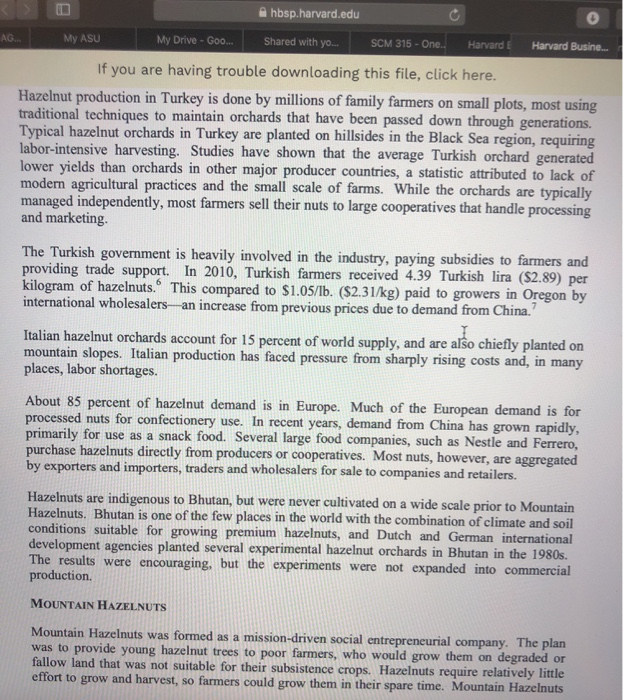
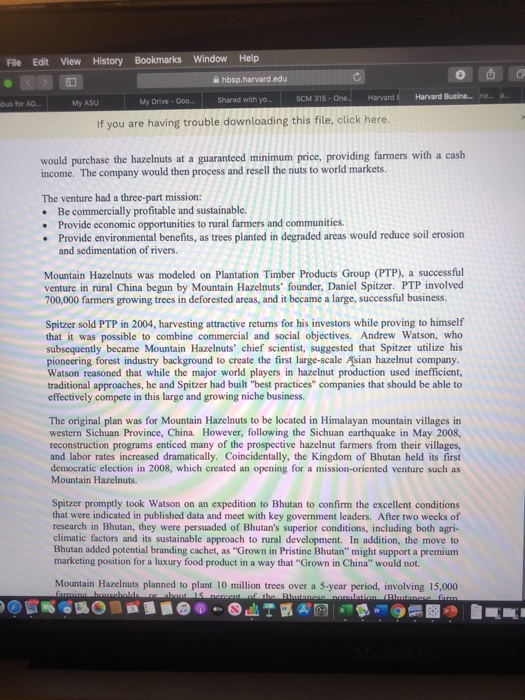
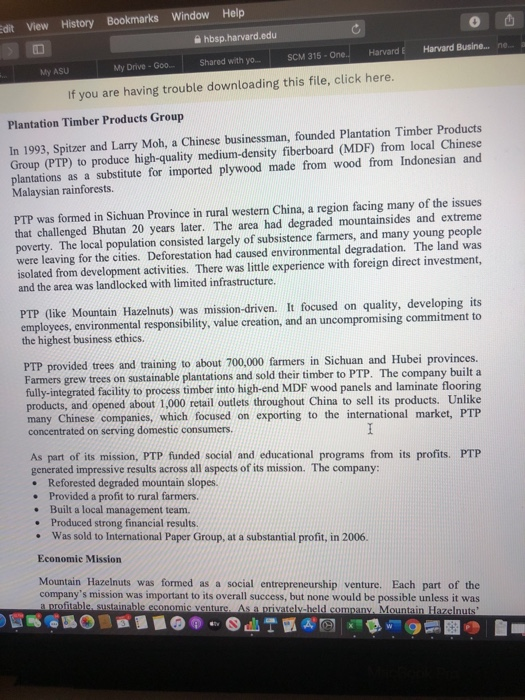
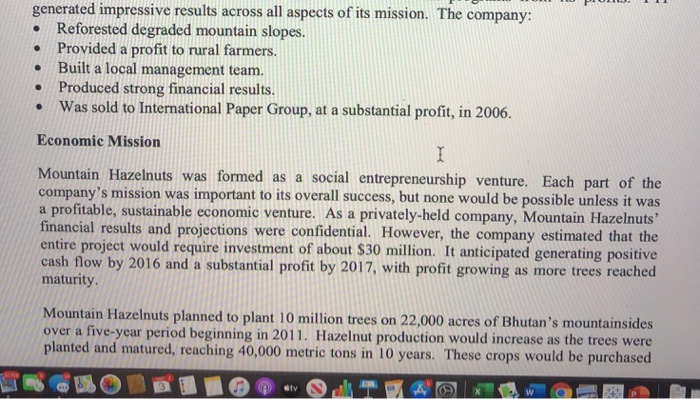
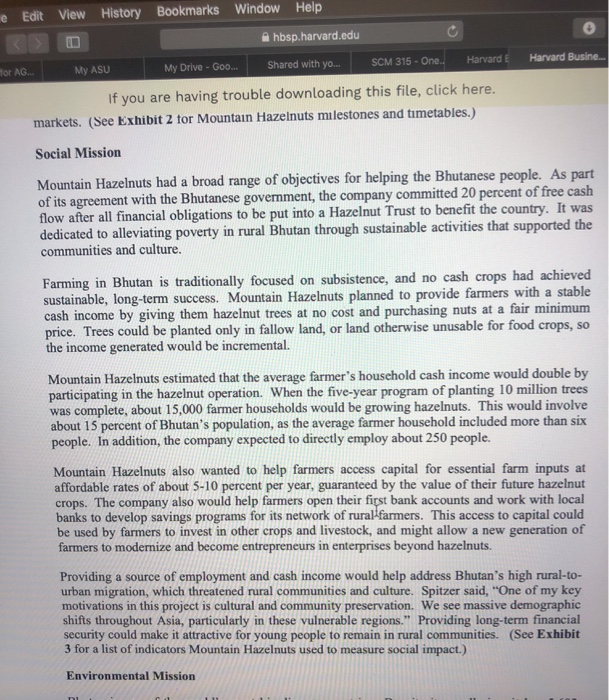
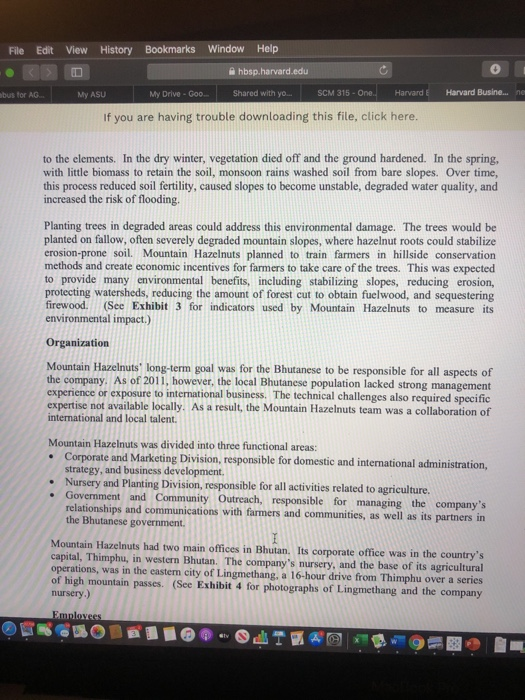
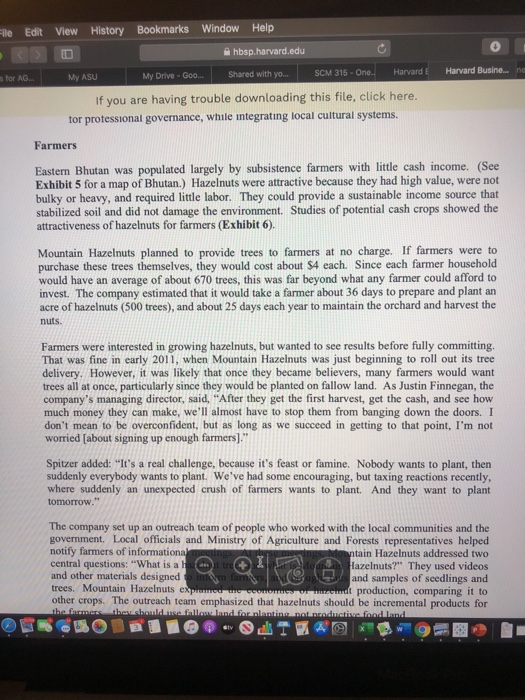
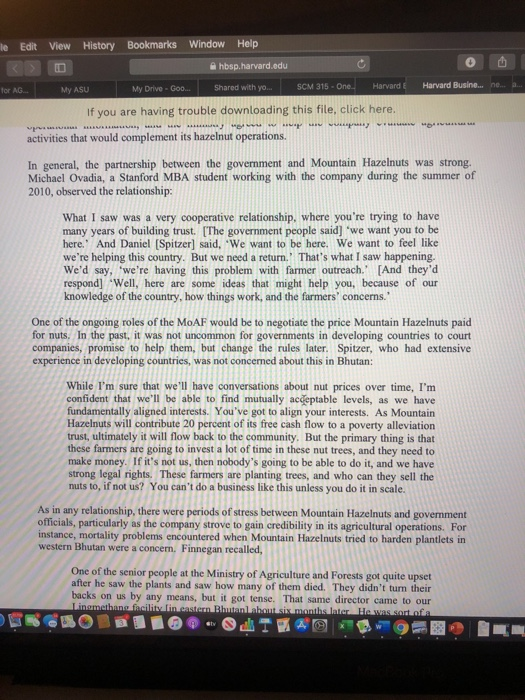

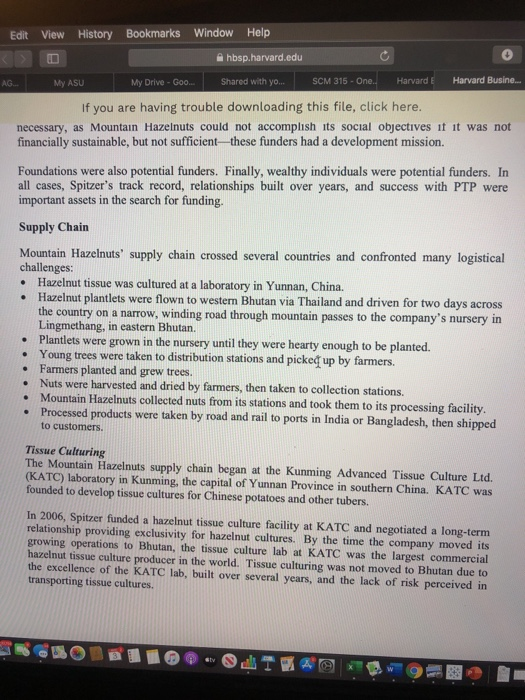
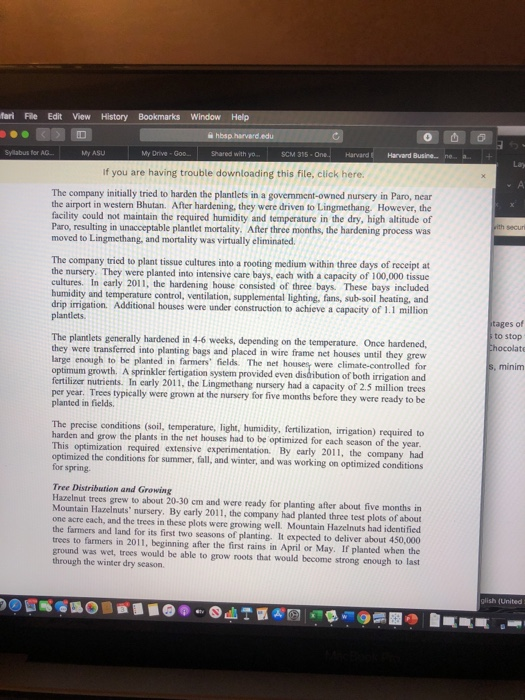
Update To keep up-to-date with security updates, fixes, and improvements, choose Check for Upd... Check for up ABGB 302: Week 7 Case Study Assignment 1 List and Explain four core qualifications (or competencies) of Mountain Hazelnuts that are sustainable in the long-run?: Mountain Hazelnuts: Case Study (40 points). 400 words, minimum word limit (total). hbsp.harvard.edu My ASU My Drive - Goo... Shared with yo... SCM 315 - One. Harvard E Harvard Busine... If you are having trouble downloading this file, click here. Hazelnut production in Turkey is done by millions of family farmers on small plots, most using traditional techniques to maintain orchards that have been passed down through generations. Typical hazelnut orchards in Turkey are planted on hillsides in the Black Sea region, requiring labor-intensive harvesting. Studies have shown that the average Turkish orchard generated lower yields than orchards in other major producer countries, a statistic attributed to lack of modern agricultural practices and the small scale of farms. While the orchards are typically managed independently, most farmers sell their nuts to large cooperatives that handle processing and marketing The Turkish government is heavily involved in the industry, paying subsidies to farmers and providing trade support. In 2010, Turkish farmers received 4.39 Turkish lira (S2.89) per kilogram of hazelnuts. This compared to $1.05/lb. ($2.31/kg) paid to growers in Oregon by international wholesalers an increase from previous prices due to demand from China. Italian hazelnut orchards account for 15 percent of world supply, and are also chiefly planted on mountain slopes. Italian production has faced pressure from sharply rising costs and, in many places, labor shortages. About 85 percent of hazelnut demand is in Europe. Much of the European demand is for processed nuts for confectionery use. In recent years, demand from China has grown rapidly, primarily for use as a snack food. Several large food companies, such as Nestle and Ferrero, purchase hazelnuts directly from producers or cooperatives. Most nuts, however, are aggregated by exporters and importers, traders and wholesalers for sale to companies and retailers. Hazelnuts are indigenous to Bhutan, but were never cultivated on a wide scale prior to Mountain Hazelnuts. Bhutan is one of the few places in the world with the combination of climate and soil conditions suitable for growing premium hazelnuts, and Dutch and German international development agencies planted several experimental hazelnut orchards in Bhutan in the 1980s. The results were encouraging, but the experiments were not expanded into commercial production MOUNTAIN HAZELNUTS Mountain Hazelnuts was formed as a mission-driven social entrepreneurial company. The plan was to provide young hazelnut trees to poor farmers, who would grow them on degraded or fallow land that was not suitable for their subsistence crops. Hazelnuts require relatively little effort to grow and harvest, so farmers could grow them in their spare time. Mountain Hazelnuts File Edit View History Bookmarks Window Help Harvard Busine no abus for AG. hbsp.harvard.edu MASU My Drive shared with yo. SCM 316-One Harvard If you are having trouble downloading this file, click here. would purchase the hazelnuts at a guaranteed minimum price, providing farmers with a cash income. The company would then process and resell the nuts to world markets. The venture had a three-part mission: Be commercially profitable and sustainable. Provide economic opportunities to rural farmers and communities. Provide environmental benefits, as trees planted in degraded areas would reduce soil erosion and sedimentation of rivers. Mountain Hazelnuts was modeled on Plantation Timber Products Group (PTP), a successful venture in rural China begun by Mountain Hazelnuts' founder, Daniel Spitzer. PTP involved 700,000 farmers growing trees in deforested areas, and it became a large, successful business Spitzer sold PTP in 2004, harvesting attractive returns for his investors while proving to himself that it was possible to combine commercial and social objectives. Andrew Watson, who subsequently became Mountain Hazelnuts' chief scientist, suggested that Spitzer utilize his pioneering forest industry background to create the first large-scale Asian hazelnut company. Watson reasoned that while the major world players in hazelnut production used inefficient, traditional approaches, he and Spitzer had built "best practices" companies that should be able to effectively compete in this large and growing niche business. The original plan was for Mountain Hazelnuts to be located in Himalayan mountain villages in western Sichuan Province, China. However, following the Sichuan earthquake in May 2008 reconstruction programs enticed many of the prospective hazelnut farmers from their villages, and labor rates increased dramatically. Coincidentally, the Kingdom of Bhutan held its first democratic election in 2008, which created an opening for a mission-oriented venture such as Mountain Hazelnuts. Spitzer promptly took Watson on an expedition to Bhutan to confirm the excellent conditions that were indicated in published data and meet with key government leaders. After two weeks of research in Bhutan, they were persuaded of Bhutan's superior conditions, including both agri- climatic factors and its sustainable approach to rural development. In addition, the move to Bhutan added potential branding cachet, as "Grown in Pristine Bhutan" might support a premium marketing position for a luxury food product in a way that "Grown in China" would not Mountain Hazelnuts planned to plant 10 million trees over a 5-year period, involving 15,000 finamin. hosholdsorbant percent of the Phantomene pamulation mese from Edit View History Bookmarks Window Help hbsp.harvard.edu Harvard E Harvard Busine... ne S CM 315. One. S hared with yo WASU My Drive - Goo If you are having trouble downloading this file, click here. Plantation Timber Products Group In 1993, Spitzer and Larry Moh, a Chinese businessman, founded Plantation Timber Products Group (PTP) to produce high-quality medium-density fiberboard (MDF) from local Chinese plantations as a substitute for imported plywood made from wood from Indonesian and Malaysian rainforests. PTP was formed in Sichuan Province in rural western China, a region facing many of the issues that challenged Bhutan 20 years later. The area had degraded mountainsides and extreme poverty. The local population consisted largely of subsistence farmers, and many young people were leaving for the cities. Deforestation had caused environmental degradation. The land was isolated from development activities. There was little experience with foreign direct investment, and the area was landlocked with limited infrastructure. PTP (like Mountain Hazelnuts) was mission-driven. It focused on quality, developing its employees, environmental responsibility, value creation, and an uncompromising commitment to the highest business ethics. PTP provided trees and training to about 700,000 farmers in Sichuan and Hubei provinces Farmers grew trees on sustainable plantations and sold their timber to PTP. The company built a fully-integrated facility to process timber into high-end MDF wood panels and laminate flooring products, and opened about 1,000 retail outlets throughout China to sell its products. Unlike many Chinese companies, which focused on exporting to the international market, PTP concentrated on serving domestic consumers. As part of its mission, PTP funded social and educational programs from its profits. PTP generated impressive results across all aspects of its mission. The company: Reforested degraded mountain slopes. Provided a profit to rural farmers. Built a local management team. Produced strong financial results. Was sold to International Paper Group, at a substantial profit, in 2006. Economic Mission Mountain Hazelnuts was formed as a social entrepreneurship venture. Each part of the company's mission was important to its overall success, but none would be possible unless it was profitable sustainable economic venture. As a privately held.company, Mountain Hazelnuts generated impressive results across all aspects of its mission. The company: Reforested degraded mountain slopes. Provided a profit to rural farmers. Built a local management team. Produced strong financial results. Was sold to International Paper Group, at a substantial profit, in 2006. Economic Mission Mountain Hazelnuts was formed as a social entrepreneurship venture. Each part of the company's mission was important to its overall success, but none would be possible unless it was a profitable, sustainable economic venture. As a privately-held company, Mountain Hazelnuts financial results and projections were confidential. However, the company estimated that the entire project would require investment of about $30 million. It anticipated generating positive cash flow by 2016 and a substantial profit by 2017, with profit growing as more trees reached maturity Mountain Hazelnuts planned to plant 10 million trees on 22,000 acres of Bhutan's mountainsides over a five-year period beginning in 2011. Hazelnut production would increase as the trees were planted and matured, reaching 40,000 metric tons in 10 years. These crops would be purchased C v W OL Edit View History Bookmarks Window Help hbsp.harvard.edu Harvard Busine. A. MASU My Drive - Goo... Shared with yo. SCM 315 - One. Harvard E If you are having trouble downloading this file, click here. markets. (See Exhibit 2 for Mountain Hazelnuts milestones and timetables.) Social Mission Mountain Hazelnuts had a broad range of objectives for helping the Bhutanese people. As part of its agreement with the Bhutanese government, the company committed 20 percent of free cash flow after all financial obligations to be put into a Hazelnut Trust to benefit the country. It was dedicated to alleviating poverty in rural Bhutan through sustainable activities that supported the communities and culture. Farming in Bhutan is traditionally focused on subsistence, and no cash crops had achieved sustainable, long-term success. Mountain Hazelnuts planned to provide farmers with a stable cash income by giving them hazelnut trees at no cost and purchasing nuts at a fair minimum price. Trees could be planted only in fallow land, or land otherwise unusable for food crops, so the income generated would be incremental. Mountain Hazelnuts estimated that the average farmer's household cash income would double by participating in the hazelnut operation. When the five-year program of planting 10 million trees was complete, about 15,000 farmer households would be growing hazelnuts. This would involve about 15 percent of Bhutan's population, as the average farmer household included more than six people. In addition, the company expected to directly employ about 250 people. Mountain Hazelnuts also wanted to help farmers access capital for essential farm inputs at affordable rates of about 5-10 percent per year, guaranteed by the value of their future hazelnut crops. The company also would help farmers open their first bank accounts and work with local banks to develop savings programs for its network of rural farmers. This access to capital could be used by farmers to invest in other crops and livestock, and might allow a new generation of farmers to modernize and become entrepreneurs in enterprises beyond hazelnuts. Providing a source of employment and cash income would help address Bhutan's high rural-to- urban migration, which threatened rural communities and culture. Spitzer said, "One of my key motivations in this project is cultural and community preservation. We see massive demographic shifts throughout Asia, particularly in these vulnerable regions. Providing long-term financial security could make it attractive for young people to remain in rural communities. (See Exhibit 3 for a list of indicators Mountain Hazelnuts used to measure social impact.) Environmental Mission File Edit View History Bookmarks Window Help hbsp.harvard.edu bus for AG MY ASU My Drive. Good Shared with you. SCM 315. Ono Harvard E If you are having trouble downloading this file, click here. Harvard Busine. to the elements. In the dry winter, vegetation died off and the ground hardened. In the spring, with little biomass to retain the soil, monsoon rains washed soil from bare slopes. Over time, this process reduced soil fertility, caused slopes to become unstable, degraded water quality, and increased the risk of flooding. Planting trees in degraded areas could address this environmental damage. The trees would be planted on fallow, often severely degraded mountain slopes, where hazelnut roots could stabilize erosion-prone soil. Mountain Hazelnuts planned to train farmers in hillside conservation methods and create economic incentives for farmers to take care of the trees. This was expected to provide many environmental benefits, including stabilizing slopes, reducing erosion, protecting watersheds, reducing the amount of forest cut to obtain fuelwood, and sequestering firewood. (See Exhibit 3 for indicators used by Mountain Hazelnuts to measure its environmental impact.) Organization Mountain Hazelnuts long-term goal was for the Bhutanese to be responsible for all aspects of the company. As of 2011, however, the local Bhutanese population lacked strong management experience or exposure to international business. The technical challenges also required specific expertise not available locally. As a result, the Mountain Hazelnuts team was a collaboration of international and local talent. Mountain Hazelnuts was divided into three functional areas: Corporate and Marketing Division, responsible for domestic and international administration, strategy, and business development. Nursery and Planting Division, responsible for all activities related to agriculture, Government and Community Outreach, responsible for managing the company's relationships and communications with farmers and communities, as well as its partners in the Bhutanese government. Mountain Hazelnuts had two main offices in Bhutan. Its corporate office was in the country's capital, Thimphu, in western Bhutan. The company's nursery, and the base of its agricultural operations, was in the easter city of Lingmethang, a 16-hour drive from Thimphu over a series of high mountain passes. (See Exhibit 4 for photographs of Lingmethang and the company nursery.) Employees File Edit 0 View History Bookmarks Window Help hbsp.harvard.edu MY ASU My Drive. Goo... Shared with yo... SCM 315 One Harvard If you are having trouble downloading this file, click here. for professional governance, while integrating local cultural systems. for AO Harvard Busine...n Farmers Eastern Bhutan was populated largely by subsistence farmers with little cash income. (See Exhibit 5 for a map of Bhutan.) Hazelnuts were attractive because they had high value, were not bulky or heavy, and required little labor. They could provide a sustainable income source that stabilized soil and did not damage the environment. Studies of potential cash crops showed the attractiveness of hazelnuts for farmers (Exhibit 6). Mountain Hazelnuts planned to provide trees to farmers at no charge. If farmers were to purchase these trees themselves, they would cost about $4 each. Since each farmer household would have an average of about 670 trees, this was far beyond what any farmer could afford to invest. The company estimated that it would take a farmer about 36 days to prepare and plant an acre of hazelnuts (500 trees), and about 25 days each year to maintain the orchard and harvest the nuts. Farmers were interested in growing hazelnuts, but wanted to see results before fully committing That was fine in early 2011, when Mountain Hazelnuts was just beginning to roll out its tree delivery. However, it was likely that once they became believers, many farmers would want trees all at once, particularly since they would be planted on fallow land. As Justin Finnegan, the company's managing director, said, "After they get the first harvest, get the cash and see how much money they can make, we'll almost have to stop them from banging down the doors. I don't mean to be overconfident, but as long as we succeed in getting to that point. I'm not worried about signing up enough farmers]." Spitzer added: "It's a real challenge, because it's feast or famine. Nobody wants to plant, then suddenly everybody wants to plant. We've had some encouraging, but taxing reactions recently, where suddenly an unexpected crush of farmers wants to plant. And they want to plant tomorrow." The company set up an outreach team of people who worked with the local communities and the government. Local officials and Ministry of Agriculture and Forests representatives helped notify farmers of informational motings g ountain Hazelnuts addressed two central questions: "What is a unit tre ona Hazelnuts? They used videos and other materials designed into fame and samples of seedlings and trees. Mountain Hazelnuts exc cccomme n d production, comparing it to other crops. The outreach team emphasized that hazelnuts should be incremental products for the formers thousholdninllan land fornlanti motinoductie fondland le Edit View History Bookmarks Window Help hbsp.harvard.edu for AG MY ASU My Drive. Go. Shared with yo... SCM 315 - One. Harvard Harvard Busine.. ne... If you are having trouble downloading this file, click here. activities that would complement its hazelnut operations. In general, the partnership between the government and Mountain Hazelnuts was strong. Michael Ovadia, a Stanford MBA student working with the company during the summer of 2010, observed the relationship: What I saw was a very cooperative relationship, where you're trying to have many years of building trust. [The government people said] 'we want you to be here." And Daniel (Spitzer) said, 'We want to be here. We want to feel like we're helping this country. But we need a return. That's what I saw happening. We'd say, 'we're having this problem with farmer outreach.' [And they'd respond] "Well, here are some ideas that might help you, because of our knowledge of the country, how things work, and the farmers' concerns. One of the ongoing roles of the MoAF would be to negotiate the price Mountain Hazelnuts paid for nuts. In the past, it was not uncommon for governments in developing countries to court companies, promise to help them, but change the rules later. Spitzer, who had extensive experience in developing countries, was not concerned about this in Bhutan: While I'm sure that we'll have conversations about nut prices over time, I'm confident that we'll be able to find mutually acceptable levels, as we have fundamentally aligned interests. You've got to align your interests. As Mountain Hazelnuts will contribute 20 percent of its free cash flow to a poverty alleviation trust, ultimately it will flow back to the community. But the primary thing is that these farmers are going to invest a lot of time in these nut trees, and they need to make money. If it's not us, then nobody's going to be able to do it, and we have strong legal rights. These farmers are planting trees, and who can they sell the nuts to, if not us? You can't do a business like this unless you do it in scale. As in any relationship, there were periods of stress between Mountain Hazelnuts and government officials, particularly as the company strove to gain credibility in its agricultural operations. For instance, mortality problems encountered when Mountain Hazelnuts tried to harden plantlets in western Bhutan were a concern. Finnegan recalled, One of the senior people at the Ministry of Agriculture and Forests got quite upset after he saw the plants and saw how many of them died. They didn't turn their backs on us by any means, but it got tense. That same director came to our Lingumahangailit.fin.castern Bhutanlaban six months later. He was.com ile Edit View History Bookmarks Window Help hbsp.harvard.edu for AG. My Drive - Goo... My ASU Shared with yo. Harvard SCM 315 - One Harvard Busine... If you are having trouble downloading this file, click here. The sense of excitement was palpable, on both sides. The prime minister and other cabinet members were proud to see their people working in such a major enterprise. Our staff exuded a sense of pride that they were part of something that will help their country. Marketing As of early 2011, Mountain Hazelnuts planned its initial sales to be into China as part of a two- stage strategy. This had several advantages. The Chinese market was large, and rapidly growing for instance the U.S. Department of Agriculture reported that China bought $737 million in tree nuts from the United States in 2009, compared to just $89 million five years earlier. Without traditional supply relationships, it would be relatively easier to penetrate than more established markets. Chinese demand was for snack food, which did not require processing of nuts into paste, the most common form of the product sold to the European market. Thus, Mountain Hazelnuts could begin selling product without building the capability needed to process nuts into paste. In addition, nuts had a longer shelf life than paste and other processed products. The company planned to sell to European customers after it had begun sales in China. The well-established European market for hazelnuts was more quality-sensitive. Postponing its engagement with these more traditional customers would enable Mountain Hazelnuts to achieve consistent quality and meet the service requirements of more demanding customers. European markets were unconnected to the Chinese market. Mountain Hazelnuts could sell a commodity. like product for Chinese consumption, but create a brand presence for European sales. Mountain Hazelnuts' location in Bhutan offered the potential to create a premium "Brand Bhutan," recalling the pristine environment and exotic appeal of the country, Financing One of the challenges facing Mountain Hazelnuts was financing. The early funding of the company and its hazelnut tissue culture operation in China was provided by Spitzer. However, the company needed additional investors to complete its development program. It anticipated that the funding required would total $30 million. de SLAVEDAM BE ANGKASBA 9 Edit View History Bookmarks Window Help hbsp.harvard.edu AG.. MyASU My Drive - Goo. Shared with yo... SCM 315 - One.. Harvard E Harvard Busine... If you are having trouble downloading this file, click here. necessary, as Mountain Hazelnuts could not accomplish its social objectives if it was not financially sustainable, but not sufficientthese funders had a development mission. Foundations were also potential funders. Finally, wealthy individuals were potential funders. In all cases, Spitzer's track record, relationships built over years, and success with PTP were important assets in the search for funding. Supply Chain Mountain Hazelnuts' supply chain crossed several countries and confronted many logistical challenges: Hazelnut tissue was cultured at a laboratory in Yunnan, China. Hazelnut plantlets were flown to western Bhutan via Thailand and driven for two days across the country on a narrow, winding road through mountain passes to the company's nursery in Lingmethang, in eastern Bhutan. Plantlets were grown in the nursery until they were hearty enough to be planted. Young trees were taken to distribution stations and picked up by farmers. Farmers planted and grew trees. Nuts were harvested and dried by farmers, then taken to collection stations. Mountain Hazelnuts collected nuts from its stations and took them to its processing facility. Processed products were taken by road and rail to ports in India or Bangladesh, then shipped to customers. Tissue Culturing The Mountain Hazelnuts supply chain began at the Kunming Advanced Tissue Culture Ltd. (KATC) laboratory in Kunming, the capital of Yunnan Province in southern China. KATC was founded to develop tissue cultures for Chinese potatoes and other tubers In 2006, Spitzer funded a hazelnut tissue culture facility at KATC and negotiated a long-term relationship providing exclusivity for hazelnut cultures. By the time the company moved its growing operations to Bhutan, the tissue culture lab at KATC was the largest commercial hazelnut tissue culture producer in the world. Tissue culturing was not moved to Bhutan due to the excellence of the KATC lab, built over several years, and the lack of risk perceived in transporting tissue cultures. fari File Edit View History Bookmarks Window Help hosp.harvard.edu MyASU My Drive - Goo... Shared with yo... SCM 315 - One. Harvard If you are having trouble downloading this file, click here Syllabus for AG... Harvard Busine.ne.... + A The company initially tried to harden the plantlets in a govement-owned nursery in Paro, near the airport in westem Bhutan. After hardening, they were driven to Lingmethang. However, the facility could not maintain the required humidity and temperature in the dry, high altitude of Paro, resulting in unacceptable plantlet mortality. After three months, the hardening process was moved to Lingmcthang, and mortality was virtually eliminated. with secur The company tried to plant tissue cultures into a rooting medium within three days of receipt at the nursery. They were planted into intensive care bays, cach with a capacity of 100,000 tissue cultures. In early 2011, the hardening house consisted of three bays. These bays included humidity and temperature control, ventilation, supplemental lighting, fans, sub-soil heating, and drip irrigation. Additional houses were under construction to achieve a capacity of 1.1 million plantlets. tages of sto stop Chocolate The plantlets generally hardened in 4-6 weeks, depending on the temperature. Once hardened, they were transferred into planting bags and placed in wire frame net houses until they grew large enough to be planted in farmers' fields. The net houses were climate-controlled for optimum growth. A sprinkler fertigation system provided even diskribution of both irrigation and fertilizer nutrients. In early 2011, the Lingmethang nursery had a capacity of 2.5 million trees per year. Trees typically were grown at the nursery for five months before they were ready to be planted in fields s, minim The precise conditions (soil, temperature, light, humidity, fertilization, irrigation) required to harden and grow the plants in the net houses had to be optimized for each season of the year. This optimization required extensive experimentation. By early 2011, the company had optimized the conditions for summer, fall, and winter, and was working on optimized conditions for spring Tree Distribution and Growing Hazelnut trees grew to about 20-30 cm and were ready for planting after about five months in Mountain Hazelnuts' nursery. By early 2011, the company had planted three test plots of about one acre cach, and the trees in these plots were growing well. Mountain Hazelnuts had identified the farmers and land for its first two seasons of planting. It expected to deliver about 450,000 trees to farmers in 2011, beginning after the first rains in April or May. If planted when the ground was wet, trees would be able to grow roots that would become strong enough to last through the winter dry season glish (United Step by Step Solution
There are 3 Steps involved in it
1 Expert Approved Answer
Step: 1 Unlock

Question Has Been Solved by an Expert!
Get step-by-step solutions from verified subject matter experts
Step: 2 Unlock
Step: 3 Unlock
 Study Help