







Question: You are choosing between two projects. The cash flows for the projects are given in the following table ($ million): a. What are the IRRs
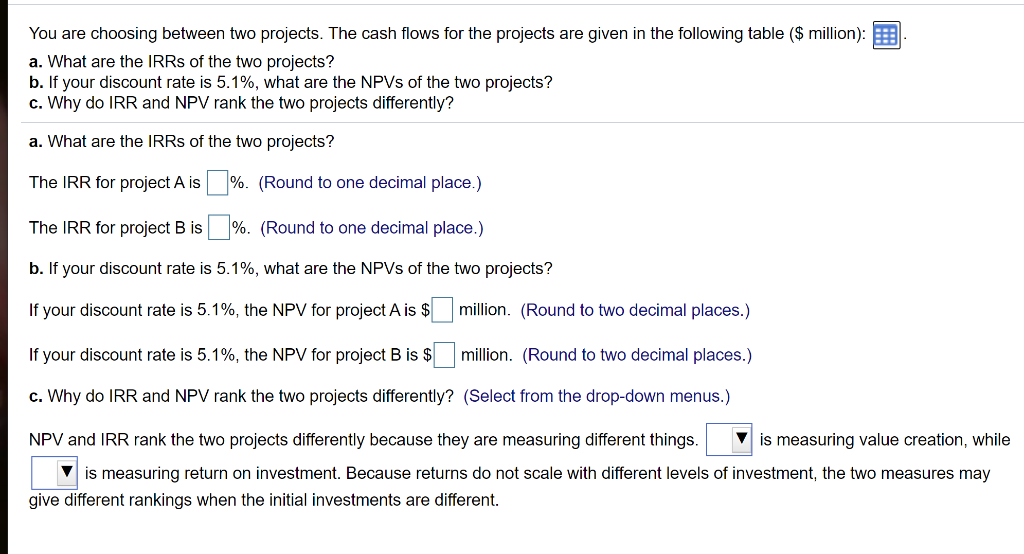
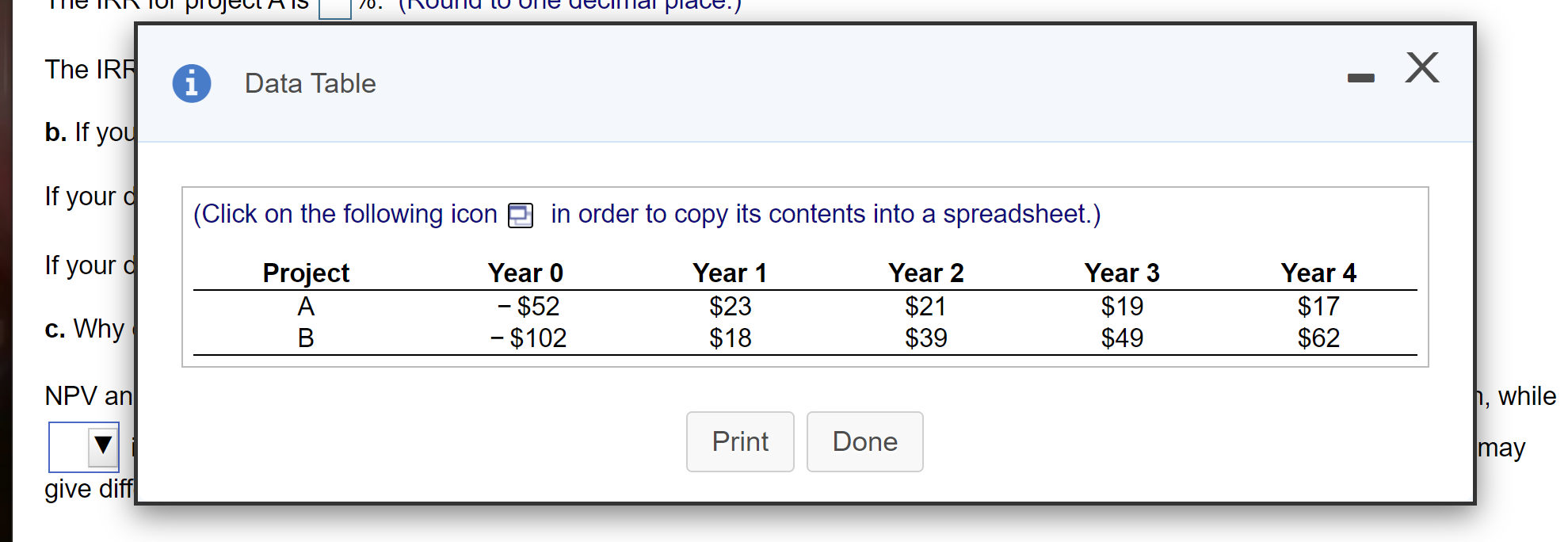
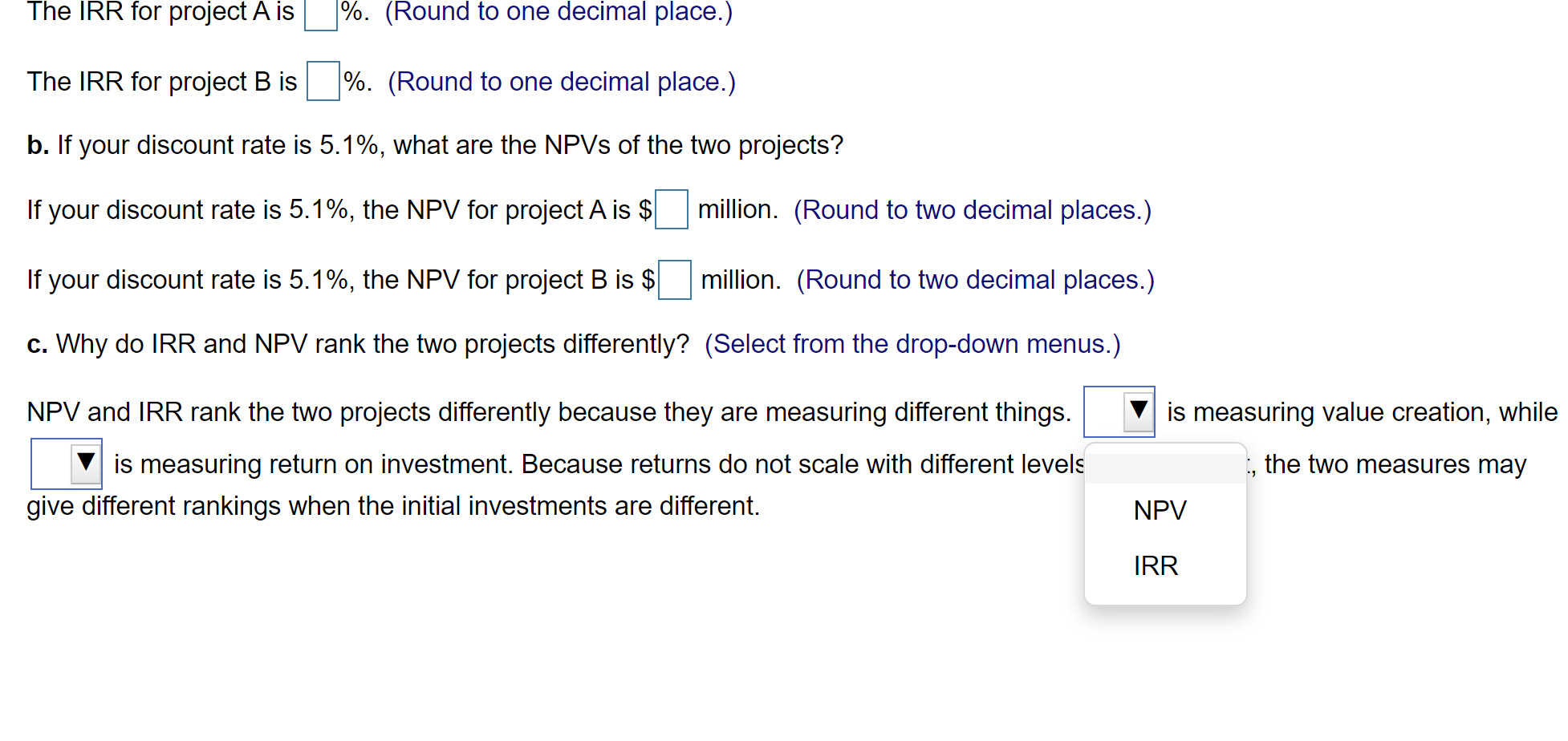
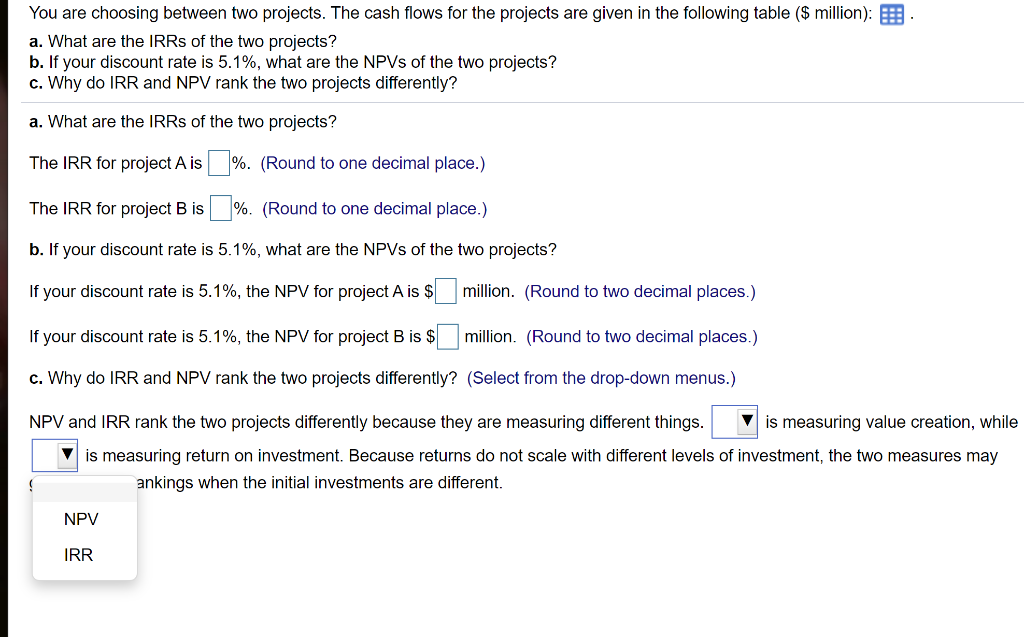
You are choosing between two projects. The cash flows for the projects are given in the following table ($ million): a. What are the IRRs of the two projects? b. If your discount rate is 5.1%, what are the NPVs of the two projects? c. Why do IRR and NPV rank the two projects differently? a. What are the IRRs of the two projects? The IRR for project A is %. (Round to one decimal place.) The IRR for project B is %. (Round to one decimal place.) b. If your discount rate is 5.1%, what are the NPVs of the two projects? If your discount rate is 5.1%, the NPV for project A is $ million. (Round to two decimal places.) If your discount rate is 5.1%, the NPV for project B is $ million. (Round to two decimal places.) c. Why do IRR and NPV rank the two projects differently? (Select from the drop-down menus.) NPV and IRR rank the two projects differently because they are measuring different things. V is measuring value creation, while Vis measuring return on investment. Because returns do not scale with different levels of investment, the two measures may give different rankings when the initial investments are different. The IRR i - X Data Table b. If you If your a (Click on the following icon @ in order to copy its contents into a spreadsheet.) If your d Project A B Year 0 - $52 - $102 Year 1 $23 $18 Year 2 $21 $39 Year 3 $19 $49 Year 4 $17 $62 c. Why NPV an while Print Done may give diff The IRR for project A is %. (Round to one decimal place.) The IRR for project B is %. (Round to one decimal place.) b. If your discount rate is 5.1%, what are the NPVs of the two projects? If your discount rate is 5.1%, the NPV for project A is $ million. (Round to two decimal places.) If your discount rate is 5.1%, the NPV for project B is $ million. (Round to two decimal places.) c. Why do IRR and NPV rank the two projects differently? (Select from the drop-down menus.) is measuring value creation, while NPV and IRR rank the two projects differently because they are measuring different things. is measuring return on investment. Because returns do not scale with different levels give different rankings when the initial investments are different. :, the two measures may NPV IRR You are choosing between two projects. The cash flows for the projects are given in the following table ($ million): a. What are the IRRs of the two projects? b. If your discount rate is 5.1%, what are the NPVs of the two projects? c. Why do IRR and NPV rank the two projects differently? a. What are the IRRs of the two projects? The IRR for project A is %. (Round to one decimal place.) The IRR for project B is %. (Round to one decimal place.) b. If your discount rate is 5.1%, what are the NPVs of the two projects? If your discount rate is 5.1%, the NPV for project A is $ million. (Round to two decimal places.) If your discount rate is 5.1%, the NPV for project B is $ million. (Round to two decimal places.) c. Why do IRR and NPV rank the two projects differently? (Select from the drop-down menus.) NPV and IRR rank the two projects differently because they are measuring different things. is measuring value creation, while is measuring return on investment. Because returns do not scale with different levels of investment, the two measures may ankings when the initial investments are different. NPV IRR
Step by Step Solution
There are 3 Steps involved in it

Get step-by-step solutions from verified subject matter experts
 Study Help