







Question: You borrow $ 2 9 0 , 0 0 0 ; the annual loan payments are $ 1 4 , 7 9 5 . 5
You borrow $; the annual loan payments are $ for years. What interest
rate are you being charged? Round your answer to the nearest whole number.
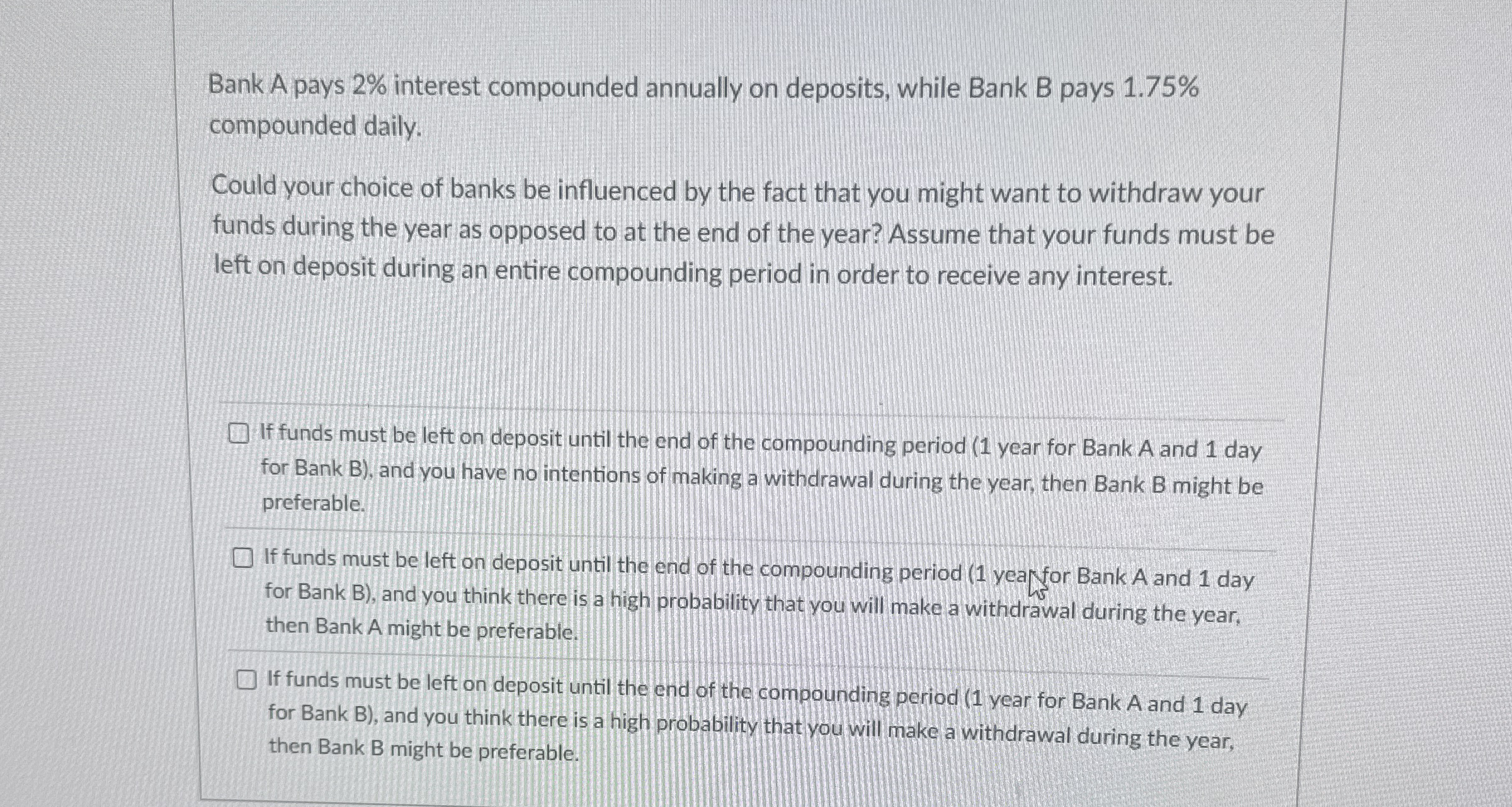
Bank A pays interest compounded annually on deposits, while Bank B pays
compounded daily.
Could your choice of banks be influenced by the fact that you might want to withdraw your
funds during the year as opposed to at the end of the year? Assume that your funds must be
left on deposit during an entire compounding period in order to receive any interest.
If funds must be left on deposit until the end of the compounding period year for Bank A and day
for Bank B and you have no intentions of making a withdrawal during the year, then Bank B might be
preferable.
If funds must be left on deposit until the end of the compounding period yearfor Bank A and day
for Bank B and you think there is a high probability that you will make a withdrawal during the year,
then Bank A might be preferable.
If funds must be left on deposit until the end of the compounding period year for Bank A and day
for Bank B and you think there is a high probability that you will make a withdrawal during the year,
then Bank B might be preferable.
Step by Step Solution
There are 3 Steps involved in it
1 Expert Approved Answer
Step: 1 Unlock

Question Has Been Solved by an Expert!
Get step-by-step solutions from verified subject matter experts
Step: 2 Unlock
Step: 3 Unlock
 Study Help