





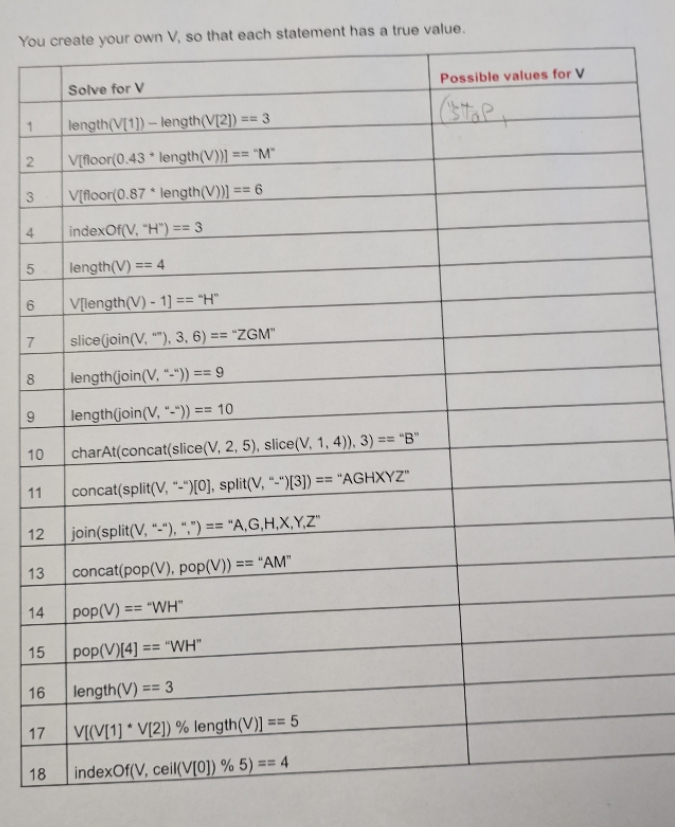
Question: You create your own V, so that each statement has a true value. Solve for V Possible values for V length(V[1]) - length(V[2]) = =
You create your own V, so that each statement hasYou create your own V, so that each statement has
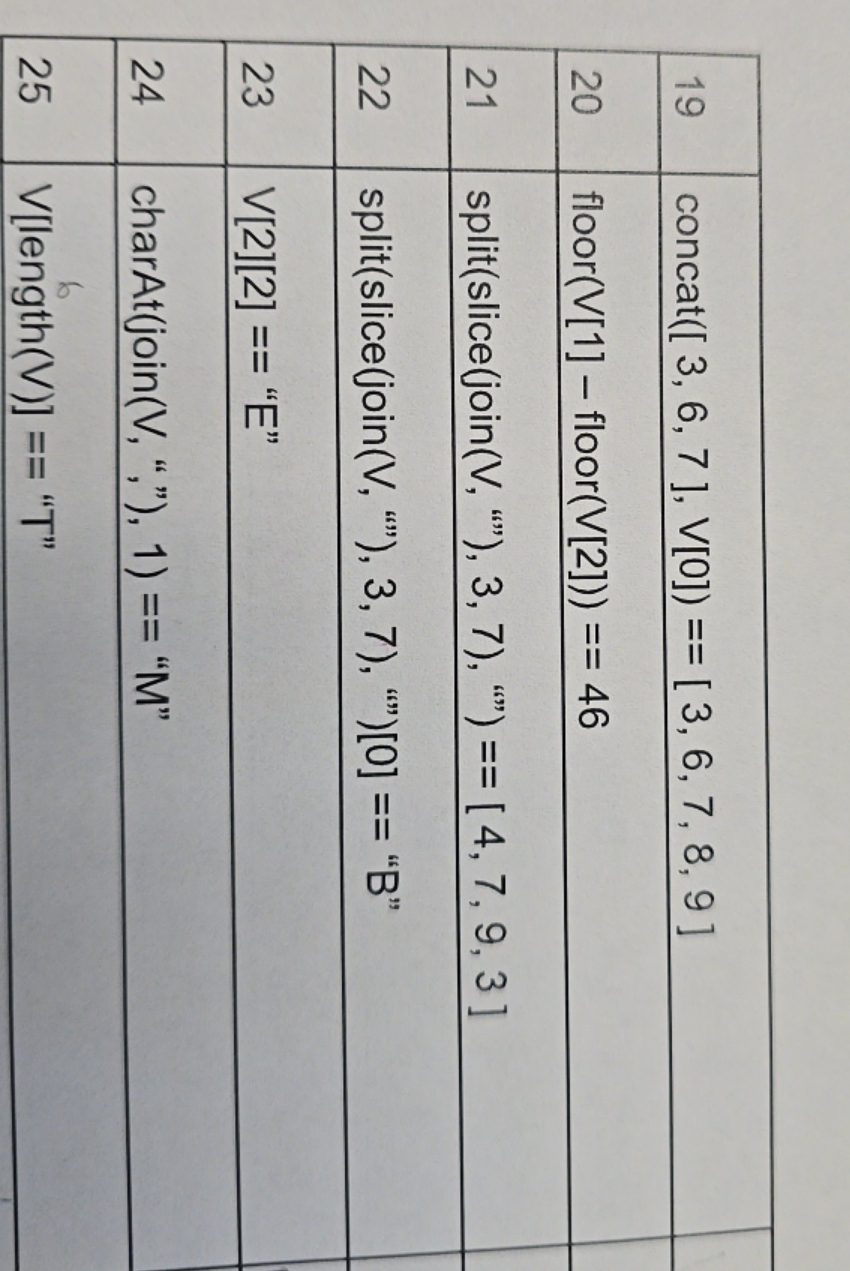
You create your own V, so that each statement has a true value. Solve for V Possible values for V length(V[1]) - length(V[2]) = = 3 "'Stap 2 V[floor(0.43 * length(V))] = = "M" 3 V[floor(0.87 * length(V))] = = 6 4 indexOf(V, "H") == 3 5 length(V) = = 4 6 V[length(V) - 1] = = "H" 7 slice (join(V, "), 3, 6) == "ZGM" 8 length(join(V, "-")) = = 9 9 length(join(V, "-")) == 10 10 charAt(concat(slice(V, 2, 5), slice(V. 1, 4)), 3) = = "B" 11 concat(split(V, "-")[0], split(V, "-")[3]) == "AGHXYZ" 12 join(split(V, "-"), ",") == "A,G,H.X, Y,Z" 13 concat(pop(V), pop(V)) == "AM" 14 pop(V) == "WH" 15 pop(V)[4] = = "WH" 16 length(V) = = 3 17 VI(V[1] * V[2]) % length (V)] = = 5 18 indexOf(V, ceil(V[0]) % 5) = = 4concat([ 3, 6, 7 ], V[0]) = = [ 3, 6, 7, 8, 9 ] floor(V[1] - floor(V[2])) = = 46 split(slice(join(V, ""), 3, 7), "") == [ 4, 7, 9, 3 ] split(slice(join(V, ""), 3, 7), "") [0] = = "B" V[2][2] = = "E" charAt(join(V, ","), 1) = = "M" V[length(V)] = = "T"

Step by Step Solution

There are 3 Steps involved in it

1 Expert Approved Answer
Step: 1 Unlock blur-text-image

Question Has Been Solved by an Expert!

Get step-by-step solutions from verified subject matter experts

Step: 2 Unlock
Step: 3 Unlock

Students Have Also Explored These Related Law Questions!