



Question: You have been asked to conduct a work sampling study for a contractor that specializes in adding new layers of asphalt over an existing roadway.
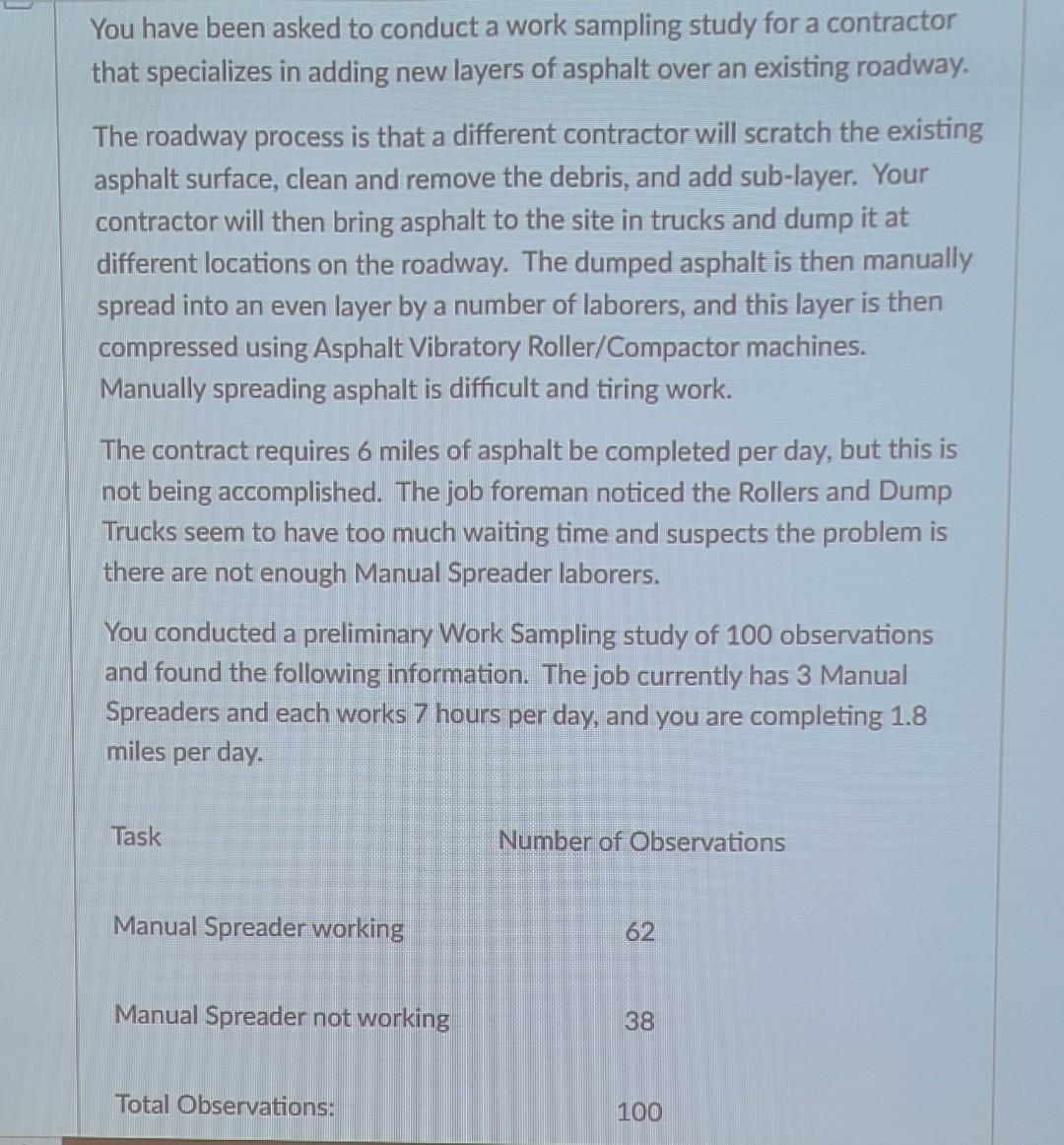
You have been asked to conduct a work sampling study for a contractor that specializes in adding new layers of asphalt over an existing roadway. The roadway process is that a different contractor will scratch the existing asphalt surface, clean and remove the debris, and add sub-layer. Your contractor will then bring asphalt to the site in trucks and dump it at different locations on the roadway. The dumped asphalt is then manually spread into an even layer by a number of laborers, and this layer is then compressed using Asphalt Vibratory Roller/Compactor machines. Manually spreading asphalt is difficult and tiring work. The contract requires 6 miles of asphalt be completed per day, but this is not being accomplished. The job foreman noticed the Rollers and Dump Trucks seem to have too much waiting time and suspects the problem is there are not enough Manual Spreader laborers. You conducted a preliminary Work Sampling study of 100 observations and found the following information. The job currently has 3 Manual Spreaders and each works 7 hours per day, and you are completing 1.8 miles per day. How many observations should be made for a statistically sound study with a 90% confidence interval and 5% allowable error? Round you answer up to the nearest number of observations. Use the same information as the previous question. If you find 58% of the observations for the actual study is "Manual Spreader Working", how many Manual Spreader laborers are required per day to complete the 6 miles of asphalt? Round your answer up to the nearest number of laborers. In developing a scientifically engineered predetermined time standard system, what must the analyst consider regarding the motion under study
Step by Step Solution
There are 3 Steps involved in it

Get step-by-step solutions from verified subject matter experts