







Question: You have two parallel rectangular plates each with an area, A. They are separated by a distance, d. One plate has charge +Q placed on
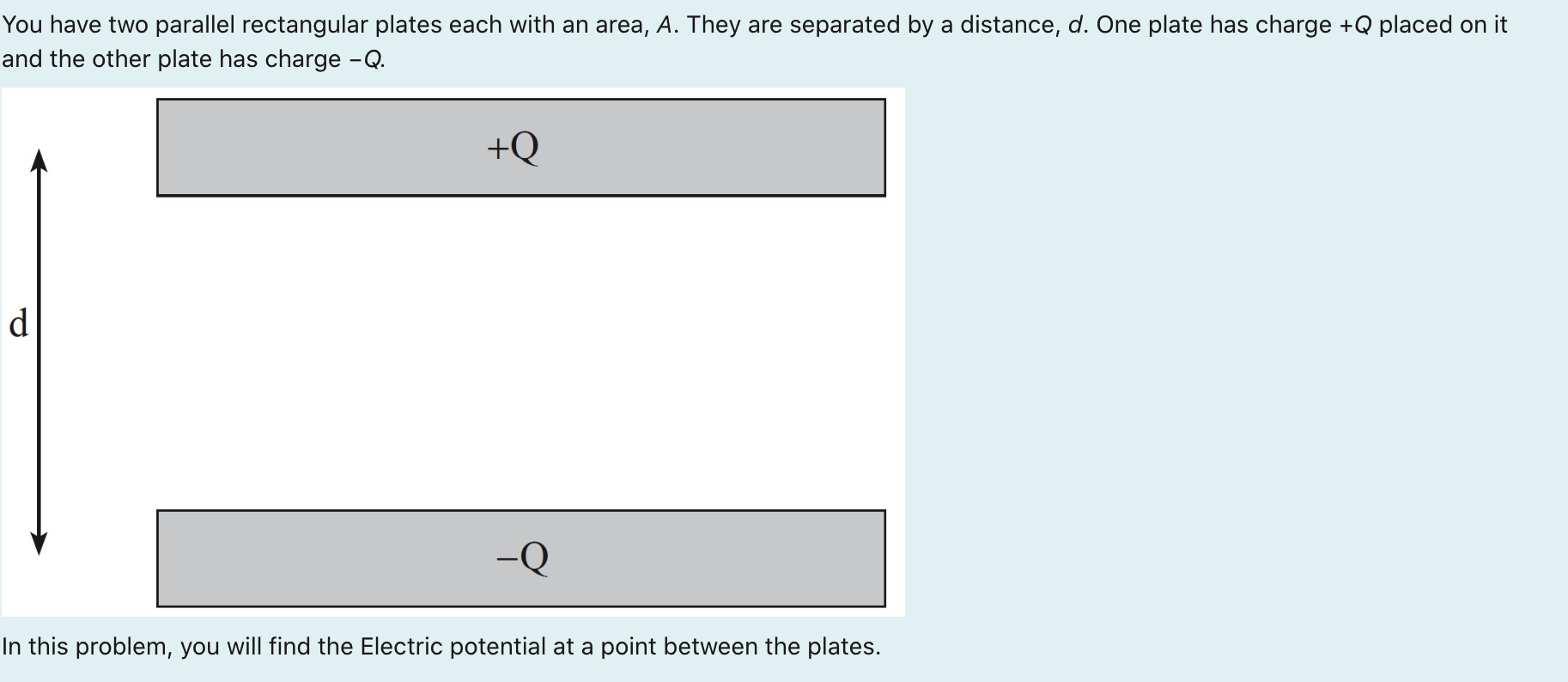
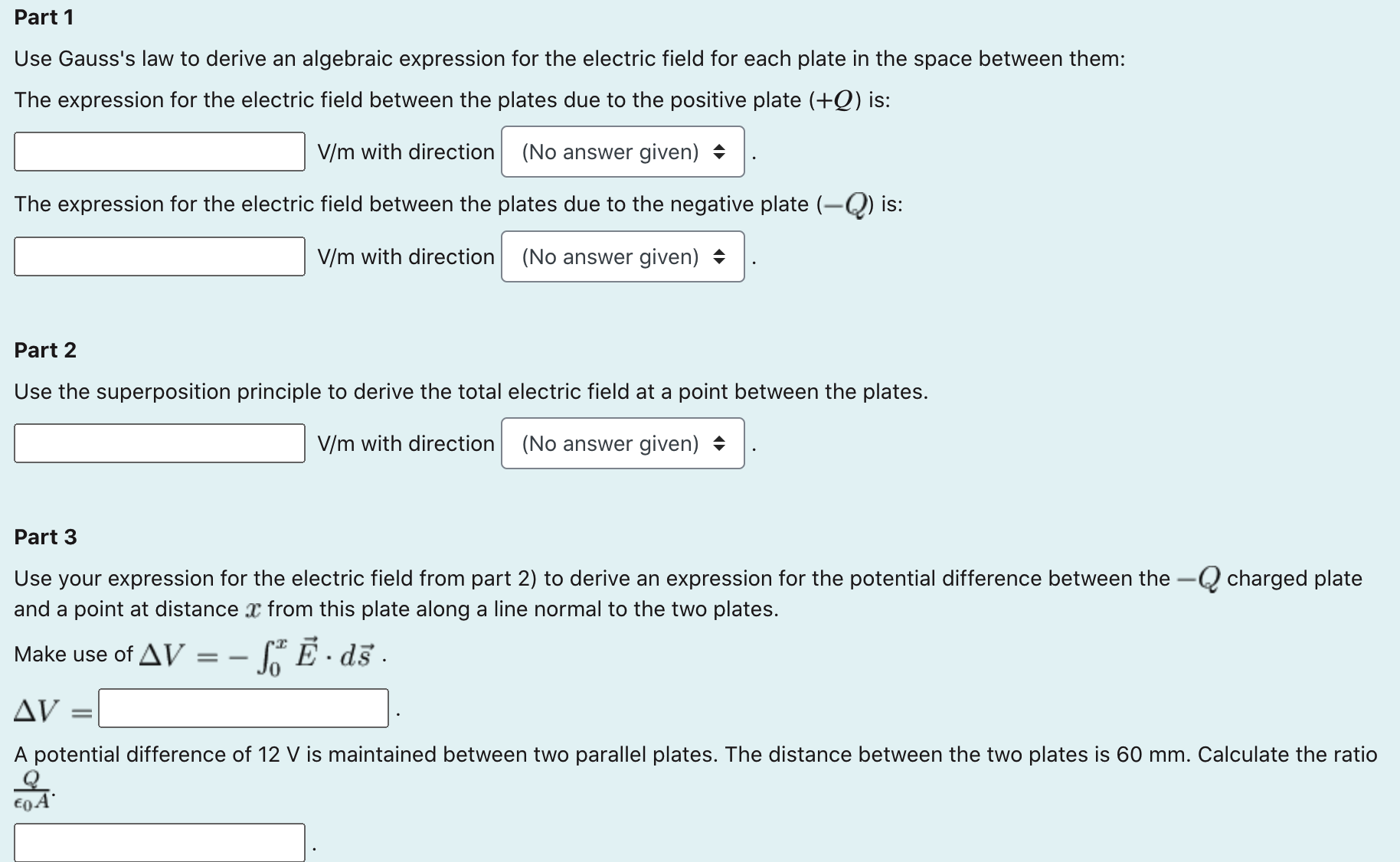
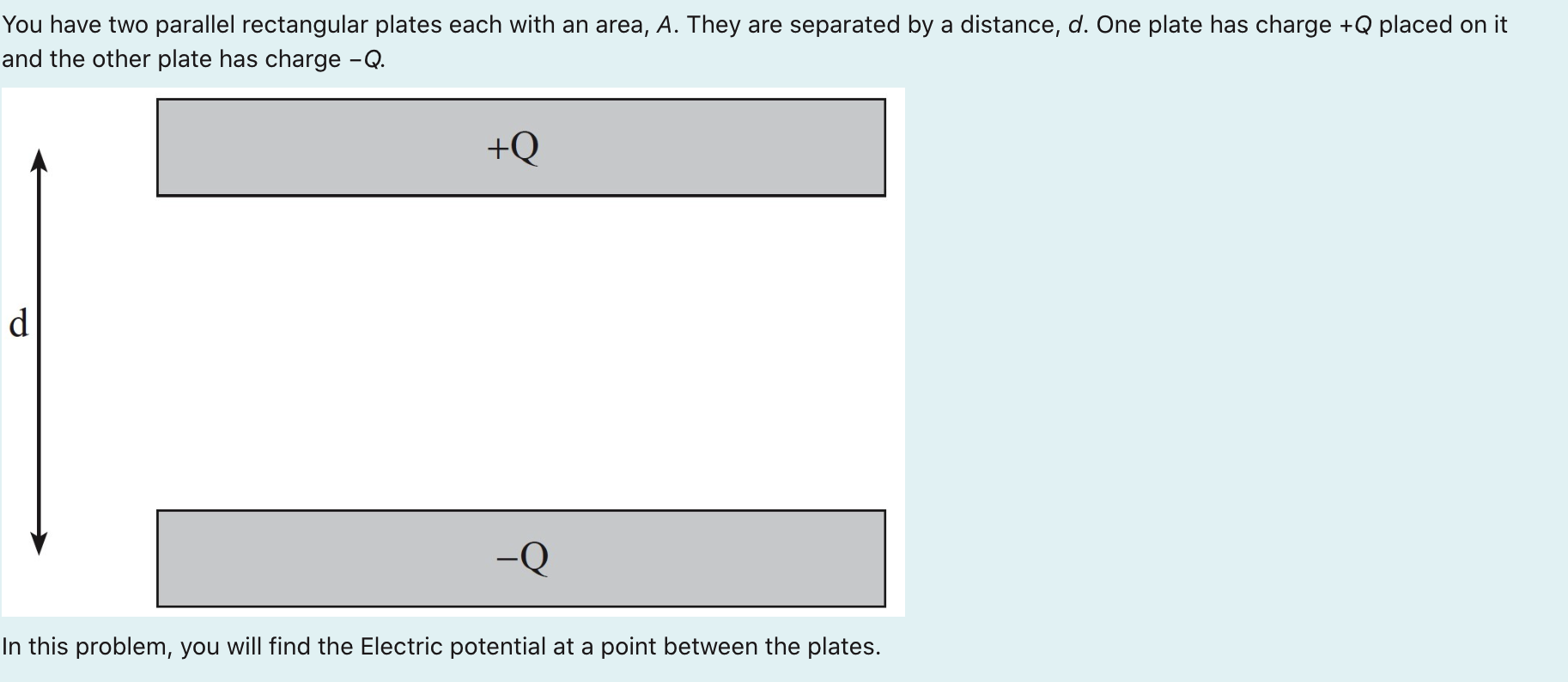
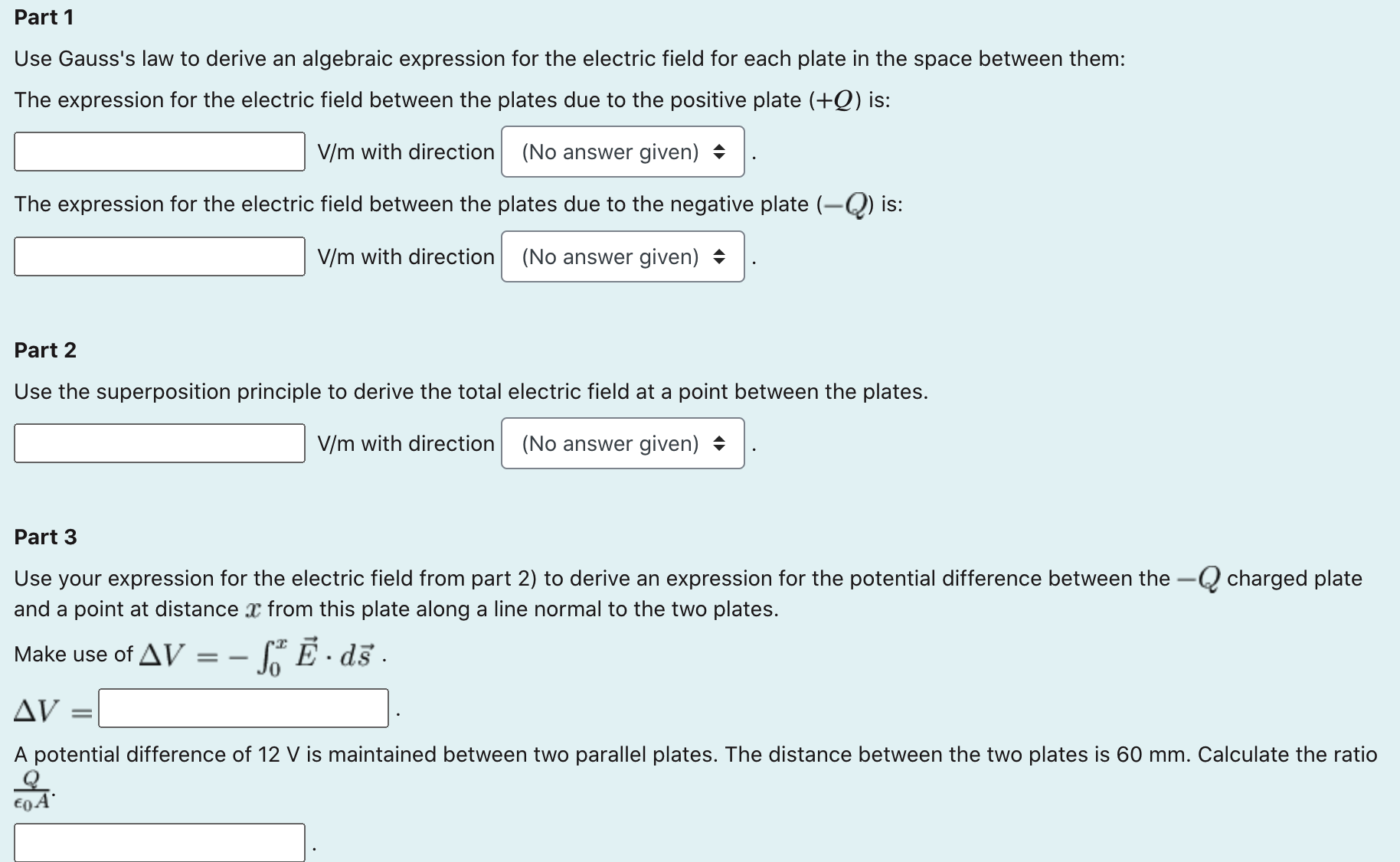
You have two parallel rectangular plates each with an area, A. They are separated by a distance, d. One plate has charge +Q placed on it and the other plate has charge Q. +Q In this problem, you will find the Electric potential at a point between the plates. Part 1 Use Gauss's law to derive an algebraic expression for the electric field for each plate in the space between them: The expression for the electric field between the plates due to the positive plate (+Q) is: V/m with direction (No answer given) : . The expression for the electric field between the plates due to the negative plate (Q) is: V/m with direction (No answer given) : . Part 2 Use the superposition principle to derive the total electric field at a point between the plates. ':| V/m with direction (No answer given) . Part 3 Use your expression for the electric field from part 2) to derive an expression for the potential difference between the Q charged plate and a point at distance :1: from this plate along a line normal to the two plates. Make use ofAV = \"IE - (1.?- AV =:|- A potential difference of 12 V is maintained between two parallel plates. The distance between the two plates is 60 mm. Calculate the ratio LL EuA :l
Step by Step Solution
There are 3 Steps involved in it

Get step-by-step solutions from verified subject matter experts
 Study Help