



Question: You must choose between a no-load, open-end mutual fund with an annual expense ratio of 0.85 percent but no transaction cost or an ETF with
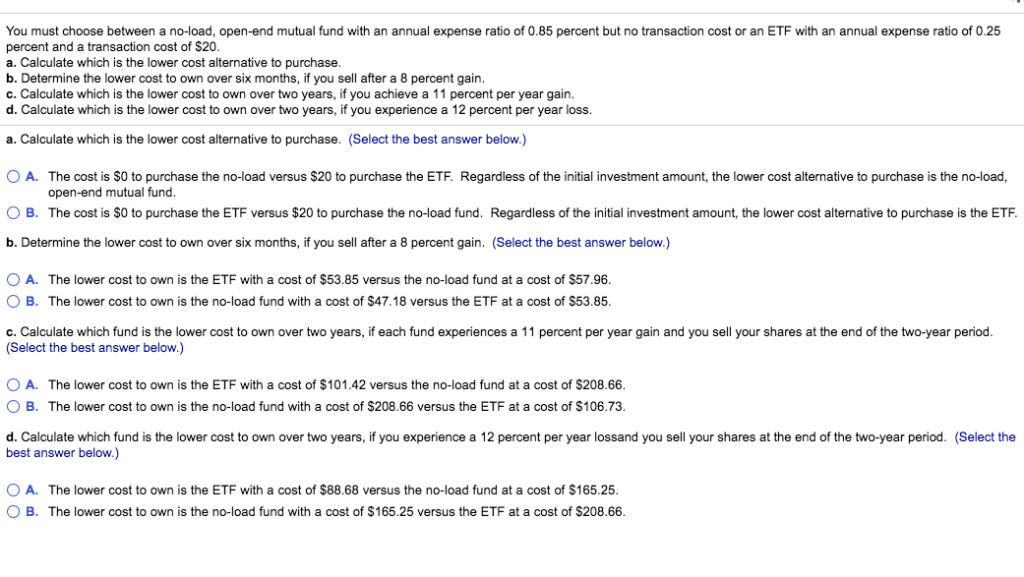
You must choose between a no-load, open-end mutual fund with an annual expense ratio of 0.85 percent but no transaction cost or an ETF with an annual expense ratio of 0.25 percent and a transaction cost of $20 a. Calculate which is the lower cost alternative to purchase b. Determine the lower cost to own over six months, if you sell after a 8 percent gain. c. Calculate which is the lower cost to own over two years, if you achieve a 11 percent per year gain. d. Calculate which is the lower cost to own over two years, if you experience a 12 percent per year loss. a. Calculate which is the lower cost alternative to purchase. (Select the best answer below.) OA. The cost is $O to purchase the no-load versus $20 to purchase the ETF. Regardless of the initial investment amount, the lower cost alternative to purchase is the no-load, B The cost is $0 to purchase he ETF versus $20 o purchase he no oad fund. Regardless of the in al n est en amount, he love osta era e purchase s he b. Determine the lower cost to own over six months, if you sell after a 8 percent gain. (Select the best answer below.) open-end mutual fund. O A. B. The lower cost to own is the ETF with a cost of $53.85 versus the no-load fund at a cost of S57.96. The lower cost to own is the no-load fund with a cost of $47.18 versus the ETF at a cost of S5385. c. Calculate which fund is the lower cost to own over two years, if each fund experiences a 11 percent per year gain and you sell your shares at the end of the two-year period Select the best answer below.) O A. O B. The lower cost to own is the ETF with a cost of $101.42 versus the no-load fund at a cost of $208.66 The lower cost to own is the no-load fund with a cost of $208.66 versus the ETF at a cost of $106.73 d. Calculate which fund is the lower cost to own over two years, if you experience a 12 percent per year lossand you sell your shares at the end of the two-year period. (Select the best answer below.) OA. O B. The lower cost to own is the ETF with a cost of $88.68 versus the no-load fund at a cost of $165.25 The lower cost to own is the no-load fund with a cost of $165.25 versus the ETF at a cost of $208.66. You must choose between a no-load, open-end mutual fund with an annual expense ratio of 0.85 percent but no transaction cost or an ETF with an annual expense ratio of 0.25 percent and a transaction cost of $20 a. Calculate which is the lower cost alternative to purchase b. Determine the lower cost to own over six months, if you sell after a 8 percent gain. c. Calculate which is the lower cost to own over two years, if you achieve a 11 percent per year gain. d. Calculate which is the lower cost to own over two years, if you experience a 12 percent per year loss. a. Calculate which is the lower cost alternative to purchase. (Select the best answer below.) OA. The cost is $O to purchase the no-load versus $20 to purchase the ETF. Regardless of the initial investment amount, the lower cost alternative to purchase is the no-load, B The cost is $0 to purchase he ETF versus $20 o purchase he no oad fund. Regardless of the in al n est en amount, he love osta era e purchase s he b. Determine the lower cost to own over six months, if you sell after a 8 percent gain. (Select the best answer below.) open-end mutual fund. O A. B. The lower cost to own is the ETF with a cost of $53.85 versus the no-load fund at a cost of S57.96. The lower cost to own is the no-load fund with a cost of $47.18 versus the ETF at a cost of S5385. c. Calculate which fund is the lower cost to own over two years, if each fund experiences a 11 percent per year gain and you sell your shares at the end of the two-year period Select the best answer below.) O A. O B. The lower cost to own is the ETF with a cost of $101.42 versus the no-load fund at a cost of $208.66 The lower cost to own is the no-load fund with a cost of $208.66 versus the ETF at a cost of $106.73 d. Calculate which fund is the lower cost to own over two years, if you experience a 12 percent per year lossand you sell your shares at the end of the two-year period. (Select the best answer below.) OA. O B. The lower cost to own is the ETF with a cost of $88.68 versus the no-load fund at a cost of $165.25 The lower cost to own is the no-load fund with a cost of $165.25 versus the ETF at a cost of $208.66
Step by Step Solution
There are 3 Steps involved in it

Get step-by-step solutions from verified subject matter experts