







Question: You must write a function called encode. It must receive two string arguments and produce one string return value. The first argument will be the
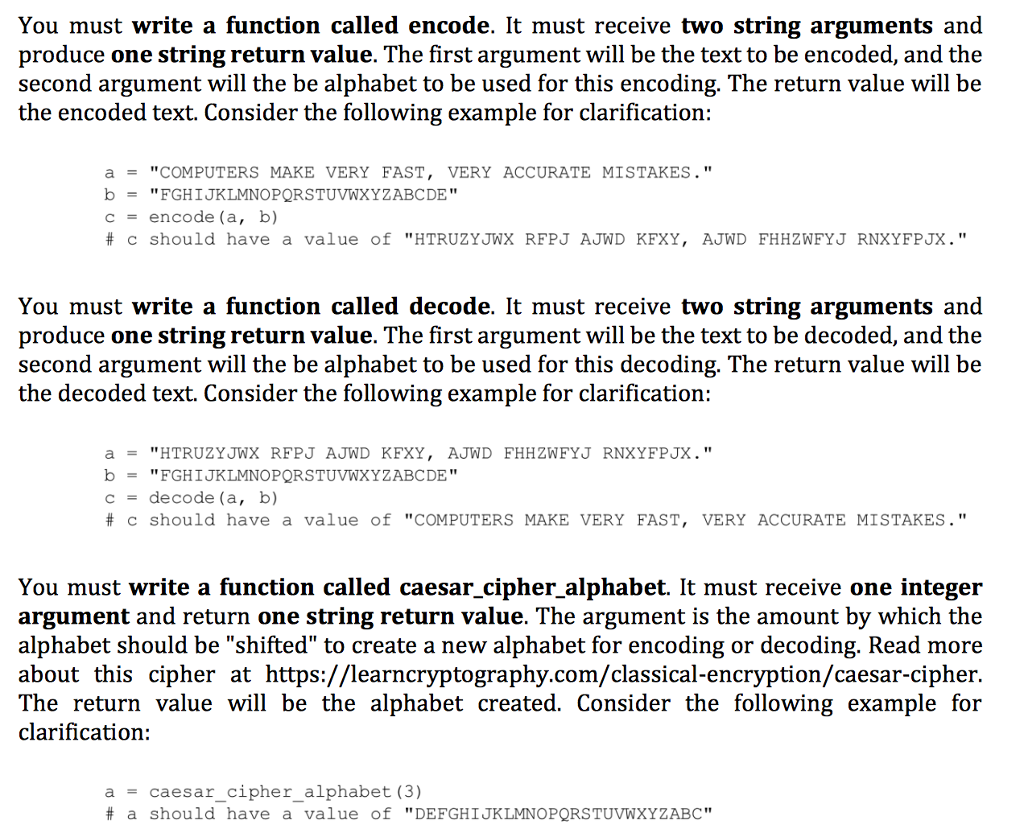
You must write a function called encode. It must receive two string arguments and produce one string return value. The first argument will be the text to be encoded, and the second argument will the be alphabet to be used for this encoding. The return value will be the encoded text. Consider the following example for clarification: a -"COMPUTERS MAKE VERY FAST, VERY ACCURATE MISTAKES." b"FGHI JKLMNOPQRSTUVWXYZABCDE c- encode (a, b) # c should have a value of "HTRUZYJWX RFPJ AJWD KEY, AJWD FHHZWFYJ RNXYFPJX." You must write a function called decode. It must receive two string arguments and produce one string return value. The first argument will be the text to be decoded, and the second argument will the be alphabet to be used for this decoding. The return value will be the decoded text. Consider the following example for clarification: b-"FGHIJKLMNOPQRSTUVWXYZABCDE" c -decode (a, b) # c should have a value of "COMPUTERS MAKE VERY FAST. VERY ACCURATE MISTAKES." You must write a function called caesar cipher alphabet. It must receive one integer argument and return one string return value. The argument is the amount by which the alphabet should be "shifted" to create a new alphabet for encoding or decoding. Read more about this cipher at https://learncryptography.com/classical-encryption/caesar-cipher. The return value will be the alphabet created. Consider the following example for clarification: a = caesar-cipher-alphabet (3) # a should have a value of "DEFGHlJKLMNOPQRSTUVWXYZABC
Step by Step Solution
There are 3 Steps involved in it

Get step-by-step solutions from verified subject matter experts
 Study Help