







Question: You should summarize the 7 items in the photos. Max.250 words! !Different answer another chegg answer please! 1. Introduction currently missing from the literature (Trioman
You should summarize the 7 items in the photos. Max.250 words! 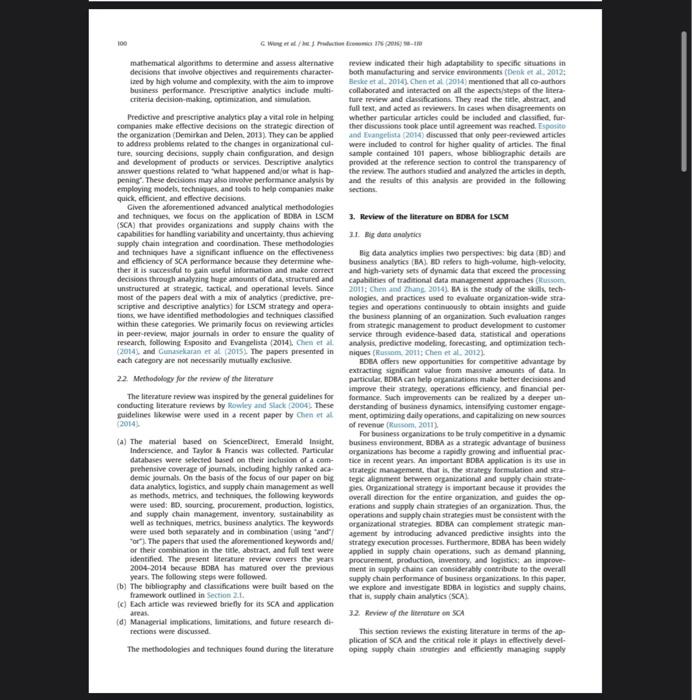
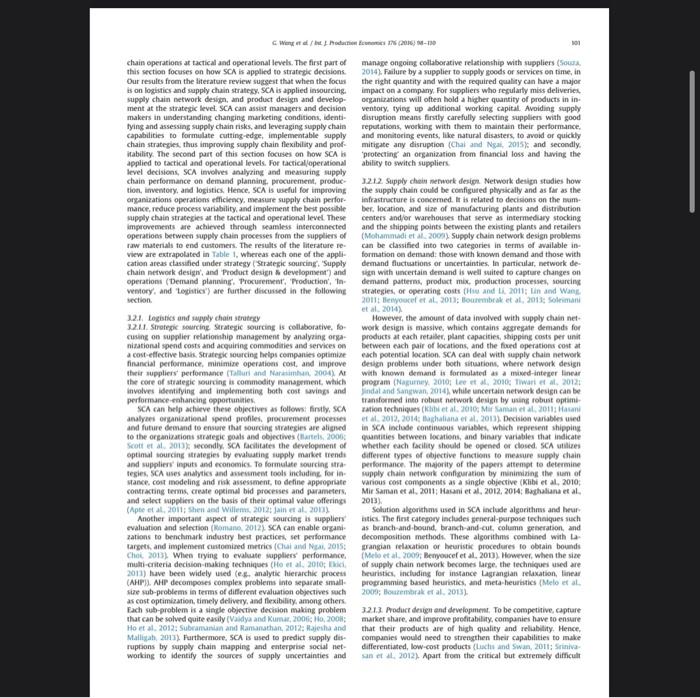
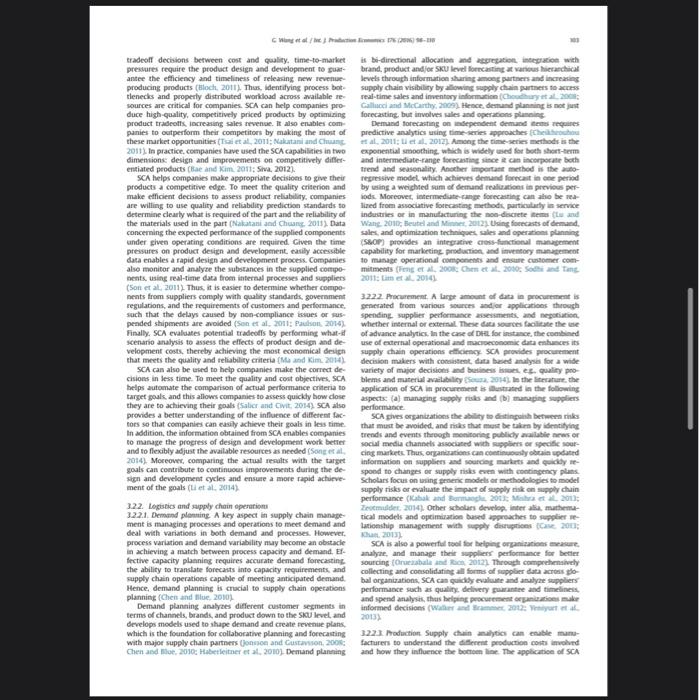
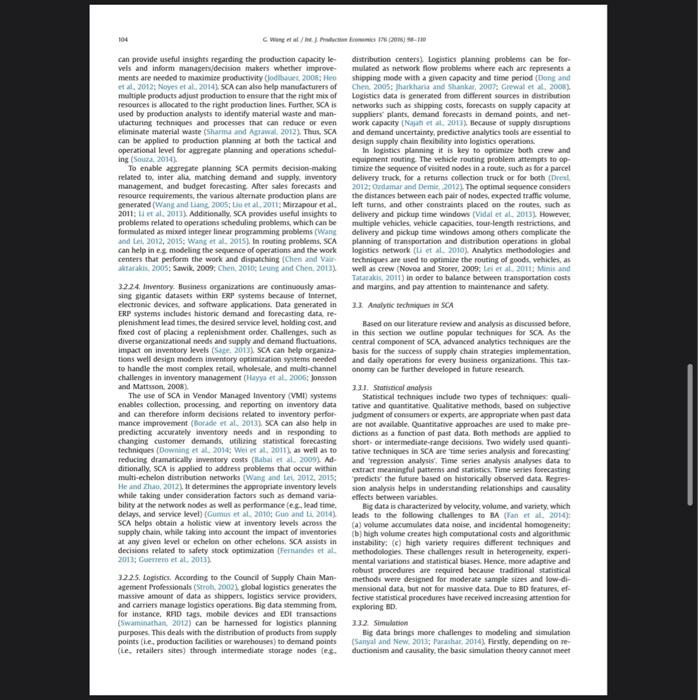
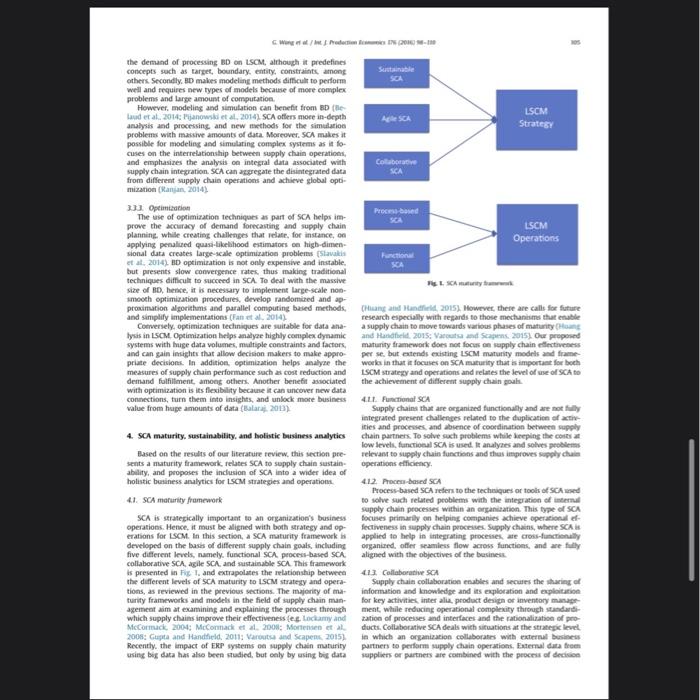
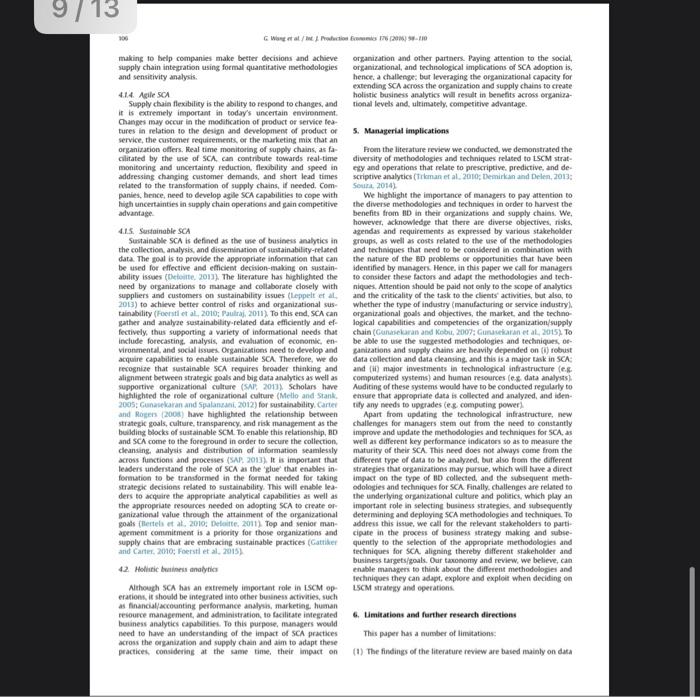
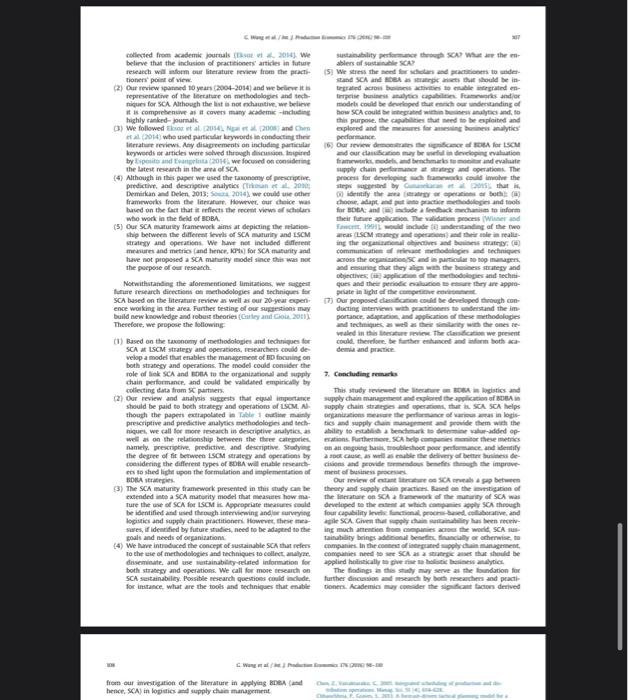
1. Introduction currently missing from the literature (Trioman et al. 2010: De mirkan and Delen. 2013: Souza, 2014): () synthesize the findings The widespread use of digital technologies has led to the of the literature review and propose a maturity framework of SCA emergence of big data business analytics (BDBA) as a critical based on five capability levels, that is, functional process-based, business capability to provide companies with better means to collaborative. agile SCA and sustainable SCA: (H) highlight the obtain value from an increasingly massive amount of data and gain role of SCA for LSCM, and stress the importance for companies to a powerful competitive advantage (Chen et al. 2012) BDBA in- acknowledge SCA as a strategic asset to be understood and in- corporates two dimensions: big data (BD) and business analytics tegrated holistically to enable the creation of business analytics (BA) BD refers to the ability to process data with the following capabilities, and (iv) identify future research directions qualities: velocity, variety, and volume. Analytics involves the The main contributions of this paper are (t) to present a review ability to gain insight from data by applying statistics, mathe- of the literature on SCA based on the nature of analytics (de- matics, econometrics, simulations, optimizations, or other techni- scriptive, predictive, prescriptive) and the focus of the SCM ques to help business organizations make better decisions (A (strategy or operations): (ii) assess the capabilities of SCA through centure Global Operations Megatrends Study. 2014). BDBA has proposing a maturity framework based on our review of the lit- attracted significant attention from researchers and decision ma- erature: (1) highlight the role of SCA in achieving organizations kers in organizations. It has been used in research to verify existing success, and (iv) acknowledge the importance of SCA as strategic models or theories, and in industry to enable business organiza- asset to be applied holistically for creating business analytics tions make better decisions (Muhtaroglu et al. 2013), particularly capabilities in logistics and supply chain management (SCM) (Wamba et al. 2015) Big data analytics in LSCM has received increasing attention 2 Framework and methodology used for the review of the because of its complexity and the prominent role of LSCM in im- literature on applications of BDBA within LSCM proving the overall business performance. Based on the survey conducted by Accenture (2014). more than one-third of the re- 2.1. Framework for the classification of the literature spondents reported being engaged in serious conversations to deploy analytics in LSCM; and three out of ten already have an Scholars have attempted to classify the literature on BDBA initiative in place to implement analytics. LSCM faces the most within LSCM by paying attention to different definitions and per- significant challenges that can potentially result in inefficiencies spectives, and aimed to identify opportunities for further research. and wastage in supply chains, such as delayed shipments, rising For instance, Wamba et al. (2015) have highlighted the role of fuel costs, inconsistent suppliers, and ever-increasing customer value creation from BD in real-time access and sharing of in- expectations, among others (Barnaghi et al., 2013). Companies formation across national governmental agencies that allows im- highly expect to capitalize on BDBA in logistics and supply chain proved decision-making and subsequently emergency service re- operations to improve the visibility, flexibility, and integration of sponse, as well as transparency and accountability across the global supply chains and logistics processes, effectively manage governmental agencies. However, their main focus is on defining demand volatility, and handle cost fluctuations (Genpact. 2014. In BD based on attributes such as volume, velocity, variety value and the strategic phase of supply chain planning, BDBA plays a vital veracity. In this paper we are not focusing on solely on different role. It has been applied to help companies make strategic deci- definitions of BDBA: rather, we draw on the taxonomy of analytics sions on sourcing, supply chain network design, as well as on under three main categories: descriptive. predictive and pre- product design and development. In the operational planning scriptive analytics (Tilman et al. 2010; Demirkan and Delen, 2013; phase, BDBA has been used to assist management in making Souta 2014 supply chain operation decisions, which often include demand planning, procurement, production, inventory, and logistics (2) Descriptive analytics takes place either at standardized peri- Current studies on the application of BDBA within LSCM - that ods or whenever needed using techniques such as online we define in this study as supply chain analytics (SCA) - have fo- analytical processing (OLAP) or drill down, and aims at iden- cused mainly on analyzing definitions and different perspectives tifying problems and opportunities within existing processes (Wamba et al. 2015), or identifying opportunities for supply chain and functions. research and education (Waller and Fawcett. 2013). However, (b) Predictive analytics involves the use of mathematical algo these scholars emphasize that BDBA is still in its infancy and there rithms and programming to discover explanatory and pre- are yet studies to explore BDBA in LSCM. To address the concerns dictive patterns within data. The aim of this type of analytics is of these scholars and extend their studies, we (1) review the lit- to accurately project what will happen in the future and erature related to the application of BDBA in LSCM (that we define provide reasons as to why it may happen. Predictive analytics as: SCA) through a framework for classifying the literature. In is enabled by the use of techniques such as datatext/web particular we draw on a taxonomy of SCA that classifies analytics mining and forecasting (Demirkan and Delen, 2013) into predictive prescriptive, and descriptive categories, which is () Prescriptive analytics involves the use of data and Want / hod 2-10 chain operations at tactical and operational levels. The first part of manage ongoing collaborative relationship with suppliers (Sout. this section focuses on how SCA is applied to strategic decisions 2014). Failure by a supplier to supply goods or services on time, in Our results from the literature review suggest that when the focus the right quantity and with the required quality can have a major is on logistics and supply chain strategy. SCA is applied insourcing impact on a company, For suppliers who regularly miss deliveries supply chain network design and product design and develop organizations will often hold a higher quantity of products in in ment at the strategic level. SCA can asset managers and decision ventory, tying up additional working capital. Avoiding supply makers in understanding changing marketing conditions, identi disruption means firstly carefully selecting suppliers with good Tying and assessing supply chain risks, and leveraging supply chain reputations, working with them to maintain their performance. capabilities to formulate cutting-edge, implementable supply and monitoring events, like natural disasters, to avoid or quickly chain strategies, thus improving supply chain flexibility and prof mitigate any disruption (Chaland N, 2015% and secondly, itability. The second part of this section focuses on how SCAIS protecting an organization from financial loss and having the applied to tactical and operational levels. For tactical operational ability to switch suppliers level decisions, SCA involves analyzing and measuring supply chain performance on demand planning procurement, produc 3212 Supply chain network design Network design studies how tion, inventory, and logistics. Hence, SC is useful for improving the supply chain could be configured physically and as far as the organizations operations efficiency, measure supply chain perfor infrastructure is concerned. It is related to decisions on the num mance, reduce process variability, and implement the best possible ber. location, and size of manufacturing plants and distribution supply chain strategies at the tactical and operational level. These centers and/or warehouses that serve as intermediary stocking Improvements are achieved through seamless interconnected and the shipping points between the existing plants and retailers operations between supply chain processes from the suppliers of (Mohammadi et al. 2009) Supply chain network design problems raw materials to end customers. The results of the literature te can be classified into two categories in terms of available in view are extrapolated in Table 1, whereas each one of the appli formation on demand those with known demand and those with cation areas classified under strategy Strategic Sourcing Supply demand fluctuations or uncertainties. In particular, network de- chain network design, and Product design development and sign with uncertain demand is well suited to capture changes on operations (Demand planning Procurement Production to demand patterns, product mix production processes, sourcing ventory, and Logistics) are further discussed in the following strategies, or operating costs (Hiu and L. 2011; Lin and Want section 2011: llenyouce et al. 2011. urembak et al. 2013: Solimani et al. 2014) 1.2.1. Logistics and supply chain strategy However, the amount of data involved with supply chain net 22.11. Strategic sourcing Strategic sourcing is collaborative, fo work design is massive, which contains aggregate demands for cusing on supplier relationship management by analyzing og products at each retailer, plant capacities, shipping costs per unit nizational spend costs and acquiring commodities and services on between each pair of locations, and the foed operations costat a cost-effective Strategi forcing helps companies optimize each potential location. SCA can deal with supply chain network financial performance, minimize operations cost and improve design problem under both situations, where network design their suppliers performance (alturland Narasimhan, 2004) At with known demand formulated as a mixed-integer linear the core of strategic Mouring is commodity management, which program (Nagurey, 2010; 2010: Tiwari et al. 2012: involves identifying and implementing both cost savings and Jindaland Sangwan, 2014) while uncertain network design can be performance enhancing opportunities transformed into robust network design by using robust optimi SCA can help achieve these objectives as follows: fint, SCA ration techniques et al. 2010; Mir Santana 2011 Hasani analyzes organizational spend profiles procurement processes 2013, 2014, Ishallana et al. 2011) Decision variables used and future demand to ensure that sourcing mrategies are aligned in SCA include continuous variables which represent shipping to the organizations strategic goals and objectives (Bartels 2000 quantities between locations, and binary variables that indicate Scott et al. 2013 secondly, SCA facilitates the development of whether each facility should be opened or closed. SCA utiles optimal sourcing strategies by evaluating supply market trends different types of objective functions to measure supply chain and suppliers inputs and economics. To formulate sourcing ra performance. The majority of the pers attempt to determine tegies, SCA uses analytics and assement tools including for in supply chain network configuration by minimizing the sum of sance cost modeling and risk assessment, to define appropriate various cost components as a single objective (Klibi et al, 2010, contracting terms, create optimal bid processes and parameters, Mir Saman et al. 2011: Hasani et al. 2012, 2014: Baghaliana et al. and select suppliers on the basis of their optimal value offerings 2013) (Apte et al. 2011; Shen and Willen 2012: Jain et al. 200 Solution algorithms used in SCA include algorithms and her Another important aspect of strategic sourcing is suppliers istics. The first category includes general purpose techniques such evaluation and selection (Roman, 2012) SCA can enable organi as branch-and-bound, branch-and-cut, column seeration, and zations to benchmark industry best practions, set performance decomposition methods. These algorithms combined with a targets and implement customized metrics (Clund, 2015: Brangian relaxation of heuristic procedures to obtain bounds Choi 2013). When trying to evaluate suppliers' performance (Melo et al. 2009; Benyoucef et al. 2003). However, when the size multi-criteria decision-making techniques (Hot al. 2010 of supply chain network becomes targe, the techniques used are 2011) have been widely used (e. analytic hierarchic proces heuristics, including for instance Lagranglan relaxation, linear (AHP). AHP decomposes complex problems into separate small programming based heuristics, and meta-heuristics (Melo et al size sub-problems in terms of different evaluation objectives such 2009; Boumrak eral, 2013) as cost optimization, timely delivery, and flexibility, among others. Fach sub-problem is a single objective decision making problem 32.1.3. Product design and development. To be competitive capture that can be solved quite easily (Vaidya and Kumar, 2006, 2001; market share and improve profitability companies have to ensure Ho et al. 2012: Subramanian and Ramanathan, 2012: Rajesha and that their products are of high quality and reliability. Hence. Malliga 2013) Furthermore, SCA Sused to predict supply dis- companies would need to strengthen their capabilities to make ruptions by supply chain mapping and enterprise social net- differentiated, low-cost products (Lucts and Swan, 2011: Sriniva working to identify the sources of supply uncertainties and Sanet, 2012). Apart from the critical but extremely difficult Contato -1 tradeoff decisions between cost and quality time-to-market is bi-directional allocation and aggregation integration with pressures require the product design and development to guar brand, product and for SKU level forecasting at als hierarchical antee the efficiency and timeliness of releasing new revenue levels through information sharing among partners and increasing producing products (loch2011). Thus, identifying process bot supply chain visibility by allowing supply chain partners to access tlenecks and properly distributed workload across availablere real-time sales and inventory information (Chrystal 2007: sources are critical for companies. SCA can help companies pro Call and McCarthy, 2005. Hence, demand planning is not just duce high quality, competitively priced products by optimising forecasting, but involves sales and operation planning product tradeofts. Increasing sales revenue. It also enables com Demand forecasting on independent demandes panies to outperform their competitors by making the most of predictive analytics using time series approaches (Chei these market opportunities (at al 2011: Nakatani and Chunt al. 2011: 2012). Among the time series methods is the 2011). In practice.companies have used the SCA capabilities in two exponential smoothing, which is widely used for both short-term dimensions design and improvements on competitively differ and intermediate-range forecasting since it can incorporate both entiated products (Bae and Kim 2011: Siva, 2012). trend and seasonality. Another important method is the auto- SCA helps companies make appropriate decisions to give their regressive model, which achieves demand forecast in one persod products a competitive edge. To meet the quality criterion and by using a weighted sum of demand relations in previous per make efficient decisions to assess product reliability companies lods. Moreover, intermediate-cange forecasting can be are willing to use quality and reliability prediction standards to dized from associative forecasting methods, particularly in service determine clearly what is required of the part and the reliability of industries or in manufacturing the non-discrete est and the materials used in the part (Nakatani and Chang 2015). Data Wang, 2010, Beutel and Me, 2012Using forecasts of demand concerning the expected performance of the supplied components sales and optimization techniques sales and operation planning under given operating conditions are required. Given the time (SOP) provides an integrative cross-functional management pressures on product design and development. easily accessible capability for marketing production and inventory managemeo data enables a rapid design and development process. Companies to manage operational components and ensure customer com also monitor and analyze the substances in the supplied compo mitments (Tiens et al. 2008 Chen et al. 2000 Sodhi and Ting nents, using real-time data from internal processes and suppliers 2011: 2014 (Son et al. 2011) Thus, it is easier to determine whether compe- nents from suppliers comply with quality standards, government 3222. Procurement. A large amount of data in procurement is regulations, and the requirements of customers and performance. generated from various sources and applications through such that the delays caused by non-compliance issues or us spending supplier performance assessments and negotiation pended shipments are avoided (Son et al. 2011: Paulson. 2014) whether internal or external These data sources facilitate the use Finally, SCA evaluates potential tradeoffs by performing what- of advance analytics. In the case of DHL for instance, the combined scenario analysis to assess the effects of product design and de use of external operational and macroeconomic data ences its velopment costs, thereby achieving the most economical design supply chain operations eficiency. SCA provides procurement that meets the quality and reliability criteria (Mand Kim.2014) decision makers with consistent data based analysis for a wide SCA can also be used to help companies make the correct de variety of major decisions and business issues, quality pro cisions in less time. To meet the quality and cost objectives, SCA blems and material valability Seun 2014 the literature, the helps automate the comparison of actual performance criteria to application of SCA in procurement is stated in the following target goals, and this allows companies to assess quickly how close aspects: (a) managing supply risks and managing suppliers they are to achieving their goals (Salicr and Civit. 2014) SCA also performance provides a better understanding of the influence of different fac SCA gives organisations the ability to distinguish between risks toes so that companies can easily achieve their goals in less time that must be avoided, and risks that must be taken by dentifying In addition, the information obtained from SCA enables companies trends and events throogh monitoring publicy wallable news or to manage the progress of design and development work better social media channels associated with specific tour- and to flexibly adjust the available resources as needed (Songea cing markets. Thus, organisations can continuously obtain updated 2014). Moreover, comparing the actual results with the target information on supplies and sourcing markets and quickly re- goals can contribute to continuous improvements during the de spond to changes or supply issue with contingency plans sign and development cycles and ensure a more rapid achieve Scholars focus on using een models ar methodologies to model ment of the goals (Li et al. 2014) supply risks or evaluate the impact of supply niskon supply chain performance (Kabak and Bone 2013 Mai 2011; 3.22. Logistics and supply chain operations Zemde 2014). Other scholars develop inter alia, mathema 3.22.1. Demand planning A key aspect in supply chain manage tical models and optimization based approaches to supplier ment is managing processes and operations to meet demand and lationship management with supply disruptions 2001; deal with variations in both demand and processes. However, n. 2013) process variation and demand variability may become an obstacle SCA is also a powerful tool for helping organizations measure in achieving a match between process capacity and demand. Er analyt, and manage the suppliers performance for better fective capacity planning requires accurate demand forecasting sourcing (resbaland 2012 Through comprehensively the ability to translate forecasts into capacity requirements and collecting and consolidating forms of supplies data are lo supply chain operations capable of meeting anticipated demand bal organuations, SCA con quity value and analyze suppliers Hence, demand planning is crucial to supply chain operations performance such as quality delivery grate and timelines planning (Chen and 2010) and spend analysis, thus helping proces make Demand planning analyzes different customer segments in terms of channels, brands, and product down to the SKU level and informed decisions (Water and tramme 2012: 2003) develops models used to shape demand and create revenue plans which is the foundation for collaborative planning and forecasting 322.3 Production Supply chain is can enable man with major supply chain partners (Jonsson and Gustavsson 2008 facturers to understand the different production costsmond Chen and No. 2050: Haberleitner et al., 2010). Demand planning and how they influence the bottom line. The application of SCA 104 cietatem 12-18 can provide useful insights regarding the production capacity le distribution centers Logistics planning problems can be for vels and inform managers decision makers whether improve mulated as network flow problems where each are represents a ments are needed to maximize productivity Codibet 2005: Hoshipping mode with a given capacity and time period (Dong and et al. 2012: Noyes et al. 2014). SCA can also help manufacturers of Chen, 2005: Jharkhand and Shankar, 2007: Grewal et al. 2008 multiple products adjust production to ensure that the right mix of Logistics data is generated from different sources in distribution resources is allocated to the right production lines. Further, SCALS networks such as shipping costs, forecasts on supply capacity at used by production analysts to identity material waste and man- suppliers plants, demand forecasts in demand points, and net- ufacturing techniques and processes that can reduce or even work capacity (Naja et al. 2005). Because of supply disruptions eliminate material waste (Sharma and Agrawal. 2012). Thus. SCA and demand uncertainty, predictive analytics tools are essential to can be applied to production planning at both the tactical and design supply chain flexibility into logistics operations operational level for agregate planning and operations schedul In logistics planning it is key to optimize both crew and ing (Soul. 2014 equipment routing The vehicle routing problem attempts to op To enable agregate planning SCA permits decision-making timize the sequence of visited nodes in a route, such as for a parcel related to inter alia matching demand and supply. Inventory delivery truck, for a retums collection truck or for both real management, and budget forecasting After sales forecasts and 2012: Oudamar and Demir, 2012). The optimal sequence considers resource requirements, the various alternate production plans are the distances between each pair of nodes expected traffic volume. generated (Want and Liang 2005: Li et al. 2011: Mirzapour et al.left turns, and other constraints placed on the routes, such as 2011: Let al. 2011). Additionally, SC provides useful insights to delivery and pickup time windows (Vidal et L 2013. However, problems related to operations scheduling problems, which can be multiple vehicles, vehicle capacities, four-length restrictions, and formulated as mixed integer linear programming problems (Wang delivery and pickup time windows among others complicate the and tel. 2012, 2015: Wang et al. 2015). In routing problems, SCA planning of transportation and distribution operations in global can help in es modeling the sequence of operations and the work logistics network (Li et al. 2010). Analytics methodologies and centers that perform the work and dispatching (Chen and a techniques are used to optimize the routing of goods, vehicles, as atarak 2005: Sawik 2009, Chen, 2010 Leung and Chen. 2013) well as crew (Novoa and Storer, 2009: Li et al. 2011: Minis and Tatarakis, 2011) in order to balance between transportation costs 32.24. Inventory. Business organizations are continuously amas and margins, and pay attention to maintenance and safety sing gigantic datasets within ERP systems because of Internet, electronic devices, and software applications. Data generated in 23 Analytic techniques in SCA ERP systems includes historic demand and forecasting data re- plenishment lead times, the desired service level, holding cost and Based on our literature review and analysis as discussed before. fixed cost of placing a replenishment order. Challenges, such as in this section we outline popular techniques for SCA As the diverse organizational needs and supply and demand fluctuations central component of SCA, advanced analytics techniques are the impact on inventory levels (Sage 2013) SCA can help organiza basis for the success of supply chain strategies implementation tions well design modern inventory optimization systems needed and daily operations for every business organizations. This tax- to handle the most complex retail, wholesale, and multi-channel onomy can be further developed in future research challenges in inventory management (Hayye et al. 2006: Jonsson and Mattsson 2008) 33.1. Stanistical analysis The use of SCA in Vendor Managed Inventory (VMI) systems Statistical techniques include two types of techniques quals enables collection processing and reporting on inventory data tative and quantitative. Qualitative methods, based on subjective and can therefore inform decisions related to inventory perfor judgment of consumers or experts are appropriate when pastdata mance improvement (Brade et al. 2013). SCA can also help in are not available. Quantitative approaches are used to make pre- predicting accurately inventory needs and in responding to dictions as a function of past data. Both methods are applied to changing customer demands, utilizing statistical forecasting short or intermediate-range decisions. Two widely used quanti techniques (Downing et al. 2014 Weiler al, 2011) as well as to tative techniques in SCA are Time series analysis and forecasting reducing dramatically inventory costs abal et al. 2009). Ad- and regression analysis. Time series analysis analyses data to ditionally. SCA is applied to address problems that occur within extract meaningful patterns and statistics. Time series forecasting multi-echelon distribution networks (Wang and tel 2012, 2015: predicts the future based on historically observed data. Regres He and Zhao, 2012). It determines the appropriate inventory levels sion analysis helps in understanding relationships and causality while taking under consideration factors such as demand var effects between variables bility at the network nodes as well as performance (ex. lead time. Big data is characterized by velocity, volume, and variety, which delays, and service level) (Gumus et al. 2010; Gun and li, 2014) leads to the following challenges to BA (Yanet al. 2014) SCA helps obtain a holistic view at inventory levels across the (a) volume accumulates data noise, and incidental homogeneity: supply chain, while taking into account the impact of investories b) High volume creates high computational costs and algorithm at any given level or echelon on other echelons, SCA assists in instability (c) high variety requires different techniques and decisions related to safety stock optimization (Fernandes et al methodologies. These challenges result in heterogeneity, experi 2013; Guerrero et al. 2013) mental variations and statistical biasek. Hence, more adaptive and robust procedures are required because traditional statistical 3225. Logistics. According to the Council of Supply Chain Man methods were designed for moderate sample sizes and low.de agement Professionals Stro, 20021 slobal Logistics generates the mensional data, but not for massive data. Due to BD features. ef- massive amount of data as shippers, logistics service providers. fective statistical procedures have received increasing attention for and carries manage logistics operations. Big data stemming from exploring BD. for instance, RFID tags, mobile devices and EDI transactions (Swaminathan, 2012) can be harnessed for logistics planning 332 Simulation purposes. This deals with the distribution of products from supply Big data brings more challenges to modeling and simulation points (ie, production facilities or warehouses) to demand points (Sanyal and New. 2013: Parashat 2014 Firstly, depending on te (ie retailers sites) through intermediate storage nodes (es. ductionism and causality, the basic simulation theory Cannot meet the demand of processing BD on LSCM, although it predefines concepts such as target, boundary, entity, constraints, among Serttainable others. Secondly, BD makes modeling methods difficult to perform well and requires new types of models because of more complex problems and large amount of computation However, modeling and simulation can benefit from the Laud et al. 2014 janowski et al. 2014). SCA offers more in-depth LSCM ASCA analysis and processing and new methods for the simulation Strategy problems with massive amounts of data. Moreover, SCA makes it possible for modeling and simulating complex systems as it fo. cuses on the interrelationship between supply chain operations, and emphasizes the analysis on integral data associated with Collaborative supply chain integration. SCA can aggregate the disintegrated data SCA from different supply chain operations and achieve global opti- mization (Ranjan, 2014) 33 Optimization Proces based The use of optimization techniques as part of SCA helps im- prove the accuracy of demand forecasting and supply chain LSCM planning, while creating challenges that relate, for instance, on Operations applying penalued quasi-likelihood estimators on high-dimen- sional data creates large-scale optimization problems (Stavak et al. 2014). BD optimization is not only expensive and instable but presents slow convergence rates, thus making traditional techniques difficult to succeed in SCA To deal with the massive size of BD, hence, it is necessary to implement large-scale non- smooth optimization procedures, develop randomized and ap- proximation algorithms and parallel computing based methods, (Huang and an 2015). However, there are calls for future and simplify implementations (Fan et al. 2014) research especially with regards to those mechanisms that enable Conversely, optimization techniques are suitable for data ana-a supply chain to move towards various phases of maturity Con lysis in SCM Optimization helps analyze highly complex dynamic and Handfield 2015: Vous and Sapiens 2015). Our proposed systems with huge data volumes, multiple constraints and factors, maturity framework does not focus on supply chain effectiveness and can gain insights that allow decision makers to make approper se, but extends existing LSCM maturity models and frame priate decisions. In addition, optimization helps analyze the works in that is focuses on SCA maturity that is important for both measures of supply chain performance such as cost reduction and SCM strategy and operations and relates the level of use of SCADO demand fulfillment among others. Another benefit associated the achievement of different supply chain goals with optimization is its flexibility because it can uncover new data connections, turn them into insights, and unlock more business 41. Functional SCA value from hupe amounts of data (Balaraj, 2013) Supply chains that are organized functionality and are not integrated present challenges related to the duplication of the ities and processes and absence of coordination between supply 4. SCA maturity, sustainability, and holistic business analytics chain partners. To solve such problems while keeping the costs low levels, functional SCA is used in analyses and solve problems Based on the results of our literature review this section pre- relevant to supply chain functions and thus improves supply chain sents a maturity framework relates SCA to supply chain sustain operations efficiency ability, and proposes the inclusion of SCA into a wider idea of holistic business analytics for LSCM strategies and operations 412 Proces based SCA Process-based SCA refers to the techniques or tools of SCA 41. SCA maturity framework to solve such related problems with the integration of internal supply chain processes within an organization. This type of SCA SCA is strategically important to an organization's business focuses primarily on helping companies achieve operationale operations. Hence, it must be aligned with both strategy and opfectiveness in supply chain processes. Supply chains, where SCA I erations for ESOM. In this section, a SCA maturity framework applied to help in integrating processes are cross-functionally developed on the basis of different supply chain goals, including organized. offer seamless flow across functions, and are fully five different levels, amely functional SCA process-based SCA aligned with the objectives of the business collaborative SCA agile SCA and sustainable SCA This framework is presented in 1. and extrapolates the relationship between 412 Collaborative SCA the different levels of SC maturity to ISCM strategy and opera- Supply chain collaboration enables and secure the sharing of tions, as reviewed in the previous sections. The majority of ma information and knowledge and its exploration and exploitation turity frameworks and models in the field of supply chain man for key activities inter alia, product design or inventory manage agement aim at examining and explaining the processes through ment, while reducing operational complexity through standard which supply chains improve their effectiveness(es. Lachamy and zation of processes and interfaces and the rationalization of pro McCormack 2004: McCormack et al. 2008: Mortensen er ducts. Collaborative SCA deals with situations at the strategic level 2005: Gupta and Handfield 2011: Varouts and Scapens 2015) in which an organization collaborates with external business Recently, the impact of ERP systems on supply chain maturity partners to perform supply chain operations External data from using big data has also been studied, but only by using big data suppliers or partners are combined with the process of decision 9/13 Wat/But Production 2010 making to help companies make better decisions and achieve organization and other partners. Paying attention to the social, supply chain integration using formal quantitative methodologies organizational, and technological implications of SCA adoption is and sensitivity analysis. hence, a challenge but leveraging the organizational capacity for extending SCA across the organization and supply chains to create 4.14. Agile SCA holistic business analyties will result in benefits across organiza Supply chain flexibility is the ability to respond to changes, and tional levels and ultimately, competitive advantage it is extremely important in today's uncertain environment Changes may occur in the modification of product or service tea tures in relation to the design and development of product or 5. Managerial implications service, the customer requirements, or the marketing mix that an organization offers. Real time monitoring of supply chains, as fa From the literature review we conducted, we demonstrated the cilitated by the use of SCA. can contribute towards real-time diversity of methodologies and techniques related to LSCM strat- monitoring and uncertainty reduction flexibility and speed in egy and operations that relate to prescriptive predictive, and de addressing changing customer demands, and short lead times scriptive analytics (Trkman et al. 2010: Demirkan and Delen. 2013: related to the transformation of supply chains, if needed. Com Soul. 2014) panies, hence need to develop agile SCA capabilities to cope with We highlight the importance of managers to pay attention to high uncertainties in supply chain operations and gain competitive the diverse methodologies and techniques in order to harvest the advantage benefits from ID in their organizations and supply chains. We however, acknowledge that there are diverse objectives, risks, 415 Sustainable SCA agendas and requirements as expressed by various sta lder Sustainable SCA is defined as the use of business analytics in groups, as well as costs related to the use of the methodologies the collection, analysis, and dissemination of sustainability-related and techniques that need to be considered in combination with data. The goal is to provide the appropriate information that can the nature of the BD problems or opportunities that have been be used for effective and efficient decision-making on sustain identified by managers. Hence, in this paper we call for managers ability issues (Deloitte 2013). The literature has highlighted the to consider these factors and adapt the methodologies and tech- need by organizations to manage and collaborate closely with niques. Attention should be paid not only to the scope of analytics suppliers and customers on sustainability issues (leppelte a and the criticality of the task to the clients activities, but also to 2013) to achieve better control of risks and organizational sus whether the type of industry (manufacturing or service industry tainability (Foerstet al. 2010; Paulraj, 2011). To this end, SCA can organizational goals and objectives, the market, and the techno gather and analyze sustainability-related data efficiently and ef- logical capabilities and competencies of the organization supply fectively, thus supporting a variety of informational needs that chain (Gunasekaran and Keb, 2007: Gunasekaran et al. 2015). To include forecasting analysis, and evaluation of economic en be able to use the suggested methodologies and techniques, or vironmental and social issues Organizations need to develop and Banizations and supply chains are heavily depended on (1) robust acquire capabilities to enable sustainable SCA. Therefore, we do data collection and data cleansing, and this is a major task in SCA: recognize that sustainable SCA requires broader thinking and and major investments in technological infrastructures alignment between strategic goals and big data analytics as well as computerized systems) and human resources (es data analysts) supportive organizational culture (SAR 2013) Scholars have Auditing of these systems would have to be conducted regularly to highlighted the role of organizational culture (Mello and Stank ensure that appropriate data is collected and analyzed, and iden- 2005: Gunasekaran and Spalanan 2012) for sustainability. Carter tify any needs to upgrades les computing power and Rogers 2005) have highlighted the relationship between Apart from updating the technolopical infrastructure, new strategic goals, culture, transparency and risk management as the challenges for managers stem out from the need to constantly building blocks of sustainable SCM. To enable this relationship, BD improve and update the methodologies and techniques for SCA, as and SCA come to the foreground in order to secure the collection, well as different key performance indicators so as to measure the cleansing, analysis and distribution of information seamlessly maturity of their SCA. This need does not always come from the across functions and processes (SAP. 2013). It is important that different type of data to be analyzed, but also from the different leaders understand the role of SCA as the glue that enables in strategies that organizations may pursue, which will have a direct formation to be transformed in the format needed for taking impact on the type of collected, and the subsequent meth- strategic decisions related to sustainability. This will enable le odologies and techniques for SCA. Finally, challenges are related to ders to acquire the appropriate analytical capabilities as well as the underlying organizational culture and politics, which playan the appropriate resources needed on adopting SCA to create or important role in selecting business strategies and subsequently ganizational value through the attainment of the organizational determining and deploying SCA methodologies and techniques. To goals (Bertels et al. 2010. Deloitte 2011)Top and senior man address this issue, we call for the relevant stakeholders to parti agement commitment is a priority for those organizations and cipute in the process of business strategy making and subie supply chains that are embracing sustainable practices (Gattider quently to the selection of the appropriate methodologies and and Carter 2010; Foerstet al. 2015) techniques for SCA aligning thereby different stakeholder and business targets goals. Our taxonomy and review, we believe, can 42 Hollistic benalytics enable managers to think about the different methodologies and Techniques they can adapt. explore and exploit when deciding on Although SCA has an extremely important role in SCM op LSCM strategy and operations erations, it should be integrated into other business activities, such as financial accounting performance analysis, marketing. human resource management, and administration, to facilitate integrated 6. Limitations and further research directions business analytics capabilities. To this purpose, managers would need to have an understanding of the impact of SCA practices This paper has a number of limitations across the organization and supply chain and aim to adapt these practices considering at the same time their impact on (1) The findings of the literature review are based mainly on data purpose the and thes collected from academik jurnals 2014. We sustainability for the SC What are them believe that the inclusion of practitioners articles in future ables of sustain SCA research will inform our literature review from the pac 15 We stress the need for stars and partners to under tioners point of view stand SCA and Acould be i (2) Our review speed 10 years (2004-2014) and we believe tegrated across the cable grated representative of the literature on methodologies and tech tiple business is a famosandor niques for SCA Although the list is not exchantie, we believe models could be developed that the standing of it is comprehensive as covers many academ-including capabilities that need to be exploited ) We followed kent et al. 2004 2005 and we 2014 who and the foreigners analytics particular keywords in contacting the lineature reviews. Any disagreements on including particular de cance for SCM keywords articles were solved through discussion Inspired by pando Logota 2016, we focused on considering framework, sodels and benchmarts and evaluate the latest research in the area of SCA phy chain performance in the Although in this paper we used the money free predictive and descriptive analytics in 2010 eps by Pc foram cone the Demikian and Delen. 2015: 2014, we could use the identify the rear both frameworks from the literature. Howeveur die was cho ta patologies and tools based on the fact that it fits the recent virs of scholars for BBA andade dock secam to inform who work in the field of BOBA their application The Name process (War and (5) OSCA mature framework aims at depicting the nation 1901 would include onderstanding of the two ship between the different levels of SCA maturity and SCM SCM dhe line Strategy and operations. We have not included different the organismentes a measures and metrics and bener, or for SCA maturity and communication techniques have not proposed a SCA maturity model since this was not across the do mars the purpose of our research they weathebess strategy and Notwithstanding the aforementioned limitations weet they are appro future research direction methodologies and techniques for priate in light of the compete podda ence working in the area. Further testing of our suggestions may build new knowledge and robust theories Catey and Go 2001 portance di andation of these methodologies Therefore, we propose the following techniques, as well as they with the ones te (1) Based on the taxonomy of methodologies and techniques for waled in this catevi The dance we present could, there be further enhanced and for both SCALSCM strategy and operations, researchers could de demia and practice velop a model that enables the management of BD focusing on both strategy and operations. The model could consider the role of link SCA and DHA to the organizational and apply 7. Concluding remarks chain performance and could be validated empirically by collecting data from the This study reviewed the logistics and (2) Our review and analysis suggests that equal importance supply chain management and explore the application of BDOBA should be puid to boch strategy and operations of LSOM, AL supply chain strategies and operations, the SCA SCA helps though the paper extrapolated in Table 1 ule mainly organizaciones measure the performance of various in logo prescriptive and predictive analysis methodologies and tech and supply chain management and provide them with the hiquet, we call for more research in descriptive analytics ity to bend en added op- well as on the relationship between the three categories Putements the degree of dit between SCM strategy and operation by a cause, as well as the delivery of better unde considering the different types of soka will enables com and provide med benefits to the improve ee to shed light upon the formulation and implementation of meat of business proces BDBA strategies Our view of states SC sp between k presented in this study can be theory and supply chain reacties Based the vestigation 3) the of Ture the use of SCA for ISCM & Appropriate measures could developed to the two cap SCA through e identified and used through interviewing andorrying four capability to productive and logistics and supply chain practitioner. However, the ele SCA. Given that she has been the dified by used to be adat sals and needs of our mcmans crowne w SCA christe have introduced the concept of sustainable SCA that redes companies in the comment integrated apply management to the use of methodologies and techniques to collect analyze companies need to see SCA 21 Sturges that should be diseminate and use sestainability related information for applied bei alle press dytics both strategy and operations. We call for more research on The findings as they may serve as the foundation for SCA Sustainability. Possible research questions could code further discussion and by both researchers and pract for instance, what are the tools and techniques that enable Toners. Academics mycosider the stacions derived (4) We from our investigation of the literature in lying BBA and hence. SCA) in logistics and supply chain management !Different answer another chegg answer please! 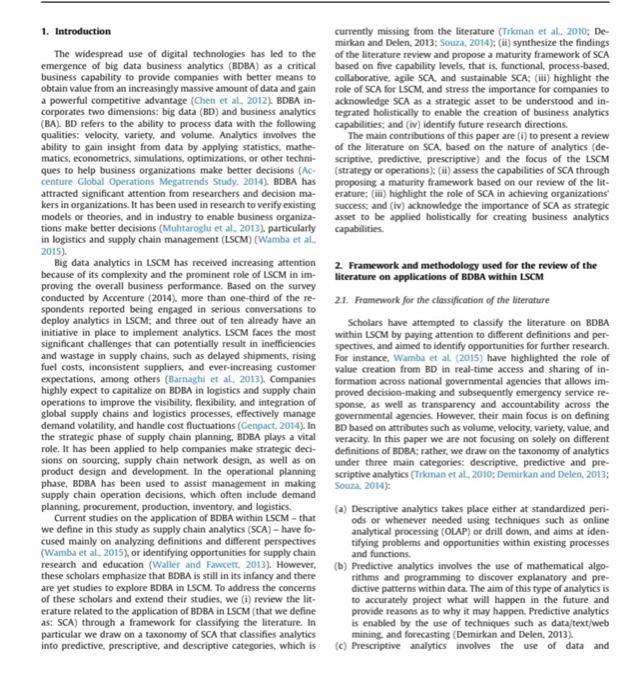
Step by Step Solution
There are 3 Steps involved in it
1 Expert Approved Answer
Step: 1 Unlock

Question Has Been Solved by an Expert!
Get step-by-step solutions from verified subject matter experts
Step: 2 Unlock
Step: 3 Unlock
 Study Help