







Question: You will find two different software licenses. Compare and contrast the two. Who uses each type of license? Compare an open source license, like Creative
You will find two different software licenses. Compare and contrast the two. Who uses each type of license? Compare an open source license, like Creative Commons or the GNU license with Microsoft or Adobes license, if you wish. around two pages please. reading is below. open image in new window to view larger size. thank you
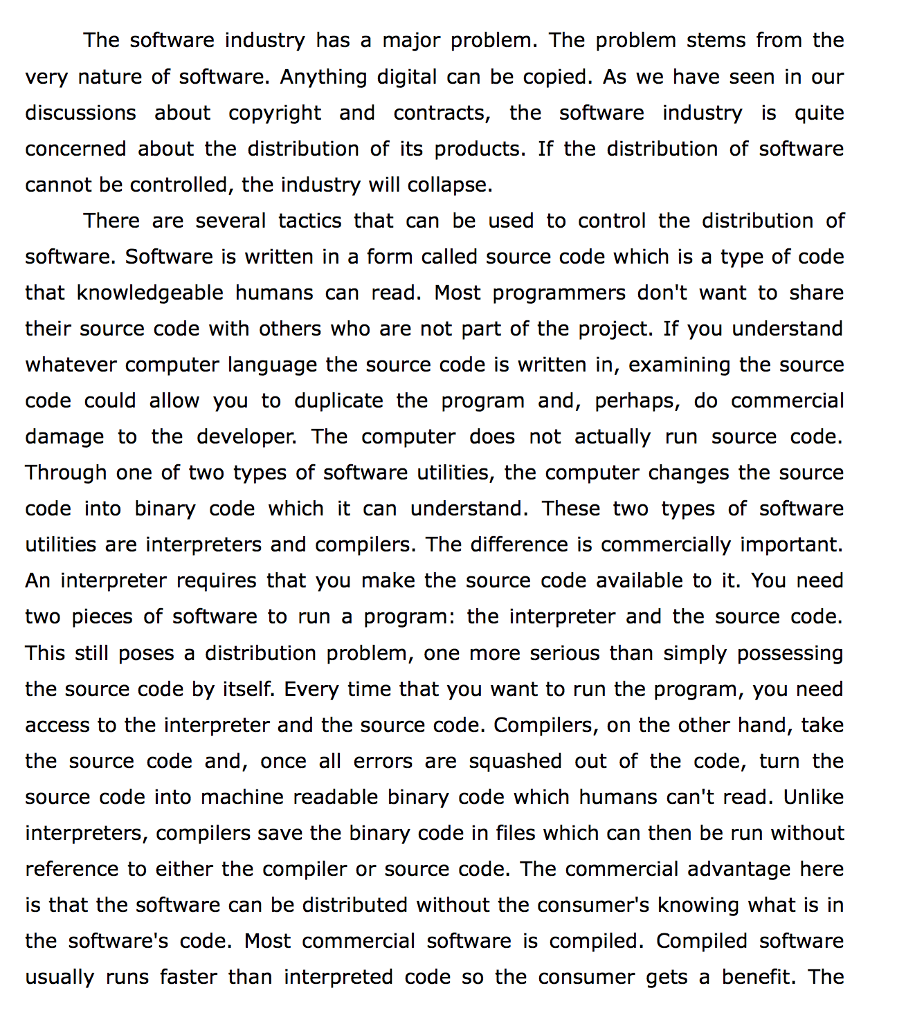
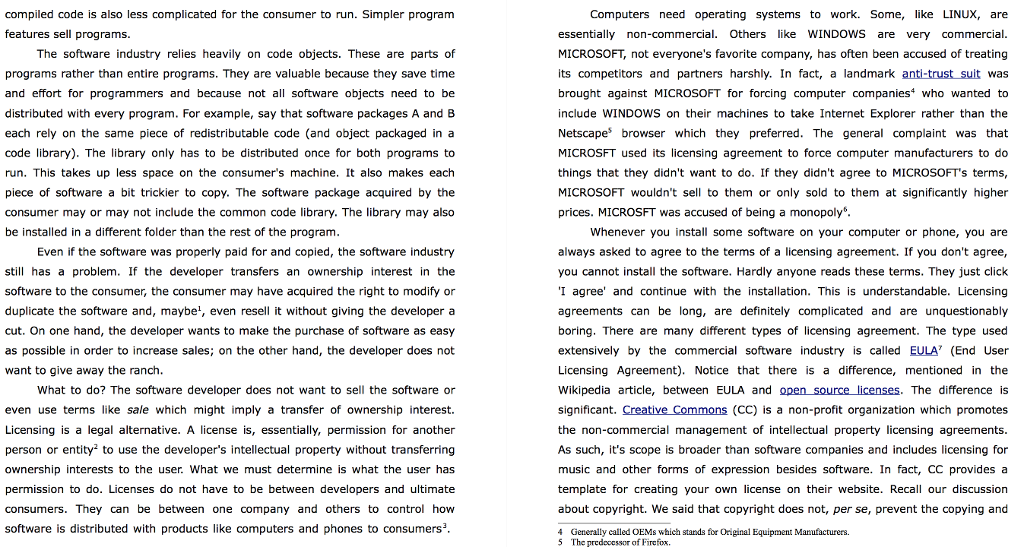
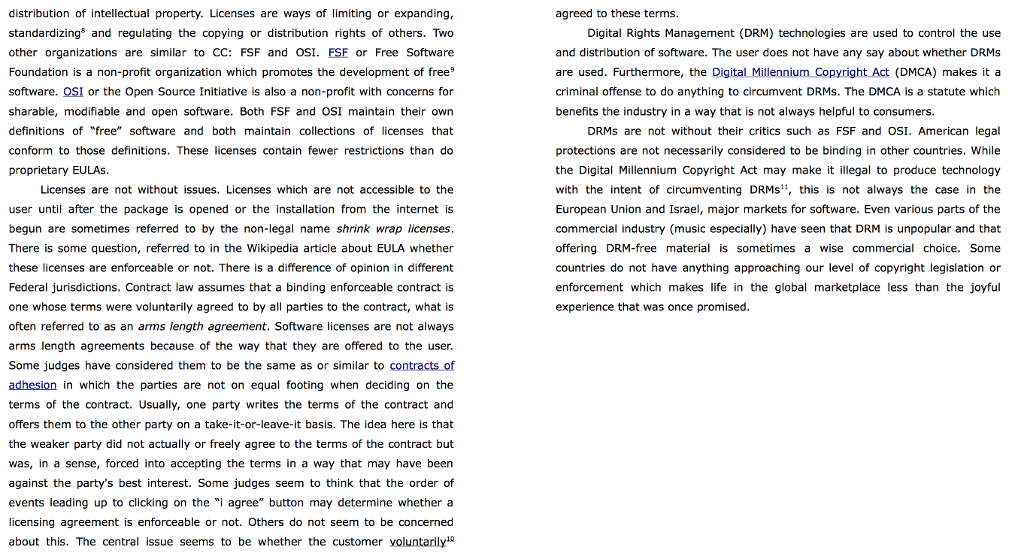
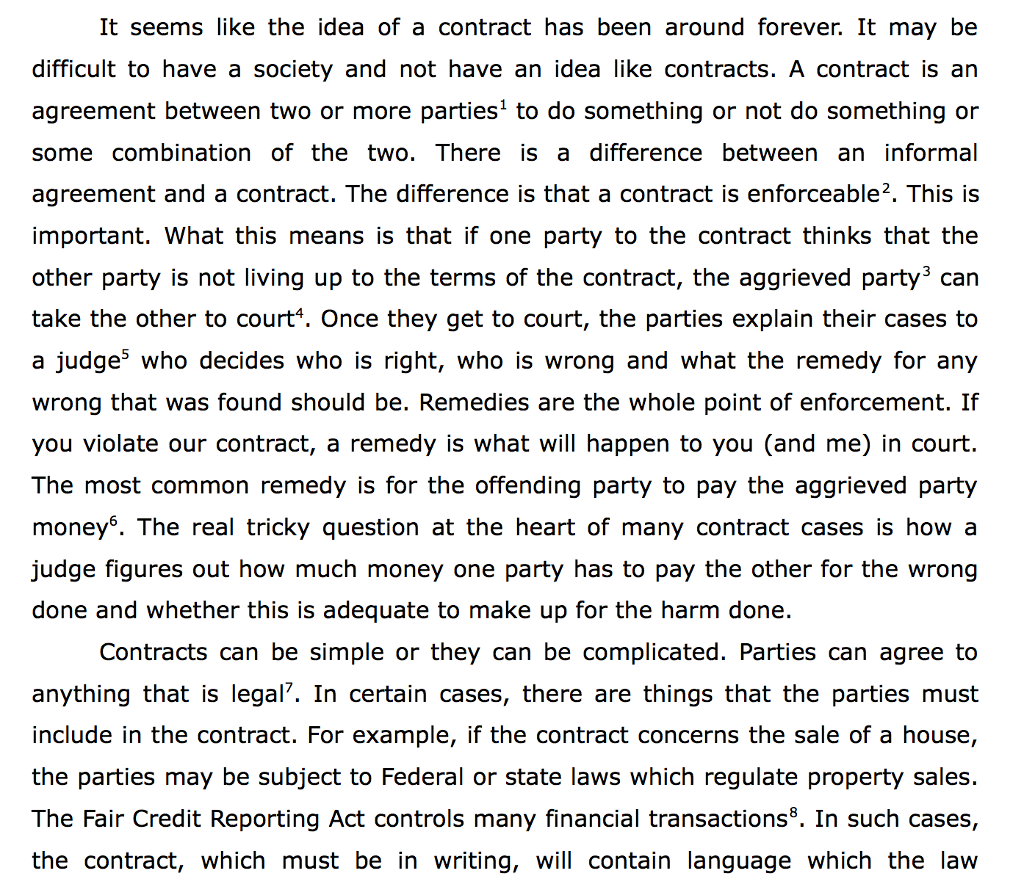
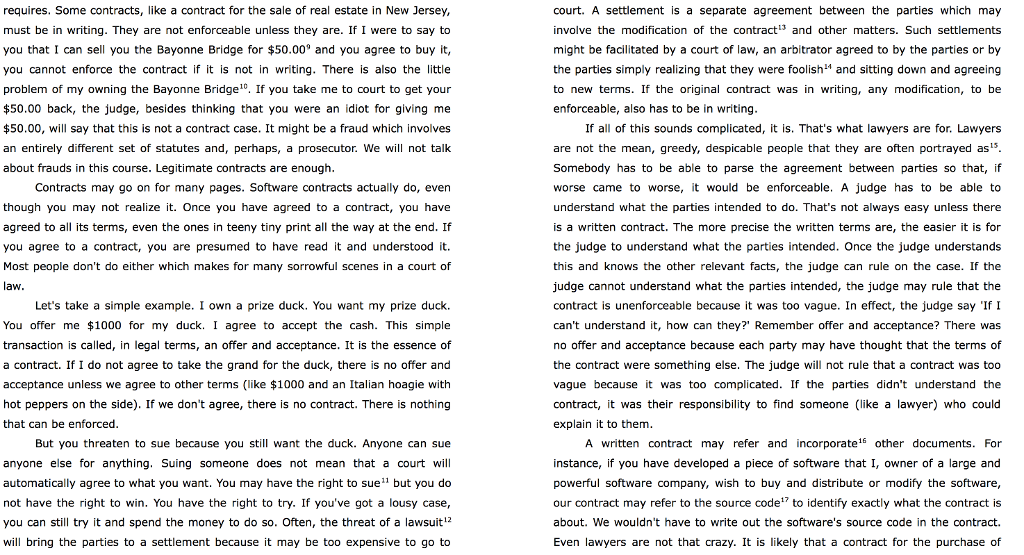
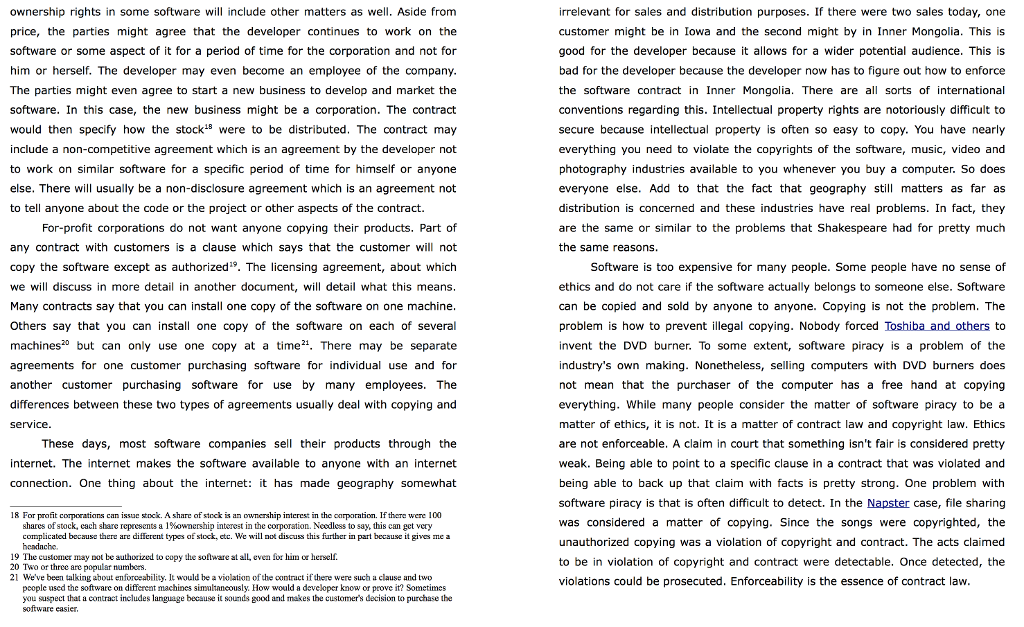
The software industry has a major problem. The problem stems from the very nature of software. Anything digital can be copied. As we have seen in our discussions about copyright and contracts, the software industry is quite concerned about the distribution of its products. If the distribution of software cannot be controlled, the industry will collapse. There are severaltacticsthatcan be used to control the distribution of software. Software is written in a form called source code which is a type of code that knowledgeable humans can read. Most programmers don't want to share their source code with others who are not part of the project. If you understand whatever computer language the source code is written in, examining the source code could allow you to duplicate the program and, perhaps, do commercial damage to the developer. The computer does not actually run source code. Through one of two types of software utilities, the computer changes the source code into binary code which it can understand. These two types of software utilities are interpreters and compilers. The difference is commercially important. An interpreter requires that you make the source code available to it. You need two pieces of software to run a program: the interpreter and the source code. This still poses a distribution problem, one more serious than simply possessing the source code by itself. Every time that you want to run the program, you need access to the interpreter and the source code. Compilers, on the other hand, take the source code and, once all errors are squashed out of the code, turn the source code into machine readable binary code which humans can't read. Unlike interpreters, compilers save the binary code in files which can then be run without reference to either the compiler or source code. The commercial advantage here is that the software can be distributed without the consumer's knowing what is in the software's code. Most commercial software is compiled. Compiled software usually runs faster than interpreted code so the consumer gets a benefit. The
Step by Step Solution
There are 3 Steps involved in it

Get step-by-step solutions from verified subject matter experts
 Study Help