







Question: Your team will create a case using a real-life scenario (one you have personally experienced) that presents a problem for your group to discuss, analyze,
Your team will create a case using a real-life scenario (one you have personally experienced) that presents a problem for your group to discuss, analyze, and solve using Organizational Behavior course material.
Description of Project:
We all have situations in our work lives that we find frustrating, upsetting, or just generally suboptimal and which we believe can be solved or improved using the sorts of things we talk about in the Organizational Behavior class. This is your chance to focus on one such situation. Each team will write a case study which you will then discuss in order to analyze and solve. (A case study is a description of a difficult situation, centered on a decision or challenge faced by the focal actor).
The team project will have three components:
1. Identify the situation (due October 2)
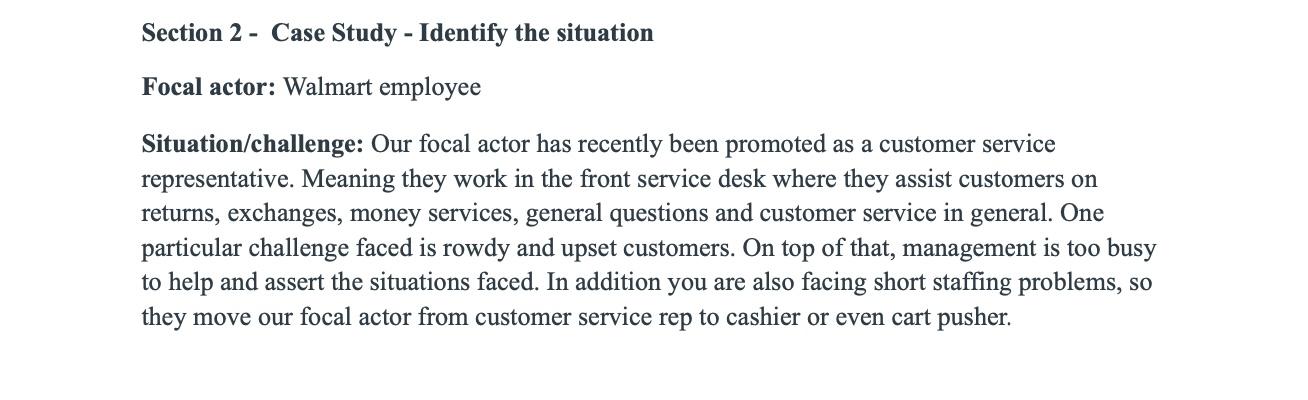
Case studies typically identify a situation with a focal actor, who needs to make a decision and/or take some action. Write a short paragraph to identify your focal actor and the situation/challenge they are facing.
2. Identify the course topics this case study touches on (due October 30)
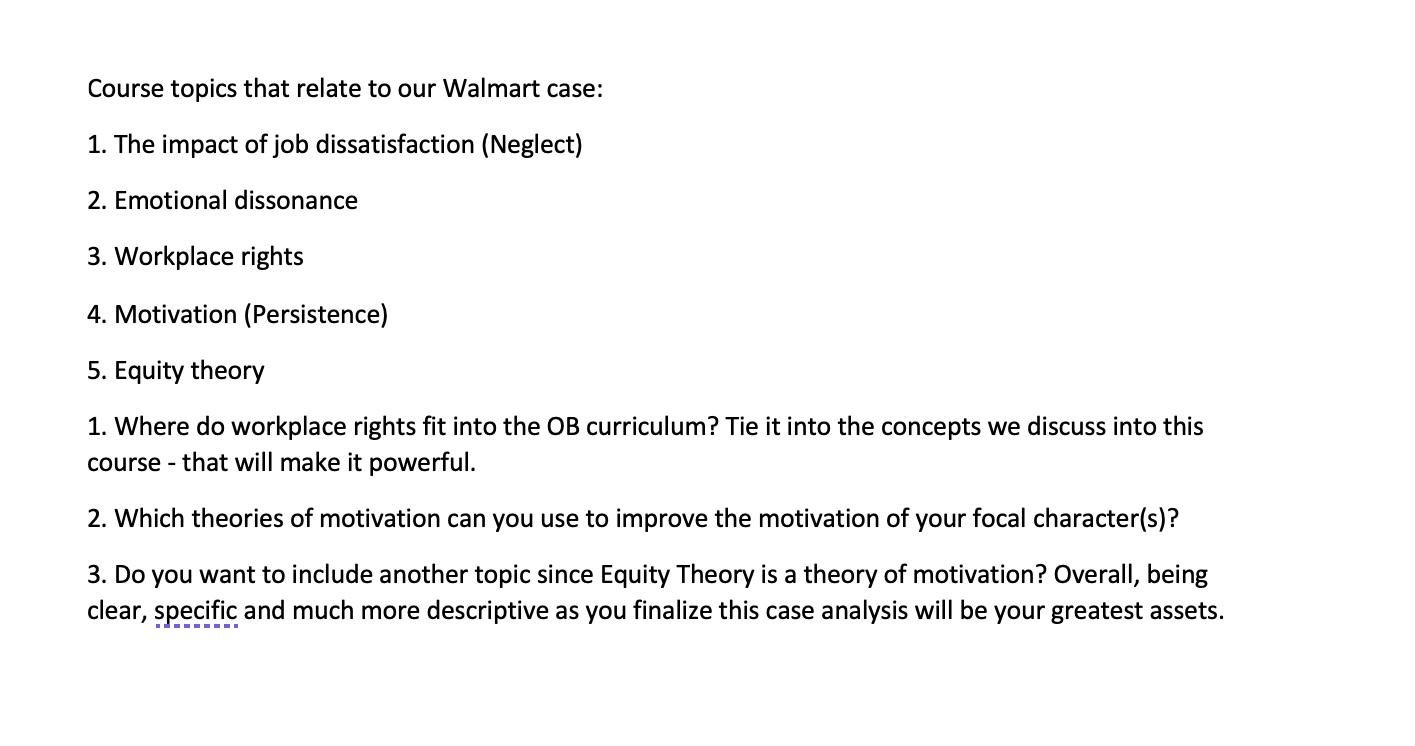
The course topics include those that might explain why the situation is happening, as well as topics that could hold the answers to solving the situation. Any course topic that has been discussed or will be discussed in class is appropriate.
3. Submit the case study, along with your answers to the questions (due December 4)
This is a formal write-up of your case study, along with your solution to the problem you present. It should be 2 - 4 pages (double-spaced). Only one submission is required per group.
Outline for case study:
Opening: introduce the focal actor (name, position, company name, etc.), a very brief overview of the situation the focal actor is in, and the decision that must be made.
Background information: provide relevant background information to help the reader put themselves into the focal actors shoes (e.g., tasks the actor must perform, people the actor must work with, relevant company policies, etc.).
Details on the problem/issue: explore the dilemma facing the focal actor by providing additional context, information the actor had at the time of the case situation, and possible alternatives for how to address the dilemma (exploring alternatives is optional).
Closing: restate the decision the focal actor must make, with relevant tasks or deadlines.
Discussion questions, along with comprehensive answers, integrating relevant course concepts.
Answers to discussion questions
Tips for writing case studies:
The case study should be written in the past tense and from the point of view of the focal actor (e.g., she noticed that the meeting agenda had changed)
Focus on the details that the reader needs to know to understand the situation and setting while also keeping it brief.
You may change people or company names to preserve anonymity of the actors in the case.
Once you have written up the situation, try to think like a professor and come up with discussion-prompting questions. I suggest starting with a general question like What course concepts are reflected in this case? Explain. You can then include reflections on the consequences of a particular situation, invitations to apply particular course material e.g., Considering what we know about leadership, motivation, etc., how do you expect this situation to impact the organization? You can also include decision points e.g., Reflecting on XYZ concepts from the Org. Behavior class, what should Character X do?
When coming up with discussion questions, begin with the end goal in mind (i.e., what do you want to accomplish from the discussion?) and then work backwards to create the discussion questions so that the case write-up will be impactful and integrative.
Step by Step Solution
There are 3 Steps involved in it

Get step-by-step solutions from verified subject matter experts
 Study Help