Question: Zara changes its clothing designs every two weeks on average, while competitors change their designs every two or three months. It carries about 11,000 distinct
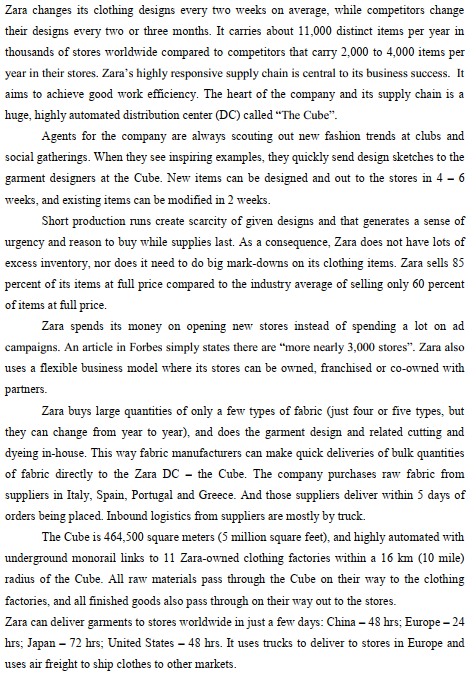
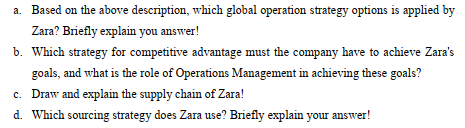
Zara changes its clothing designs every two weeks on average, while competitors change their designs every two or three months. It carries about 11,000 distinct items per year in thousands of stores worldwide compared to competitors that carry 2,000 to 4,000 items per year in their stores. Zara's highly responsive supply chain is central to its business success. It aims to achieve good work efficiency. The heart of the company and its supply chain is a huge, highly automated distribution center (DC) called The Cube". Agents for the company are always scouting out new fashion trends at clubs and social gatherings. When they see inspiring examples, they quickly send design sketches to the gament designers at the Cube. New items can be designed and out to the stores in 4 - 6 weeks, and existing items can be modified in 2 weeks. Short production runs create scarcity of given designs and that generates a sense of urgency and reason to buy while supplies last. As a consequence, Zara does not have lots of excess inventory, nor does it need to do big mark-downs on its clothing items. Zara sells 85 percent of its items at full price compared to the industry average of selling only 60 percent of items at full price. Zara spends its money on opening new stores instead of spending a lot on ad campaigns. An article in Forbes simply states there are "more nearly 3,000 stores. Zara also uses a flexible business model where its stores can be owned, franchised or co-owned with partners. Zara buys large quantities of only a few types of fabric (just four or five types, but they can change from year to year), and does the garment design and related cutting and dyeing in-house. This way fabric manufacturers can make quick deliveries of bulk quantities of fabric directly to the Zara DC - the Cube. The company purchases raw fabric from suppliers in Italy, Spain, Portugal and Greece. And those suppliers deliver within 5 days of orders being placed. Inbound logistics from suppliers are mostly by truck. The Cube is 464,500 square meters (5 million square feet), and highly automated with underground monorail links to 11 Zara-owned clothing factories within a 16 km (10 mile) radius of the Cube. All raw materials pass through the Cube on their way to the clothing factories, and all finished goods also pass through on their way out to the stores. Zara can deliver garments to stores worldwide in just a few days: China - 48 hrs; Europe - 24 hrs; Japan - 72 hrs; United States - 48 hrs. It uses trucks to deliver to stores in Europe and uses air freight to ship clothes to other markets. a. Based on the above description, which global operation strategy options is applied by Zara? Briefly explain you answer! b. Which strategy for competitive advantage must the company have to achieve Zara's goals, and what is the role of Operations Management in achieving these goals? c. Draw and explain the supply chain of Zara! d. Which sourcing strategy does Zara use? Briefly explain your









 Study Help