







Question: Suppose a test for a disease is 80% accurate for those who have the disease (true positives) and 80% accurate for those who do not
Suppose a test for a disease is 80% accurate for those who have the disease (true positives) and 80% accurate for those who do not have the disease (true negatives). Within a sample of 4,000 patients, the incidence rate of the disease matches the national average, which is 1.5%.
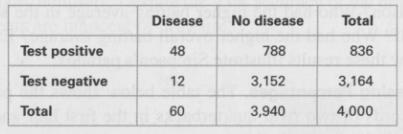
a. Of those with the disease, what percentage test positive?
b. Of those who test positive, what percentage have the disease? Compare this result to the one in part a and explain why they are different.
c. Suppose a patient tests positive for the disease. As a doctor using this table, how would you describe the patient's chance of actually having the disease? Compare this figure to the overall incidence rate of the disease.
Test positive Test negative Total Disease No disease Total 836 3,164 4,000 48 12 60 788 3,152 3,940
Step by Step Solution
3.37 Rating (169 Votes )
There are 3 Steps involved in it
a Of those with the disease 48 out of 60 or 80 test positive b O... View full answer

Get step-by-step solutions from verified subject matter experts
Document Format (1 attachment)

666-M-S-D-A (5692).docx
120 KBs Word File
 Study Help