Model Choice And Model Aggregation(Edition)
Authors:
Gilbert Saporta ,Frederic Bertrand ,Jean Jacques Droesbeke


In Stock: 1 Left
Shipment time
Expected shipping within 2 - 3 DaysPopular items with books
Total Price:
$0
Solution Manual Includes
Price:
$9.99
Book details
ISBN: 2710811774, 978-2710811770
Book publisher: Editions Technip
Book Price $0 : For Over Forty Years, Choosing A Statistical Model Thanks To Data Consisted In Optimizing A Criterion Based On Penalized Likelihood (H. Akaike, 1973) Or Penalized Least Squares (C. Mallows, 1973). These Methods Are Valid For Predictive Model Choice (regression, Classification) And For Descriptive Models (clustering, Mixtures). Most Of Their Properties Are Asymptotic, But A Non-asymptotic Theory Has Emerged At The End Of The Last Century (Birgé-Massart, 1997). Instead Of Choosing The Best Model Among Several Candidates, Model Aggregation Combines Different Models, Often Linearly, Allowing Better Predictions. Bayesian Statistics Provide A Useful Framework For Model Choice And Model Aggregation With Bayesian Model Averaging.In A Purely Predictive Context And With Very Few Assumptions, Ensemble Methods Or Meta-algorithms, Such As Boosting And Random Forests, Have Proven Their Efficiency. This Volume Originates From The Collaboration Of High-level Specialists: Christophe Biernacki (Université De Lille I), Jean-Michel Marin (Université De Montpellier), Pascal Massart (Université De Paris-Sud), Cathy Maugis-Rabusseau (INSA De Toulouse), Mathilde Mougeot (Université Paris Diderot), And Nicolas Vayatis (École Normale Supérieure De Cachan) Who Were All Speakers At The 16th Biennal Workshop On Advanced Statistics Organized By The French Statistical Society. In This Book, The Reader Will Find A Synthesis Of The Methodologies’ Foundations And Of Recent Work And Applications In Various Fields.The French Statistical Society (SFdS) Is A Non-profit Organization That Promotes The Development Of Statistics, As Well As A Professional Body For All Kinds Of Statisticians Working In Public And Private Sectors. Founded In 1997, SFdS Is The Heir Of The Société De Statistique De Paris, Established In 1860. SFdS Is A Corporate Member Of The International Statistical Institute And A Founding Member Of FENStatS—the Federation Of European National Statistical Societies.
Customers also bought these books (16)
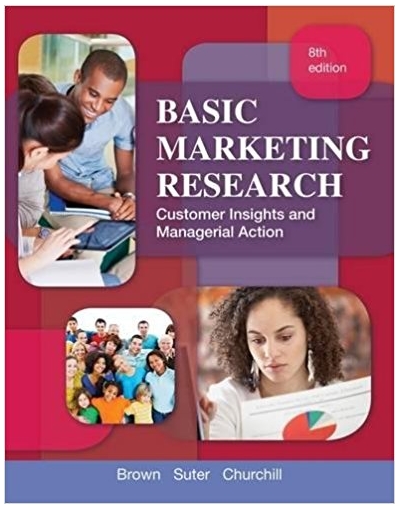
Basic Marketing Research - 8th edition
Tom J. Brown
ISBN: 1133188540, 978-1111525293, 1111525293, 978-1305178571, 1305178572, 978-1133188544
$85.61 $122.30
Differential Equations and Linear Algebra - 2nd edition
Jerry Farlow
ISBN: 131860615, 978-0131860612
$0 $23.85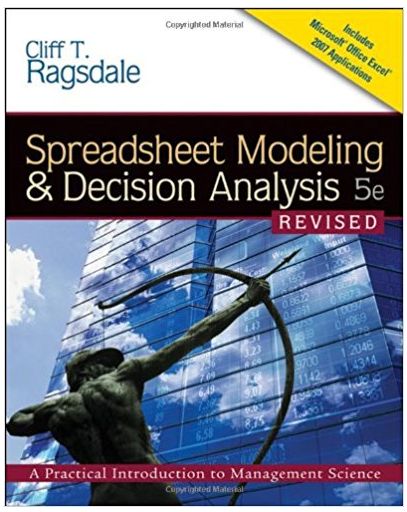
Spreadsheet Modeling And Decision Analysis A Practical Introduction To Management Science - 5th Edition
Cliff T. Ragsdale
ISBN: 324656645, 324656637, 9780324656640, 978-0324656633
$108.09 $154.41
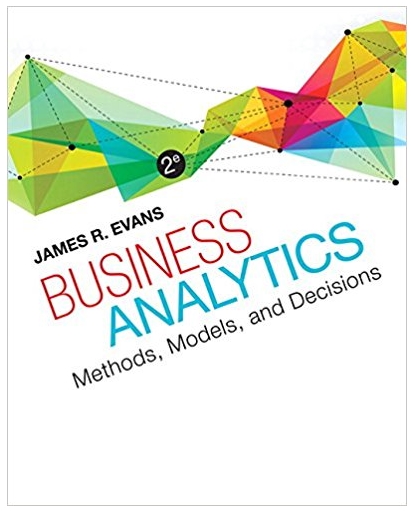
Business Analytics Methods Models And Decisions - 2nd Edition
James R. Evans
ISBN: 321997824, 978-1119298588, 978-0321997821
$0 $32.77

Caring Economics Conversations On Altruism And Compassion Between Scientists Economists And The Dalai Lama - 1st Edition
Tania Singer
ISBN: 1250064120, 978-1250064127
$0 $12.17

Statistical Analysis Of Experimental Data - 99th Edition
John Mandel
ISBN: 0470566434, 978-0470566435
$0 $28.29

Citizenship And Democratization In Southeast Asia - 1st Edition
Ward Berenschot
ISBN: 9004327770, 978-9004327771
$96.6 $138.00
Advanced Supervised And Semi Supervised Learning Theory And Algorithms - 1st Edition
Massih Reza Amini
ISBN: 3031999274, 978-3031999277
$0 $48.74


Managerial Accounting - 13th Edition
Ray H. Garrison
ISBN: 978-0073379616, 73379611, 978-0697789938
$0 $58.53
Understanding Basic Statistics - 9th Edition
Charles Henry Brase
ISBN: 0357757351, 978-0357757352
$63.15 $90.21
Neural Approaches To Conversational Ai Question Answering Task Oriented Dialogues And Social Chatbots In Information Retrieval - 1st Edition
Jianfeng Gao
ISBN: 1680835521, 978-1680835526
$60.2 $86.00
Bayesian Methods For Statistical Analysis - 1st Edition
Borek Puza
ISBN: 1921934255, 978-1921934254
$0 $37.00
Model Choice Or Hypotheses Testing A Discussion From A Bayesian Point Of View With Application In Matlab - 1st Edition
Pietro Schena
ISBN: 3844331549, 978-3844331547
$0 $57.00Popular Among Students (13)

Time For Kids Grammar Rules - 1st Edition
The Editors Of Time For Kids
ISBN: 1603209549, 978-1603209540
$0 $8.00

Matlab For Machine Learning Unlock The Power Of Deep Learning For Swift And Enhanced Results - 1st Edition
Giuseppe Ciaburro
ISBN: 1835087698, 978-1835087695
$0 $22.77

Natural Language Processing The Complete Guide - 1st Edition
Dr Hesham Mohamed Elsherif
ISBN: 1088096980, 978-1088096987
$0 $11.00

Easy Grammar Grades 5 And 6 - 1st Edition
Wanda C Phillips
ISBN: 0936981113, 978-0936981116
$0 $11.08

Teneues Quicknotes Audubon Owls Notecards 20 Full Color Notecards 20 Classic White Envelopes 4 Designs 5 Cards Each Design Keepsake Box 20 Notecards In A Box With Magnetic Closure - 1st Edition
Teneues
ISBN: 1623258898, 978-1623258894
$0 $8.48
Quantitative Social Science Data With R An Introduction - 2nd Edition
Brian J Fogarty
ISBN: 152979045X, 978-1529790450
$0 $25.49

The Extended Field Of Operator Theory - 1st Edition
Michael A Dritschel
ISBN: 3764379790, 978-3764379797
$0 $59.00

The Unfinished Nation A Concise History Of The American People Volume 1 - 7th Edition
Alan Brinkley
ISBN: 007741229X, 978-0077412296
$0 $45.00
Government Finance Statistics Yearbook 2005 - 1st Edition
Not Available
ISBN: 1589064623, 978-1589064621
$81.2 $116.00

Black Eagle General Daniel Chappie James Jr - 1st Edition
Mcgovern
ISBN: 0817313079, 9780817313074
$0 $22.00

Corporals Of Industry Exploring The Unholy Alliance Between The Education Industry And The Professions - 1st Edition
Robert Farrow
ISBN: 979-8369953068
$0 $8.42