







Question: Suppose thal we wish to extend the method described for finding one generalized eigenvector to finding two (or more) generalized eigenvectors. Let's look at the
Suppose thal we wish to extend the method described for finding one generalized eigenvector to finding two (or more) generalized eigenvectors. Let's look at the case where  has multiplicity 3 but has only one linearly independent eigenvector io. First. we find
  1 by the method described in this section. Then we find
  2 such that

(We continue in this fashion to obtain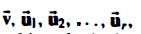 for r and r is the number of "missing" eigenvectors for
  .)
.)
(a) Show that
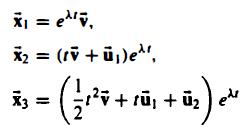
are solutions of given that
  and
and  has multiplicity 3 and r = 2.
(b) Show that the vectorsv and
and  are linearly independent.
(c) Solve 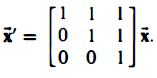
(A AI)z = j. or (A AI)z = v
Step by Step Solution
3.55 Rating (159 Votes )
There are 3 Steps involved in it
a i ii iii b We first show that the set is linearly independent i Observe that from the definitions ... View full answer

Get step-by-step solutions from verified subject matter experts
Document Format (1 attachment)

947-M-L-A-L-S (4983).docx
120 KBs Word File
 Study Help