







Question: The following code attempts to examine a number and return whether that number is prime (i.e., has no factors other than 1 and itself). A
The following code attempts to examine a number and return whether that number is prime (i.e., has no factors other than 1 and itself). A flag named prime is used. However, the Boolean logic is not implemented correctly, so the method does not always return the correct answer. In what cases does the method report an incorrect answer? How can the code be changed so that it will always return a correct result?
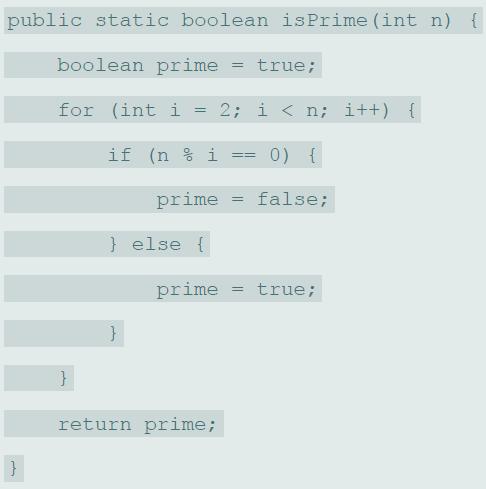
public static boolean isPrime (int n) { boolean prime true; for (int i 2; i < n; i++) { if (n % i 0) { == prime = false; } else { prime true; return prime;
Step by Step Solution
3.34 Rating (154 Votes )
There are 3 Steps involved in it
In this isPrime code the boolean flag isnt being used properly because if the co... View full answer

Get step-by-step solutions from verified subject matter experts
 Study Help