


In July 2008, Brian, Dale, and Sandra Allen signed a contract with East Resources, Inc., concerning 148
Question:
In July 2008, Brian, Dale, and Sandra Allen signed a contract with East Resources, Inc., concerning 148 acres of the Allens’ property. East wanted to develop and exploit the oil and gas resources located within the property. The contract stated that the Allens would receive12.
5 percent of the proceeds from the oil and gas production on the property during a five-year period beginning August 30, 2010, but indicated that the agreement was “made on the condition that within sixty (60) days from the Effective Date of this lease, [East] shall pay to the [Allens] the sum of Two Thousand Dollars ($2000.00) per acre for the first year.” This agreement was later amended to increase the Allens’ royalty to14.
5 percent.
However, this amendment also stated that “[East] shall pay [the Allens] … $150.00 per acre for [East’s] option to make an additional payment of
$1,500 per acre on or before [August 30, 2010] in order to make the Lease effective.”
In July 2010, East sent the Allens a check for $222,000, which would have satisfied the per-acre fee “option” outlined in the amendment.
However, East stopped payment on the check a few days later, telling the Allens that it “was issued in error.” The Allens sued SWEPI, East’s successor, stating that East’s refusal to pay the $222,000 breached the agreement. SWEPI argued that the agreement was simply an option contract that it chose not to take part in. What do you think of SWEPI’s argument? How did the court rule?
Step by Step Answer:
SWEPIs argument that the agreement was simply an option contract that it chose not to exercise may not hold up under scrutiny depending on the interpr...View the full answer


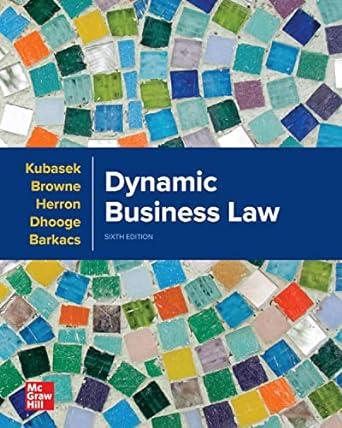
Dynamic Business Law
ISBN: 9781260733976
6th Edition
Authors: Nancy Kubasek, M. Neil Browne, Daniel Herron, Lucien Dhooge, Linda Barkacs
