







Question: From the data in Table 8.11 the 95% confidence interval for the difference in proportions with a completely healed index corn at 12months postrandomisation between
From the data in Table 8.11 the 95% confidence interval for the difference in proportions with a completely healed index corn at 12‐months post‐randomisation between the corn plaster and scalpel treated groups is:
−0.04 to 0.33.
Which of the following statements about the above 95%
confidence interval is INCORRECT?
A. The above 95% confidence interval contains the true population difference in proportions with a completely healed index corn at 12‐month post‐randomisation between the corn plaster and scalpel treated groups.
B. The 95% confidence interval for the difference in proportions with completely healed index corn at 12‐month post‐randomisation is calculated as ± 1.96 SEs away from the difference in proportions completely healed index corn at 12‐months post‐randomisation between the corn plaster and scalpel treated groups.
C. If we repeated the study 100 times we would expect 95 of the resulting 95% confidence intervals to include the population difference in proportions with a completely healed index corn at 12‐month post‐randomisation between the corn plaster and scalpel treated groups D. The 95% confidence interval is consistent with there being no difference in the population between the corn plaster and scalpel treated groups in the proportions with a completely healed index corn at 12‐month postrandomisation.
E. The above 95% confidence interval is likely to contain the true population difference in proportions with a completely healed index corn at 12‐month post‐randomisation between the corn plaster and scalpel treated groups.
Table 8.11
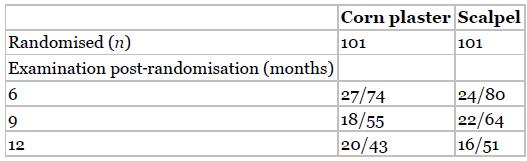
Randomised (n) Examination post-randomisation (months) 6 9 12 Corn plaster Scalpel 101 101 27/74 24/80 18/55 22/64 20/43 16/51
Step by Step Solution
3.40 Rating (144 Votes )
There are 3 Steps involved in it
A is incorrect Any CI may con... View full answer

Get step-by-step solutions from verified subject matter experts
 Study Help