







Question: Example 9.6 describes a simple arbiter for two devices contending for a shared resource. Design a similar arbiter for three devices that use a shared
Example 9.6 describes a simple arbiter for two devices contending for a shared resource. Design a similar arbiter for three devices that use a shared resource. In case of simultaneous requests, namely, if one device has been granted access to the shared resource and before it releases its request the other two devices make requests of their own, let the priority of the devices be Device 1 > Device 2 > Device 3.
Example 9.6
A SIMPLE ARBITER In computer systems it is often useful to have some resource shared Example 9.6 by a number of different devices. Usually, the resource can be used by only one device at a time. When various devices need to use the resource, they have to request to do so. These requests are handled by an arbiter circuit. When there are two or more outstanding requests, the arbiter may use some priority scheme to choose one of them, as already discussed in Section 6.8.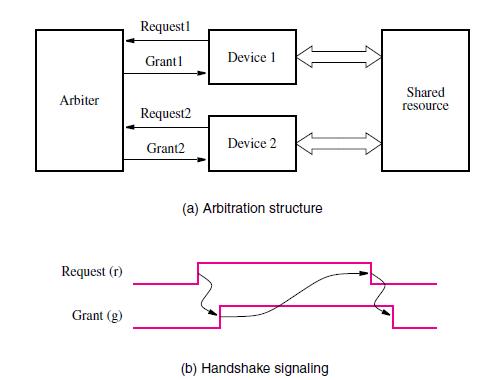
Arbiter Request (r) Grant (g) Request1 Grantl Request2 Grant2 Device 1 Device 2 (a) Arbitration structure (b) Handshake signaling Shared resource
Step by Step Solution
3.59 Rating (167 Votes )
There are 3 Steps involved in it
The description entails three new elements that are used to handle the selection o... View full answer

Get step-by-step solutions from verified subject matter experts
 Study Help