



Question: It should be pointed out that these are the views of a letter writer who added that because Australias potential uranium mining sites are safe,
It should be pointed out that these are the views of a letter writer who added that because Australia’s potential uranium mining sites are safe, nuclear meltdowns like those that occurred in the United States, Ukraine and Japan will not arise. He added, very controversially, that even those disasters were well managed, and the effects much less harmful than predicted. In addition, there is huge demand for Australian uranium, and the export of these minerals results in increased employment and massive financial gains for mining companies. Some of his opinions may find support from Associate Professor Martin Sevior from the School of Physics at Melbourne University. Professor Sevior is in favour of nuclear energy because of a looming oil crunch, insufficient other options and the cleanliness of nuclear power. He said that ‘greenhouse gas emissions resulting from nuclear power will be one per cent that of, say, coal’. Professor Sevior added ‘I don’t think Chernobyl will ever happen again. It was a terrible design with terrible safety procedures, and the world has learnt the lessons from Chernobyl’.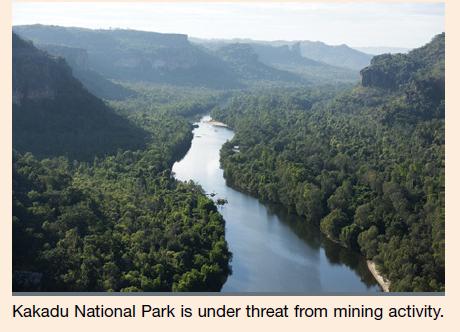
There is, however, a countervailing view. The first of these is that it is unethical to mine uranium in the first place, never mind use the ore in nuclear reactors to generate so‐called ‘clean’ energy. Uranium mining in iconic Kakadu Park particularly concerns many Greens, Indigenous Australians and other environmentalists. Indigenous Australians have traditionally referred to a mountain containing massive uranium deposits as a ‘mountain of sickness’. Recently, the top end has experienced record rainfalls, which caused a threat of the overflowing of contaminated water from Rio Tinto’s tailings dam at its Ranger Uranium Mine into the Kakadu Wetlands.
Others question whether the use of nuclear energy is ethical. The Three Mile Island and Chernobyl disasters in the United States and Ukraine are well documented. More recently, Japan’s tsunami and consequent nuclear explosion at the Fukushima nuclear plant has really fuelled the debate. An earthquake measuring 8.9 on the Richter scale struck Japan on 12 March 2011. This triggered a ten‐metre‐high tsunami, which hit the north‐eastern coast. Aside from the terrible damage caused by the earthquake and tsunami, a radiation leak was confirmed at the Fukushima plant. A survey conducted in Fukushima in late March found that almost half of 1000 children tested returned positive results for thyroid exposure to radiation. The leak was so serious that, some five months later, a nursery school, some sixty kilometres away from the crippled plant, removed topsoil from its playground and banned the children from playing outside.
As a result of such disasters, public sentiment has moved away from nuclear energy. However, the sight of a coal‐fuelled electricity generator’s cooling towers belching smoke into the atmosphere is also not pretty.
QUESTION
Based on the arguments presented here, do you think Australia should go nuclear? Why?
Kakadu National Park is under threat from mining activity.
Step by Step Solution
3.37 Rating (172 Votes )
There are 3 Steps involved in it
whether Australia should pursue nuclear energy is a complex and multifaceted issue and the decision involves weighing various economic environmental e... View full answer

Get step-by-step solutions from verified subject matter experts