Question: I need help with creating an outline using this outline template below and using these information below. References: https://www.sparknotes.com/lit/asilay/summary/ https://www.sparknotes.com/lit/disgrace/section5/ https://www.coursehero.com/lit/Disgrace/plot-summary/ https://www.sparknotes.com/lit/disgrace/section1/ https://archive.org/details/AsILayDyingFullTextWILLIAMFAULKNER/As%20I%20Lay%20Dying%20Full%20Text%20WILLIAM%20FAULKNER%20-%20Copy/page5/mode/2up https://www.cliffsnotes.com/literature/a/as-i-lay-dying/summary-and-analysis/sections-2838 Page
I need help with creating an outline using this outline template below and using these information below.
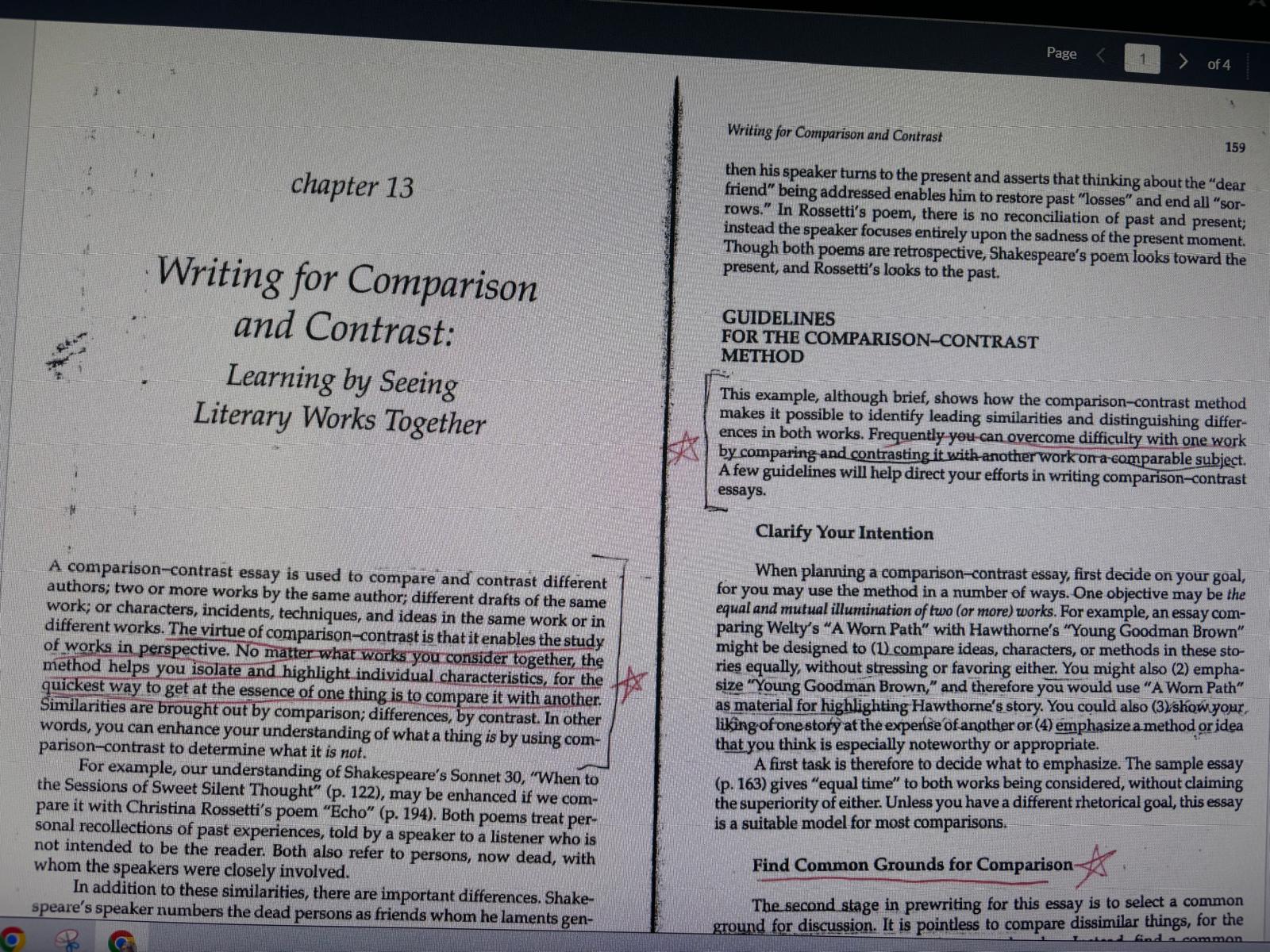
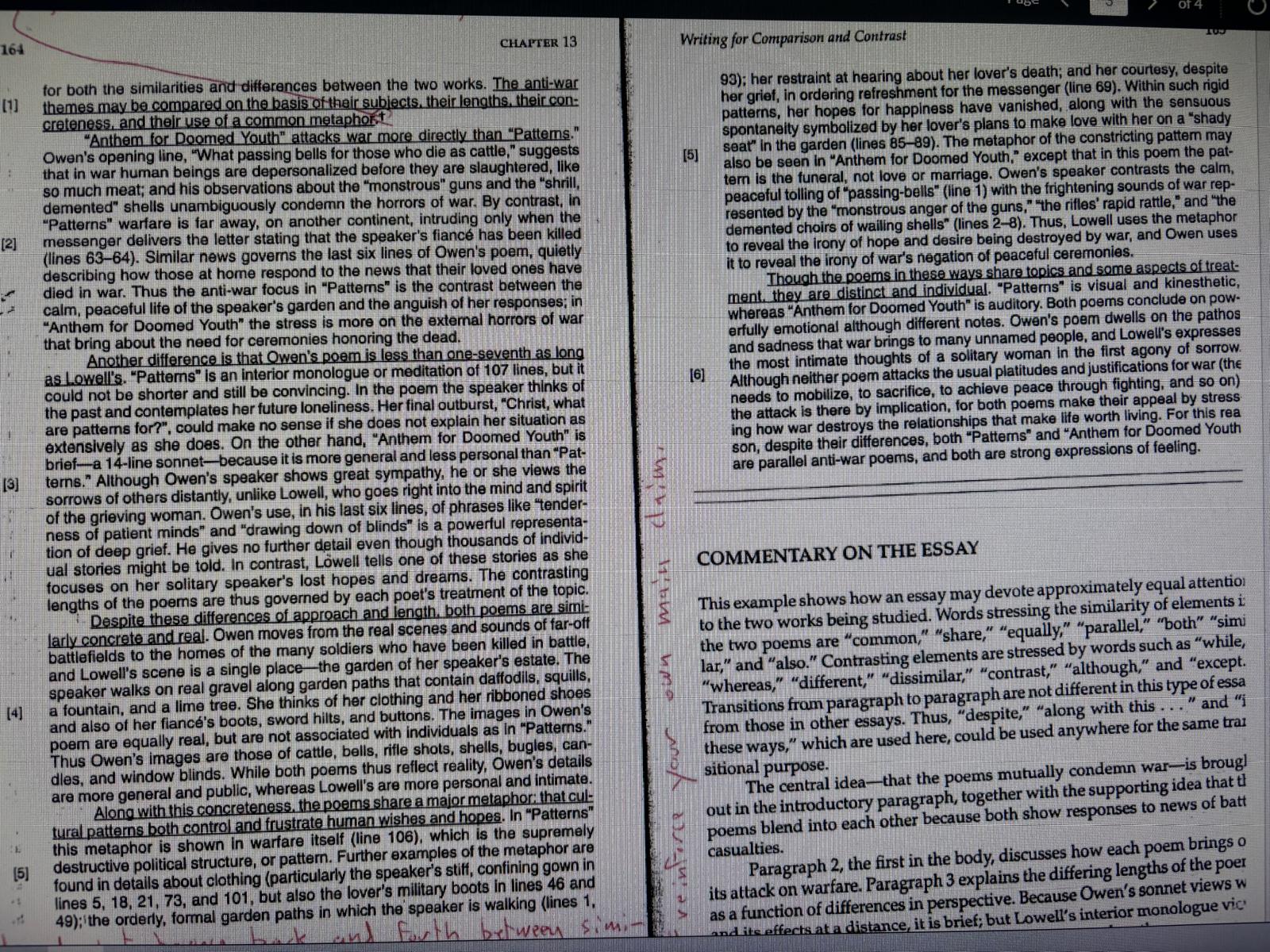
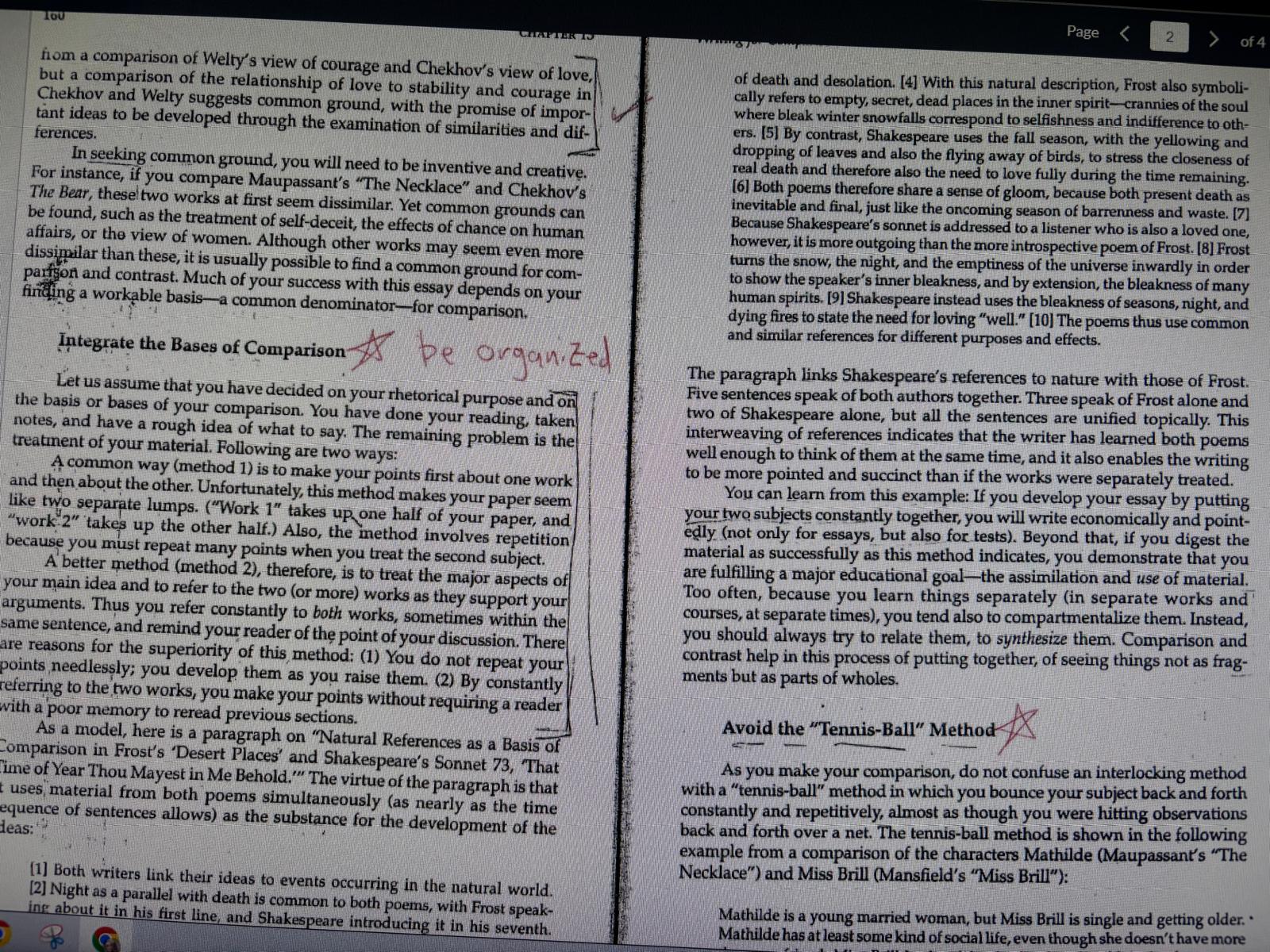
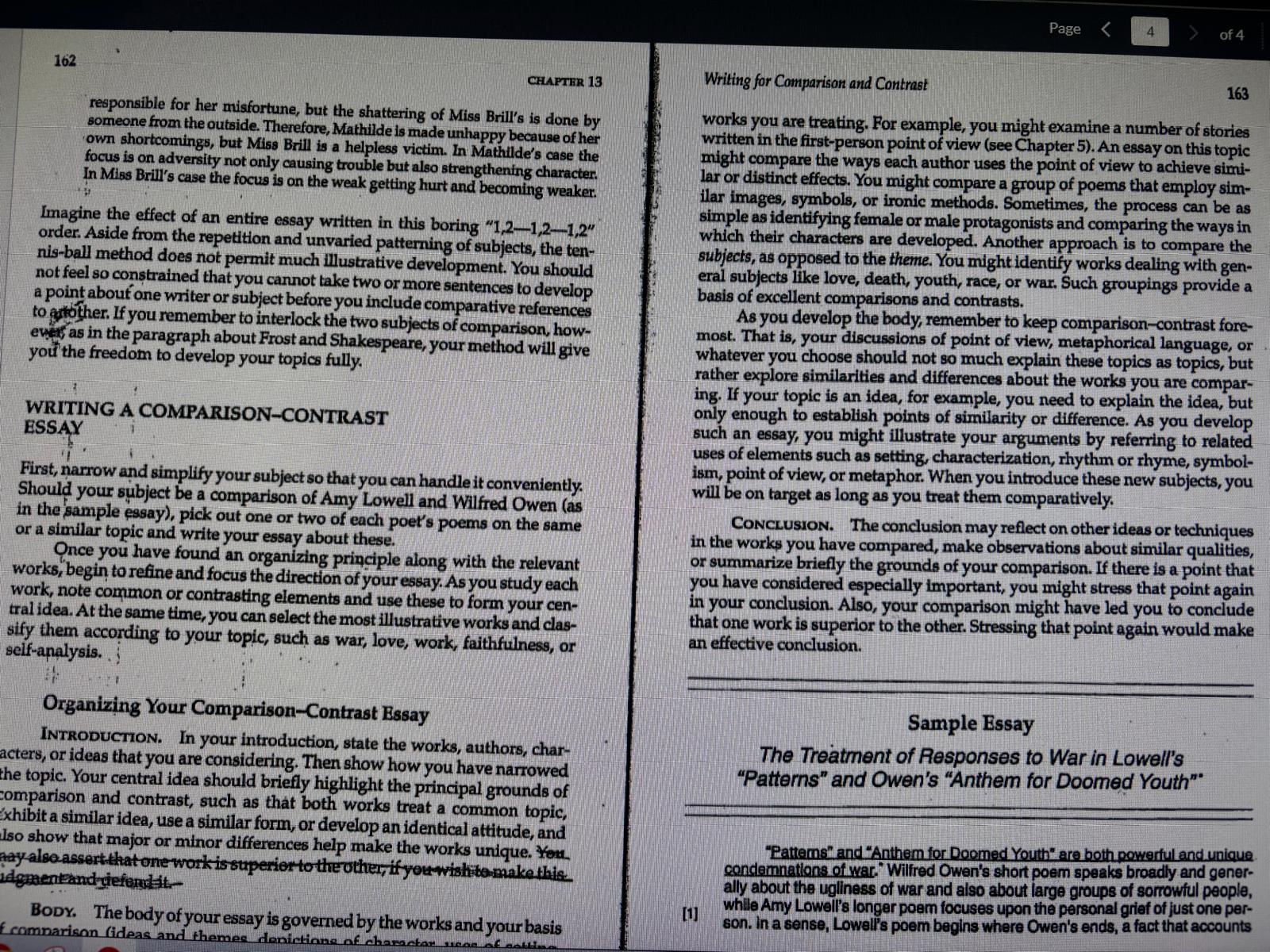
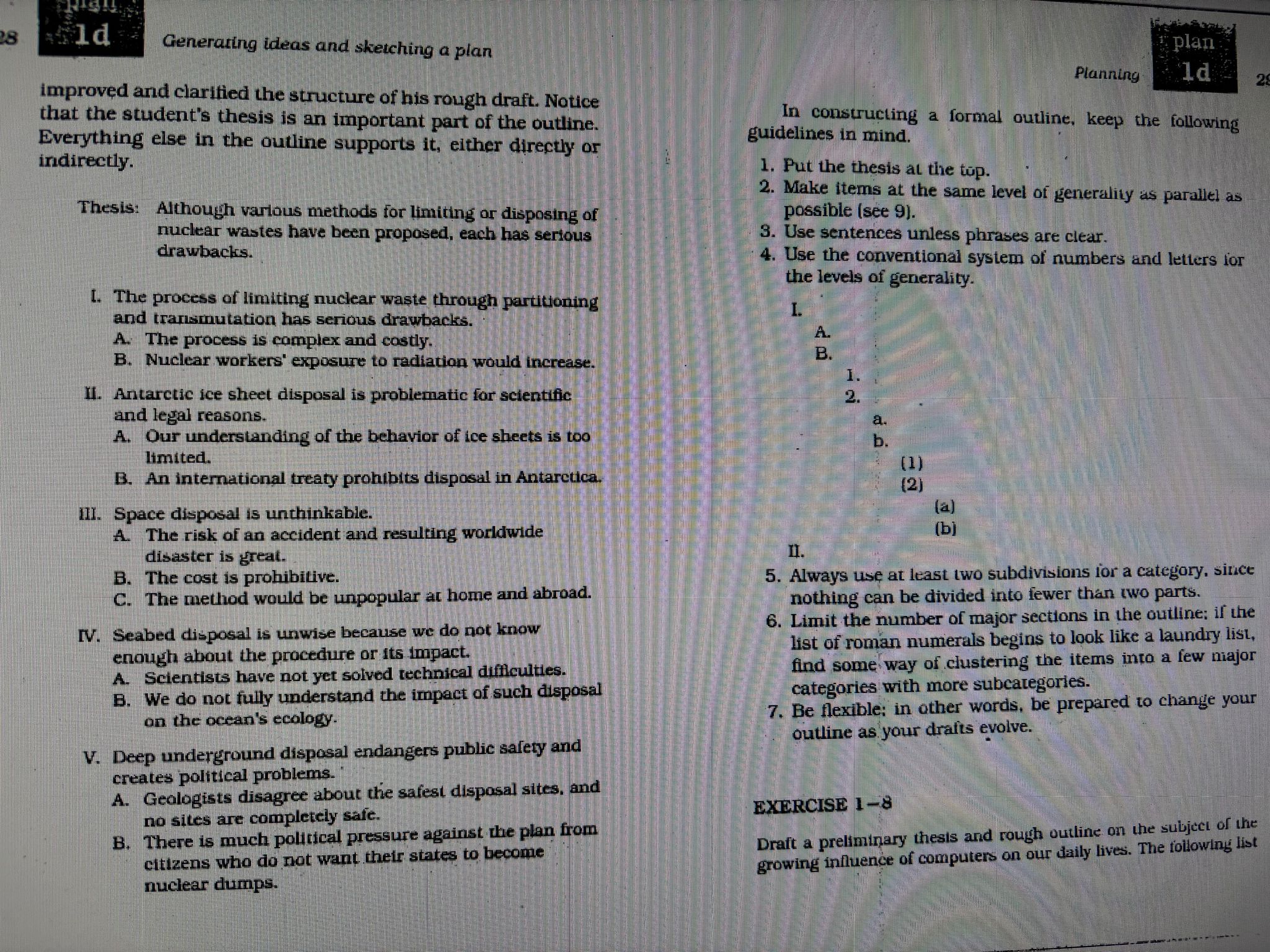
Page 1 > of 4 Writing for Comparison and Contrast 159 then his speaker turns to the present and asserts that thinking about the "dear chapter 13 friend" being addressed enables him to restore past "losses" and end all "sor- rows." In Rossetti's poem, there is no reconciliation of past and present; instead the speaker focuses entirely upon the sadness of the present moment Though both poems are retrospective, Shakespeare's poem looks toward the Writing for Comparison present, and Rossetti's looks to the past. GUIDELINES and Contrast: FOR THE COMPARISON-CONTRAST METHOD Learning by Seeing This example, although brief, shows how the comparison-contrast method Literary Works Together makes it possible to identify leading similarities and distinguishing differ- ences in both works. Frequently you can overcome difficulty with one work by comparing and contrasting it with another work on a comparable subject. A few guidelines will help direct your efforts in writing comparison-contrast essays. Clarify Your Intention When planning a comparison-contrast essay, first decide on your goal, A comparison-contrast essay is used to compare and contrast different for you may use the method in a number of ways. One objective may be the authors; two or more works by the same author; different drafts of the same equal and mutual illumination of two (or more) works. For example, an essay com- work; or characters, incidents, techniques, and ideas in the same work or in paring Welty's "A Worn Path" with Hawthorne's "Young Goodman Brown" different works. The virtue of comparison-contrast is that it enables the study might be designed to (1) compare ideas, characters, or methods in these sto- of works in perspective. No matter what works you consider together, the ries equally, without stressing or favoring either. You might also (2) emphas method helps you isolate and highlight individual characteristics, for the size "Young Goodman Brown," and therefore you would use "A Worn Path" quickest way to get at the essence of one thing is to compare it with another. as material for highlighting Hawthorne's story. You could also (3)show your, Similarities are brought out by comparison; differences, by contrast. In other liking of one story at the expense of another or (4) emphasize a method or idea words, you can enhance your understanding of what a thing is by using com- that you think is especially noteworthy or appropriate. parison-contrast to determine what it is not. A first task is therefore to decide what to emphasize. The sample essay For example, our understanding of Shakespeare's Sonnet 30, "When to (p. 163) gives "equal time" to both works being considered, without claiming the Sessions of Sweet Silent Thought" (p. 122), may be enhanced if we com- the superiority of either. Unless you have a different rhetorical goal, this essay pare it with Christina Rossetti's poem "Echo" (p. 194). Both poems treat per- is a suitable model for most comparisons. sonal recollections of past experiences, told by a speaker to a listener who is not intended to be the reader. Both also refer to persons, now dead, with Find Common Grounds for Comparison whom the speakers were closely involved. In addition to these similarities, there are important differences. Shake- The second stage in prewriting for this essay is to select a common speare's speaker numbers the dead persons as friends whom he laments gen- ground for discussion. It is pointless to compare dissimilar things, for the and find a164 CHAPTER 13 Writing for Comparison and Contrast [1] for both the similarities and differences between the two works. The anti-war themes may be compared on the basis of their subjects, their lengths. their con: 93); her restraint at hearing about her lover's death; and her courtesy, despite creteness, and their use of a common metaphor.T her grief, in ordering refreshment for the messenger (line 69). Within such rigid "Anthem for Doomed Youth" attacks war more directly than "Patterns." patterns, her hopes for happiness have vanished, along with the sensuous Owen's opening line, "What passing bells for those who die as cattle," suggests spontaneity symbolized by her lover's plans to make love with her on a "shady that in war human beings are depersonalized before they are slaughtered, like [5] seat" in the garden (lines 85-89). The metaphor of the constricting pattern may so much meat; and his observations about the "monstrous" guns and the "shrill, also be seen in "Anthem for Doomed Youth," except that in this poem the pat- demented" shells unambiguously condemn the horrors of war. By contrast, in tern is the funeral, not love or marriage. Owen's speaker contrasts the calm, "Patterns" warfare is far away, on another continent, intruding only when the peaceful tolling of "passing-bells" (line 1) with the frightening sounds of war rep- 2] messenger delivers the letter stating that the speaker's fiance has been killed resented by the "monstrous anger of the guns," "the rifles' rapid rattle," and "the (lines 63-64). Similar news governs the last six lines of Owen's poem, quietly demented choirs of wailing shells" (lines 2-8). Thus, Lowell uses the metaphor describing how those at home respond to the news that their loved ones have to reveal the irony of hope and desire being destroyed by war, and Owen uses it to reveal the irony of war's negation of peaceful ceremonies. died in war. Thus the anti-war focus in "Patterns" is the contrast between the Though the poems in these ways share topics and some aspects of treat- calm, peaceful life of the speaker's garden and the anguish of her responses; in ment. they are distinct and individual. "Patterns" is visual and kinesthetic, "Anthem for Doomed Youth" the stress is more on the external horrors of war whereas "Anthem for Doomed Youth" is auditory. Both poems conclude on pow- that bring about the need for ceremonies honoring the dead. erfully emotional although different notes. Owen's poem dwells on the pathos Another difference is that Owen's poem is less than one-seventh as long and sadness that war brings to many unnamed people, and Lowell's expresses as Lowell's. "Patterns" is an interior monologue or meditation of 107 lines, but it the most intimate thoughts of a solitary woman in the first agony of sorrow could not be shorter and still be convincing. In the poem the speaker thinks of (6] Although neither poem attacks the usual platitudes and justifications for war (the the past and contemplates her future loneliness. Her final outburst, "Christ, what needs to mobilize, to sacrifice, to achieve peace through fighting, and so on) are patterns for?", could make no sense if she does not explain her situation as the attack is there by implication, for both poems make their appeal by stress extensively as she does. On the other hand, "Anthem for Doomed Youth" is ing how war destroys the relationships that make life worth living. For this rea brief-a 14-line sonnet-because it is more general and less personal than "Pat- son, despite their differences, both "Patterns" and "Anthem for Doomed Youth ters." Although Owen's speaker shows great sympathy, he or she views the are parallel anti-war poems, and both are strong expressions of feeling. sorrows of others distantly, unlike Lowell, who goes right into the mind and spirit of the grieving woman. Owen's use, in his last six lines, of phrases like "tender- ness of patient minds" and "drawing down of blinds" is a powerful representa- tion of deep grief. He gives no further detail even though thousands of individ- ual stories might be told. In contrast, Lowell tells one of these stories as she focuses on her solitary speaker's lost hopes and dreams. The contrasting COMMENTARY ON THE ESSAY lengths of the poems are thus governed by each poet's treatment of the topic. Despite these differences of approach and length, both poems are simi- This example shows how an essay may devote approximately equal attention larly concrete and real. Owen moves from the real scenes and sounds of far-off to the two works being studied. Words stressing the similarity of elements i battlefields to the homes of the many soldiers who have been killed in battle, and Lowell's scene is a single place the garden of her speaker's estate. The the two poems are "common," "share," "equally," "parallel," "both" "simi speaker walks on real gravel along garden paths that contain daffodils, squills, lar," and "also." Contrasting elements are stressed by words such as "while, (4] a fountain, and a lime tree. She thinks of her clothing and her ribboned shoes "whereas," "different," "dissimilar," "contrast," "although," and "except. and also of her fiance's boots, sword hills, and buttons. The images in Owen's Transitions from paragraph to paragraph are not different in this type of essa poem are equally real, but are not associated with individuals as in "Patterns." from those in other essays. Thus, "despite," "along with this . . . " and "i Thus Owen's images are those of cattle, bells, rifle shots, shells, bugles, can- these ways," which are used here, could be used anywhere for the same trai dies, and window blinds. While both poems thus reflect reality, Owen's details are more general and public, whereas Lowell's are more personal and intimate. sitional purpose. Along with this concreteness. the poems share a major metaphor: that cul- The central idea-that the poems mutually condemn war-is brough tural patterns both control and frustrate human wishes and hopes. In "Patterns" out in the introductory paragraph, together with the supporting idea that th this metaphor is shown in warfare itself (line 106), which is the supremely poems blend into each other because both show responses to news of batt destructive political structure, or pattern. Further examples of the metaphor are casualties. found in details about clothing (particularly the speaker's stiff, confining gown in Paragraph 2, the first in the body, discusses how each poem brings o lines 5, 18, 21, 73, and 101, but also the lover's military boots in lines 46 and 49); the orderly, formal garden paths in which the speaker is walking (lines 1, its attack on warfare. Paragraph 3 explains the differing lengths of the poer as a function of differences in perspective. Because Owen's sonnet views w and its effects at a distance, it is brief; but Lowell's interior monologue vic'LOU Page 2 of 4 from a comparison of Welty's view of courage and Chekhov's view of love, of death and desolation. [4] With this natural description, Frost also symboli- but a comparison of the relationship of love to stability and courage in cally refers to empty, secret, dead places in the inner spirit- crannies of the soul Chekhov and Welty suggests common ground, with the promise of impor- where bleak winter snowfalls correspond to selfishness and indifference to oth- tant ideas to be developed through the examination of similarities and dif- ers. [5] By contrast, Shakespeare uses the fall season, with the yellowing and ferences. dropping of leaves and also the flying away of birds, to stress the closeness of In seeking common ground, you will need to be inventive and creative. real death and therefore also the need to love fully during the time remaining. For instance, if you compare Maupassant's "The Necklace" and Chekhow's [6] Both poems therefore share a sense of gloom, because both present death as The Bear, these two works at first seem dissimilar. Yet common grounds can inevitable and final, just like the oncoming season of barrenness and waste. [7] be found, such as the treatment of self-deceit, the effects of chance on human Because Shakespeare's sonnet is addressed to a listener who is also a loved one, affairs, or the view of women. Although other works may seem even more however, it is more outgoing than the more introspective poem of Frost. [8] Frost dissimilar than these, it is usually possible to find a common ground for com- turns the snow, the night, and the emptiness of the universe inwardly in order o show the speaker's inner bleakness, and by extension, the bleakness of many parison and contrast. Much of your success with this essay depends on your human spirits. [9] Shakespeare instead uses the bleakness of seasons, night, and finding a workable basis-a common denominator-for comparison. dying fires to state the need for loving "well." [10] The poems thus use common and similar references for different purposes and effects. Integrate the Bases of Comparison A be organized The paragraph links Shakespeare's references to nature with those of Frost. Let us assume that you have decided on your rhetorical purpose and on Five sentences speak of both authors together. Three speak of Frost alone and the basis or bases of your comparison. You have done your reading, taken two of Shakespeare alone, but all the sentences are unified topically. This notes, and have a rough idea of what to say. The remaining problem is the interweaving of references indicates that the writer has learned both poems treatment of your material. Following are two ways: well enough to think of them at the same time, and it also enables the writing A common way (method 1) is to make your points first about one work to be more pointed and succinct than if the works were separately treated. and then about the other. Unfortunately, this method makes your paper seem You can learn from this example: If you develop your essay by putting like two separate lumps. ("Work 1" takes up one half of your paper, and your two subjects constantly together, you will write economically and point- "work 2" takes up the other half.) Also, the method involves repetition edly (not only for essays, but also for tests). Beyond that, if you digest the because you must repeat many points when you treat the second subject. material as successfully as this method indicates, you demonstrate that you A better method (method 2), therefore, is to treat the major aspects of are fulfilling a major educational goal-the assimilation and use of material. your main idea and to refer to the two (or more) works as they support your Too often, because you learn things separately (in separate works and arguments. Thus you refer constantly to both works, sometimes within the courses, at separate times), you tend also to compartmentalize them. Instead, same sentence, and remind your reader of the point of your discussion. There you should always try to relate them, to synthesize them. Comparison and are reasons for the superiority of this method: (1) You do not repeat your contrast help in this process of putting together, of seeing things not as frag- points needlessly; you develop them as you raise them. (2) By constantly ments but as parts of wholes. referring to the two works, you make your points without requiring a reader with a poor memory to reread previous sections. Avoid the "Tennis-Ball" Method As a model, here is a paragraph on "Natural References as a Basis of comparison in Frost's 'Desert Places' and Shakespeare's Sonnet 73, That As you make your comparison, do not confuse an interlocking method Time of Year Thou Mayest in Me Behold." The virtue of the paragraph is that with a "tennis-ball" method in which you bounce your subject back and forth uses material from both poems simultaneously (as nearly as the time constantly and repetitively, almost as though you were hitting observations deas: quence of sentences allows) as the substance for the development of the back and forth over a net. The tennis-ball method is shown in the following example from a comparison of the characters Mathilde (Maupassant's "The Necklace") and Miss Brill (Mansfield's "Miss Brill"): [1] Both writers link their ideas to events occurring in the natural world. [2] Night as a parallel with death is common to both poems, with Frost speak- Mathilde is a young married woman, but Miss Brill is single and getting older. . ing about it in his first line, and Shakespeare introducing it in his seventh. Mathilde has at least some kind of social life, even though she doesn't have morePage 4 of 4 162 CHAPTER 13 Writing for Comparison and Contrast 163 responsible for her misfortune, but the shattering of Miss Brill's is done by works you are treating. For example, you might examine a number of stories someone from the outside. Therefore, Mathilde is made unhappy because of her written in the first-person point of view (see Chapter 5). An essay on this topic own shortcomings, but Miss Brill is a helpless victim. In Mathilde's case the might compare the ways each author uses the point of view to achieve simi- focus is on adversity not only causing trouble but also strengthening character. lar or distinct effects. You might compare a group of poems that employ sim- In Miss Brill's case the focus is on the weak getting hurt and becoming weaker. ilar images, symbols, or ironic methods. Sometimes, the process can be as simple as identifying female or male protagonists and comparing the ways in Imagine the effect of an entire essay written in this boring "1,2-1,2-1,2" which their characters are developed. Another approach is to compare the order. Aside from the repetition and unvaried patterning of subjects, the ten- subjects, as opposed to the theme. You might identify works dealing with gen- nis-ball method does not permit much illustrative development. You should eral subjects like love, death, youth, race, or war. Such groupings provide a not feel so constrained that you cannot take two or more sentences to develop basis of excellent comparisons and contrasts. a point about one writer or subject before you include comparative references As you develop the body, remember to keep comparison-contrast fore- to another. If you remember to interlock the two subjects of comparison, how- most. That is, your discussions of point of view, metaphorical language, or even as in the paragraph about Frost and Shakespeare, your method will give whatever you choose should not so much explain these topics as topics, but you the freedom to develop your topics fully. rather explore similarities and differences about the works you are compar- ing. If your topic is an idea, for example, you need to explain the idea, but WRITING A COMPARISON-CONTRAST only enough to establish points of similarity or difference. As you develop ESSAY such an essay, you might illustrate your arguments by referring to related uses of elements such as setting, characterization, rhythm or rhyme, symbol- ism, point of view, or metaphor. When you introduce these new subjects, you First, narrow and simplify your subject so that you can handle it conveniently. will be on target as long as you treat them comparatively. Should your subject be a comparison of Amy Lowell and Wilfred Owen (as in the sample essay), pick out one or two of each poet's poems on the same CONCLUSION. The conclusion may reflect on other ideas or techniques or a similar topic and write your essay about these. in the works you have compared, make observations about similar qualities, Once you have found an organizing principle along with the relevant or summarize briefly the grounds of your comparison. If there is a point that works, begin to refine and focus the direction of your essay. As you study each you have considered especially important, you might stress that point again work, note common or contrasting elements and use these to form your cen- in your conclusion. Also, your comparison might have led you to conclude tral idea. At the same time, you can select the most illustrative works and clas- that one work is superior to the other. Stressing that point again would make sify them according to your topic, such as war, love, work, faithfulness, or an effective conclusion. self-analysis. . Organizing Your Comparison-Contrast Essay Sample Essay INTRODUCTION. In your introduction, state the works, authors, char- The Treatment of Responses to War in Lowell's cters, or ideas that you are considering. Then show how you have narrowed "Patterns" and Owen's "Anthem for Doomed Youth" the topic. Your central idea should briefly highlight the principal grounds of omparison and contrast, such as that both works treat a common topic, xhibit a similar idea, use a similar form, or develop an identical attitude, and Iso show that major or minor differences help make the works unique. You "Patterns" and "Anthem for Doomed Youth" are both powerful and unique may also assert that one work is superior to the other, if you wish to make this. condemnations of war." Wilfred Owen's short poem speaks broadly and gener- idgment and defend it.- ally about the ugliness of war and also about large groups of sorrowful people, while Amy Lowell's longer poem focuses upon the personal grief of just one per- [1] BODY. The body of your essay is governed by the works and your basis son. In a sense, Lowell's poem begins where Owen's ends, a fact that accounts f comparison fideas and themes denictions of character ness of setsalld Generating ideas and sketching a plan plan Planning 1d improved and clarified the structure of his rough draft. Notice that the student's thesis is an important part of the outline. In constructing a formal outline, keep the following Everything else in the outline supports it, either directly or guidelines in mind. indirectly. 1. Put the thesis at the top. 2. Make items at the same level of generality as parallel as Thesis: Although various methods for limiting or disposing of possible (see 9). nuclear wastes have been proposed, each has serious 3. Use sentences unless phrases are clear. drawbacks. 4. Use the conventional system of numbers and letters for the levels of generality. I. The process of limiting nuclear waste through partitioning and transmutation has serious drawbacks. A. The process is complex and costly. A. B. Nuclear workers' exposure to radiation would increase. B. II. Antarctic ice sheet disposal is problematic for scientific 2. and legal reasons. a. A. Our understanding of the behavior of ice sheets is too b. limited. (1) B. An international treaty prohibits disposal in Antarctica. (2) III. Space disposal is unthinkable. (a) A. The risk of an accident and resulting worldwide (b ) disaster is great. II. B. The cost is prohibitive. 5. Always use at least two subdivisions for a category, since C. The method would be unpopular at home and abroad. nothing can be divided into fewer than two parts. 6. Limit the number of major sections in the outline; if the IV. Seabed disposal is unwise because we do not know list of roman numerals begins to look like a laundry list, enough about the procedure or its impact. A. Scientists have not yet solved technical difficulties. find some way of clustering the items into a few major B. We do not fully understand the impact of such disposal categories with more subcategories. 7. Be flexible: in other words. be prepared to change your on the ocean's ecology. outline as your drafts evolve. V. Deep underground disposal endangers public safety and creates political problems." A. Geologists disagree about the safest disposal sites, and EXERCISE 1-8 no sites are completely safe. B. There is much political pressure against the plan from Draft a preliminary thesis and rough outline on the subject of the citizens who do not want their states to become growing influence of computers on our daily lives. The following list nuclear dumps
Step by Step Solution
There are 3 Steps involved in it
1 Expert Approved Answer
Step: 1 Unlock
Question Has Been Solved by an Expert!
Get step-by-step solutions from verified subject matter experts
Step: 2 Unlock
Step: 3 Unlock
Students Have Also Explored These Related Business Writing Questions!









 Study Help