New Semester
Started
Get
50% OFF
Study Help!
--h --m --s
Claim Now
Question Answers
Textbooks
Find textbooks, questions and answers
Oops, something went wrong!
Change your search query and then try again
S
Books
FREE
Study Help
Expert Questions
Accounting
General Management
Mathematics
Finance
Organizational Behaviour
Law
Physics
Operating System
Management Leadership
Sociology
Programming
Marketing
Database
Computer Network
Economics
Textbooks Solutions
Accounting
Managerial Accounting
Management Leadership
Cost Accounting
Statistics
Business Law
Corporate Finance
Finance
Economics
Auditing
Tutors
Online Tutors
Find a Tutor
Hire a Tutor
Become a Tutor
AI Tutor
AI Study Planner
NEW
Sell Books
Search
Search
Sign In
Register
study help
mathematics
complete pure mathematics
Complete Pure Mathematics 1 For Cambridge International AS & A Level 2nd Edition Jean Linsky, Brian Western, James Nicholson - Solutions
Solve the equation sin (x − 30°) = 0.7 for0° ≤ x ≤ 360°.
Solve the equation for 0° ≤ 0 ≤ 360°.6 sin (θ + 70)° − 5 cos (θ + 70)° = 0
Solve each of these equations, giving all solutions between 0 and 47. 1a) sin x =1/2b) cos θ = − 1/√2c) sin x = −1d) tan θ = − 1
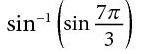
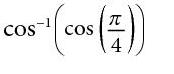
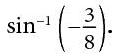
a) Write down the value ofi. ii.iii.iv.b) Is sin−1(sin x) = x for all values of x? sin sin T 3
Show that (1 + sinθ + cosθ)² = 2(1 + sinθ) (1 + cosθ).
Solve 3 tan x = √27 for − 180° ≤ x < 180°.
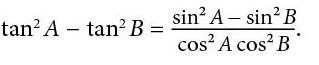
Prove the following identities a) cos5 θ = cosθ − 2 sin²θ cosθ + cosθ sin4θb) (4 sinθ + 3 cosθ)² + (3 sinθ − 4 cosθ)² = 25c) tan² A - tan² B = sin² A - sin² B cos² A cos² B
a) Use your calculator to find the angle (to the nearest degree) between 0° and 90° whose sine is 0.36.b)Hence find another angle between 0° and 360° whose sine is 0.36.
a) Sketch on the same diagram the graphs of y = sin 2θ and y = cosθ for 0° ≤ θ ≤ 180°.b) State the number of roots of the equation sin 2θ = cos θ for which 0° ≤ 0 ≤ 180°.c) Find the roots of the equation sin 2θ = cosθ for which 0° ≤ θ ≤ 360°.
Solve the equation 8 cos²x = 5 + 2 sin x for 0° ≤ x ≤ 360°.
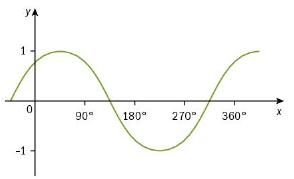
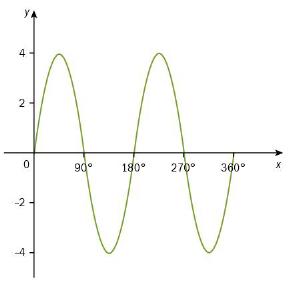
Find an equation for each graph.a.b.c.d. УА 1 -1 0 90° 180° 270° 360°
Solve the equation for 0° ≤ 0 ≤ 360°.1 + sinθ cos² θ = sinθ
Solve each of these equations, giving all solutions between 0° and 360°.a) sin x = 0.384 b) tan x = 1.988c) cos x = 0.379d)sin x = −0.2
Solve 6 cos 30x − 30 for 0° ≤ x < 24°.
Express the following in terms of the related acute angle.a) sin 132°b) cos 310°c) tan 215°d) sin 220° e) cos 153°f) tan 148°g)cos 195° h) sin 335°
Find the equation of the line parallel to the line y = 4 − 3x andpassing through the point (5,7).
Find the equation of these circles. a) Centre (−2, −1) and passes through the point (2, 0)b) Centre (−3, 7) and passes through the point (−2, 4)c) Centre (5, −4) and passes through the point (0,8)d) Centre (6, 0) and passes through the point (−1, −3)d)
Find the set of values of k for which the line y = kx − 4 intersects thecurve y = x² at two distinct points.
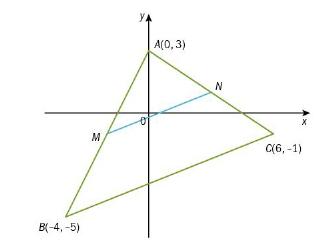
The diagram shows triangle ABC. The coordinates of A, B and Care (0, 3), (−4, −5) and (6, −1)respectively. M is the mid-point of AB, andN is the mid-point of AC.Show that MN is parallel to BC. B(-4,-5) M YA A(0,3) N C(6,-1)
A is the point (3, −4) and B is the point (−5, −10). Find the equationof the perpendicular bisector of AB.
Show that A(4, 3), B(−3, 2), C(−5, −2) and D(2, −1) are the vertices ofa parallelogram.
Find all the angles between 0° and 360° whose sine is −0.25.
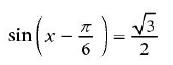
Solve the following equations for 0 ≤ x ≤ 2π.a) 3 tan x +2 = 5b) c) sin 2x = 1/2d) 6 cos 3x − 3 = 0e) 7 − 2 tan 4x = 13f) 10 cos x/3 = 1 sit in (x - 2) = √³ 6 2
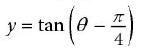
Sketch, on separate diagrams, the graphs of the following functions for 0 ≤ θ ≤ 2π.a) y = 6 cosθ + 2b)c)d) y = tan (0-1)
Solve the equation cos 2x = cos 144° for 0° ≤ x ≤ 360°.
Solve each of the equations where possible. a) sin−1 x = π/6b) sin−1 x = π/3c) sin−1 x = −π/6d) sin−1 x = π
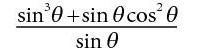
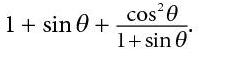
Simplifya.b. sin³0+ sin cos²0 sin 0
Solve the equation for 0° ≤ 0 ≤ 360°.cos² θ − 4 sin² θ = 1.
Prove the identity sin4θ/tanθ = sinθcosθ − sinθcos³θ.
a) Without using a calculator, state whether each of these is positive or negative.i) sin 130° ii) cos 130°iii) sin 255°iv) cos 255°b) Use your calculator to find the value ofi) sin 130° ii) cos 130°iii) sin 255°iv) cos 255°.
Solve the equation 2 sinθ = cosθ for 0 ≤ θ ≤ π/2.
a) Use a calculator to find, in radians correct to 3 significant figures, the principal value ofi) tan−1 (0.4)ii) tan−1 (−0.4)iii) sin−1 (2/3)iv) sin−1 (−2/3)v) cos−1 (0.62)vi) cos−1 (−0.62).b) What do you notice about your answers to (a) (i) and (a)(ii)?c) What do you notice
Solve the equation for 0° ≤ 0 ≤ 360°.3 sin² θ = cos² θ.
Find all the angles between 0° and 360° whose cosine is −0.766.
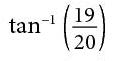
Use a calculator to find, in degrees correct to 1 decimal place, the principal value ofa) cos−¹ (0.6)b) sin−¹ (0.25)c) d) tan−¹(10) e)cos−¹ (−0.83)f) tan-¹ 19 20
In the following equations, find all the values of 0 between 0° and 360°.a) cos θ = 0.776b) sin 2θ = −0.364c) tan 3θ = 1.988 d) cos θ/2 = −0.379 e) tan θ/2 = −1.030 f) sin 3θ/2 = 0.664.
Find the exact values of a) sin 3π/4 b) sin 4π/3c) sin 3π/2d) tan5π/3
Sketch, on separate diagrams, the graphs ofa) y = sin 3x for 0° ≤ x ≤ 360°b) y = −cos 2x for 0° ≤ x ≤ 360°c) y = tan 1/2x for −360° ≤ x ≤ 360°d) y = 2 sin 4x for 0° ≤ x ≤ 180° e) y = 3 tan (x + 30°) for 0° ≤ x ≤ 360°.f) y = 3 sin 2x − 1 for 0° ≤ x ≤
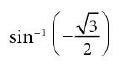
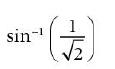
Without using a calculator write down in degrees, where possible, the principal value ofa) sin−¹ 0 b) sin−¹ (−1)c)d)e) cos−¹ 1f)g) cos−¹2h) cos−¹ (−1)i) tan−¹ 1j) tan−¹ 0k)l) sin-¹ 2
Solve the equation sin 2θ = 0.667 for 0° ≤ θ ≤ 180°.
Solve the equation for 0° ≤ 0 ≤ 360°.2 cos² θ + sinθ = 1.
Given tan π/4 = 1, write down all the angles between 0 and 6π whose tangent is 1.
Express in terms of sinθa) sin²θ − cos²θb) 2 cos²θ − 4 sinθ.
Solve these equations for 0° ≤ x ≤ 360°.a) 4 sin x = 3b) 5 tan x − 1 = 9c) 6 cos x + 5 = 8d) 8 sin (x + 20°) = 5e) 10 − 3 cos x = 9 f) 9 sin (x-15°) = − 4
Find the exact values ofa) cos 240°b) tan 135°c) sin 300°d) cos 315°.
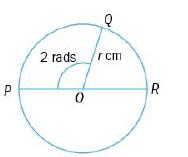
The diagram shows a circle with centre O and radius r cm. The points P, Q, and R lie on the circle. The line PR is a diameter of the circle and angle POQ = 2 radians. The area of sector QOR is 30 cm² less than the area of sector POQ. Find the value of r. P 2 rads 0 Q rcm R
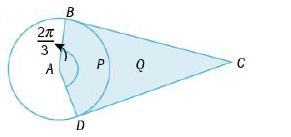
The diagram shows a sector P of a circle with centre A and radius 6 cm. Angle BAD = 2π/3 radians. CB and CD are tangents to the circle at B and D. The shaded region inside the circle is P and the shaded region outside the circle is Q.i) Find the exact perimeter of Q.ii) Find the exact area of Q.
Find the period of each of these functions.a) y = sin 2xb) y = cos 5xc) y = cos x + 1d) y = 5 sin(x − 30)°e) y = tan 1/2 xf) y = 2 tan 3x − 4g) y = tan (x + 45)° h) y = 3 sin (2x − 60)°
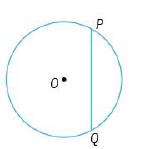
In the diagram, the line PQ divides the circle with centre O and radius r into two segments. Show that when angle POQ = 2.6 radians, the area of the larger segment is approximately twice the area of the smaller segment. 0⁰ P Q
The diagram shows a circle with centre O and radius r cm. Points A and B lie on TU the circle and angle AOB = π/4 radians. The tangent to the circle at A intersects the straight line through O and B at the point C.a) Find expressions in terms of r fori) The area of sector OABii) The length of
An angle θ is known to be between 270° and 360° and sin² θ = 9/25 Find a) sinθb) cosθc) tanθ.
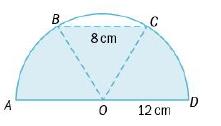
In the diagram, OAB and OCD are sectors of a circle with centre O and radius 12 cm. Angle AOB = angle COD, AOD is a straight line and BC = 8 cm. Calculatei) Angle BOC in radiansii) The perimeter of the shaded shapeiii) The area of the shaded shape. A B 8cm 0 с 12 cm D
Solve the equation for 0° ≤ 0 ≤ 360°.cos² θ − sin² θ = 0.
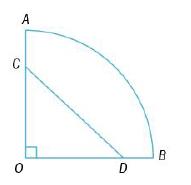
The diagram shows the sector OAB of a circle with centre O and radius 20m. Angle AOB = π/2 radian. The straight line CD divides the sector into two regions which have equal areas and the lengths of OC and OD are equal. Calculate the exact length of OC. A C 0 D B
Given that sin 40° = 0.643 (3 s.f.)a) Write down another angle between 0° and 360° whose sine is 0.643b) Write down two angles between 360° and 720° whose sine is 0.643.
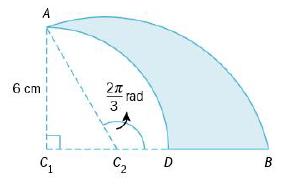
AD is an arc of a circle with centre C1 and radius 6 cm. AB is an arc of a circle with centre C2. The size of angle AC2D is 2π/3 radians. Calculatea) The radius of the circle with centre C2b) The area of the shaded region ABD. A 6 cm C₁ 2 rad 3 C₂ D B
Express 4 cos²x − sin²x in terms of cos x.
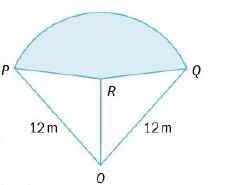
The diagram shows a sector OPQ of a circle with centre O and radius 12 m. PR = QR = OR = 8 m. Work out the area of the shaded region PQR. P 12m 0 R 12m Q
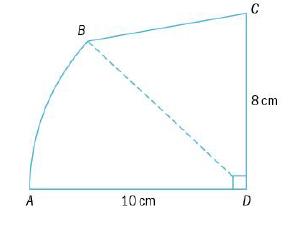
The diagram shows a shape ABCD. The curve AB is an arc of a circle with centre D. Angle ADB is 0.75 rad. Finda) The length of the arc ABb) The area of the sector ADBc) The area of ABCD. A B 10 cm C 8cm D
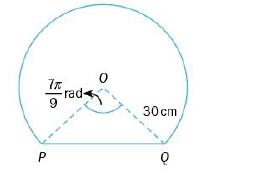
The diagram shows a shape made from the arc of a circle with centre O and radius 30 cm and the straight line PQ. The size of angle POQ is 7π/9 radians. 좀 P rad- 30cm Q
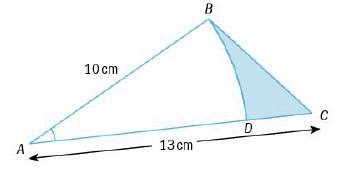
The diagram below shows a triangle ABC with AB = 10 cm, AC = 13 cm and angle BAC = 0.5 rad. BD is an arc of a circle with centre A and radius 10 cm. Finda) The length of arc BDb) The perimeter of the shaded regionc) The area of the shaded region. A 10 cm 13 cm B D C
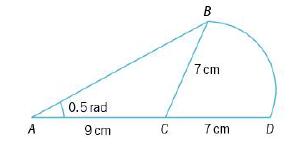
A shape is made from joining a triangle ABC to a sector CBD of a circle with radius 7 cm and centre C. The points A, C and D lie on a straight line with AC = 9 cm. Angle BAC = 0.5 radians. Finda) The angle ACB giving your answer in radiansb) The area of ABDC. A 0.5 rad 9 cm C B 7cm 7cm D
OAB is a sector of a circle, with centre O and a radius of 12 cm. Find the perimeter of the shaded segment. A B 12 cm I rad 0
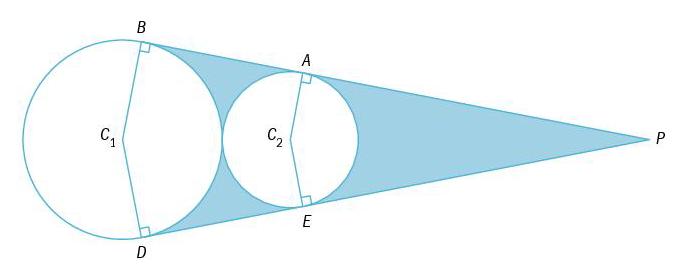
In the diagram below, PAB and PED are tangents to two circles which touch and have centres C1 and C2, respectively and radii 10 cm and 6 cm, respectively.a) Calculate the angle APE in radians.b) Calculate the the total area of the shaded regions.c) Calculate the total of the perimeters of the
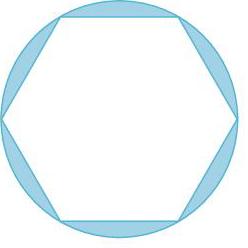
The diagram shows a regular hexagon inside a circle of radius 10 cm. Find the total area of the shaded regions.
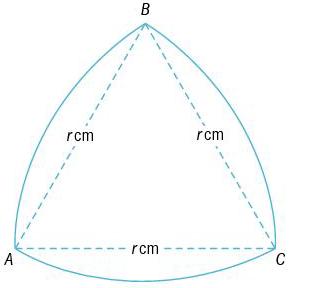
The diagram shows a shape ABC. The boundary of the shape is made from three arcs. The arcs AB, BC and AC have centres C, A, B, respectively.a) Find the perimeter of the shape in terms of r and π.b) Find the area of the shape when r = 15 cm. A rcm B rcm rcm C
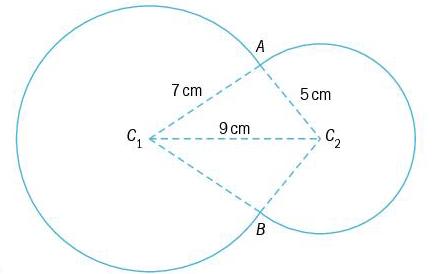
A metal plate is made from two circles. One circle is of radius 7 cm. The other circle is of radius 5 cm. Their centres C1, and C2, are 9 cm apart.a) Find, in radians, angles AC1B and AC2B.b) Find the area of the metal plate.c) Find the perimeter of the metal plate. C₁ 7 cm 9 cm A B 5 cm C₂
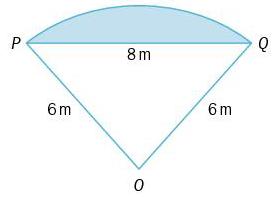
In the diagram below, OPQ is a sector of a circle, radius 6m. The straight line PQ is 8 m long. Calculatea) The area of the sector OPQb) The shaded area. P 6m 8m 0 6m Q
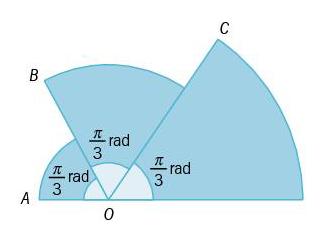
The diagram has three sectors with OA = 2 cm, OB = 4 cm and OC = 6 cm.a) Find the total area of the shape in terms of π.b) Find the total perimeter of the shape in terms of π. B A wla -rad rad 3 0 π -rad 3 C
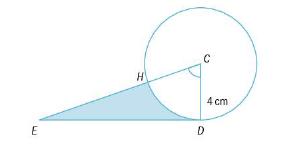
A circle has centre C and radius 4 cm. The diagram shows the circle with a point D which lies on the circle. The tangent at D passes through the point E. EC = √65 cm. Finda) The size in radians of angle DCEb) The area of the shaded region DEH. E H с D 4 cm
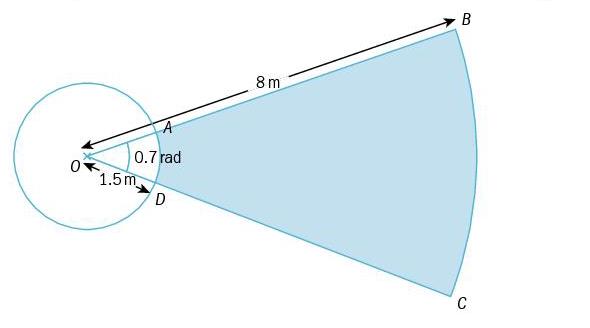
The diagram shows the area used for a sports event. The area is made from the sectors of two circles, centre O. Calculate the area of the shaded region. 0 A 0.7 rad 1.5 m D 8m B C
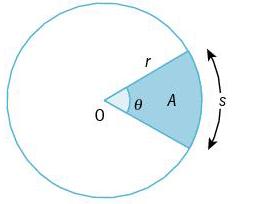
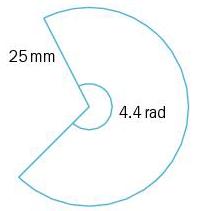
In the diagram of a circle centre O, the arc length is s and the area of the shaded area is A.a) Find θ when r = 6 cm and s = 10 cm.b) Find θ when r = 25 mm and A = 1000 mm².c) Find r when θ = 0.8 rad and s = 20 m.d) Find r when θ = 3π/4 rad and A = 50 cm². 0 r 0 А S
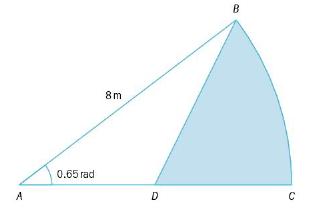
In the diagram, ABC is a sector of a circle with centre A and radius 8 m. The size of angle BAC is 0.65 rad and D is the mid-point of AC. Finda) The length of the arc BCb) The area of the shaded region BCD. A 0.65 rad 8m D с
In the diagram below, ABCD is a sector of a circle with centre B and radius 5 m. Given that the length of the arc ADC is 15π/4 m, finda) The exact size of angle ABC in radiansb) The exact area of the sector ABCD. A 5m 8 D 5m C
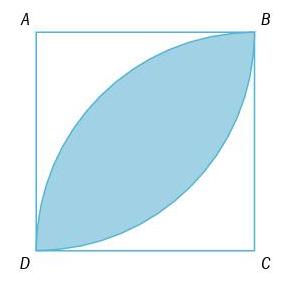
The diagram shows a square ABCD. The two arcs are arcs of circles, with centres A and C and radius r cm. Find the area of the shaded region in terms of r and π. A D B с
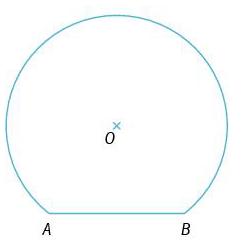
The diagram shows part of a circle centre O, with radius 12 cm, and a straight line AB. The length of AB is 12 cm. Find the perimeter of the shape. A 0 0 B
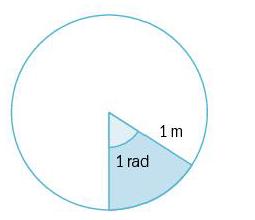
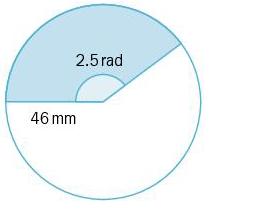
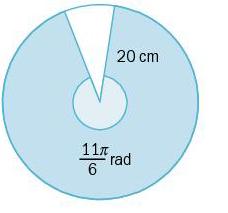
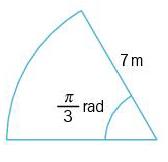
Find the area of the shaded sector in each circle.a.b.c.d. 1 rad 1m
Convert each angle to degrees. a) π/10b) 7π/180c) 3π/8 d) 5π/6e) 4π/3 f) 2π/9
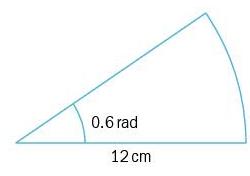
Find the length of each arc of a circle.a. b.c.d. 0.6 rad 12 cm
Convert each angle to radians, giving your answer to 3 significant figures.a) 25°b) 100°c) 250°d) 80°e) 137°f) 318°
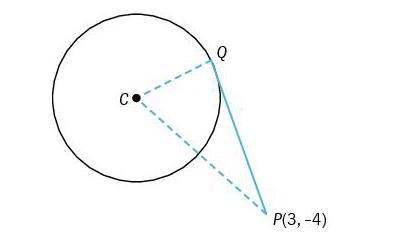
PQ is a tangent to the circle, centre C, with equation x² + y² + 6x − 8y = 0.a) Find the length of CQ. P has coordinates (3, −4).b) Find the length of PQ.c)Calculate the length of the shortest distance from P to the circle. С. 10 Q P(3,-4)
Convert each angle to radians, giving your answer in terms of .a) 15°b) 225°c) 135°d) 315°e) 63°f) 72°
A circle with centre C has equation (x − 7)² + (y − 4)² = 16.The point P(1,7) lies outside the circle.Find the length of the two tangents to thecircle from P.
A circle with centre C(2, −1) passes through the point A(4, 2).a) Find the equation of the circle in the form x² + y² + ax + by + k = 0, where a, b and k are integers.b) Find the equation of the tangent to the circle at A.c) Find the coordinates of the points atwhich the tangent cuts the
A circle with centre C has equation x² + y² + 6x + 2y = 8 = 0. For the line x + y = k, determine the values of k for which the line and the circlea) Meet at two distinct pointsb) Meet at a single point (the line is a tangent to the circle)c) Do not meet.
a) Sketch the graph of y = g(x) and state the domain and range of g(x). b) Give the coordinates where y = crosses a coordinate axis. y = g(x) c) Sketch the graph of y = h(x) and state the domain and range of h(x). d) Give the coordinates where y=h(x) crosses a coordinate axis.f(x) =
The points K, L and M have coordinates (10, 8), (−2, −10) and (−14, −2) respectively.a) Use Pythagoras' theorem to show that KLM is a right-angled triangle.b) Hence find the equation of the circle thatpasses through K, L and M.
A circle with centre Chas equation x² + y² + 8x + 4y − 5 = 0.a) Find the coordinates of C and the radius of the circle.b) A(0, −5) and B(0,1) lie on the circle. Find the equation of the line perpendicular to AB which goes through B.c) Show that this line goes through theother end of the
The points A and B have coordinates (5, −1) and (−1, 7) respectively. C is the mid-point of AB.a) Find the coordinates of C.b) Find the equation of the circle with AB as diameter.c) Find the equation of the tangent to thecircle at A.
The points P, Q and R have coordinates (2, 1), (6, 2) and (2, 18) respectively.a) Use Pythagoras' theorem to show that PQR is a right-angled triangle.b) Hence find the equation of the circle thatpasses through P, Q and R.
The circle x² + y² + 2x + 4y − 35 = 0 has centre C and passes through points P and Q.a) Find the coordinates of C. M(3, 2) is the mid-point of PQ.b) Find the equation of the line PQ. Give your answer in the form ax + by + c = 0.c) Find the coordinates of P and Q.
A circle with centre C has equation x² + y² − 6x + 2y + 5 = 0.a) Find the coordinates of C and the radius of the circle.b) A(5, −2) lies on the circle. Find theequation of the tangent to the circle at A.
The circles with equations x² + y² + 6x − 10y = 26 and x² + y² − 12x + 4y = k are congruent.a) Determine the value of k.b) Calculate the distance between their centres.
A line has equation 4x + y + k = 0 and a curve has equation y = kx² + 3, where k is a constant.a) Find the two values of k for which the line is a tangent to the curve.b) Find the equation of the straight linejoining the points on the curve for thesetwo values of k.
Show that that the straight line with equation 3x − y + 8 = 0 is a tangent to the circle with equation x² + y² − 18 x 10y + 16 = 0.
Calculate the exact distance of the point P(−1, 1) to the point on the circlex² + y² − 6x − 10y + 30 = 0 that is closest to P.
Determine the set of values of k for which the line 3x + y = k does not intersect the curve with equation y = x² − 2x + 1.
The line y = kx − 6 is a tangent to the curve y = x² + x − 2.a) Find the two possible values of k.b)For each of these values of k, find thecoordinates of the point where the linetouches the curve.
Find the equation of the circle whose diameter is the line joining the points P(−1, 5) and Q(3, −1).
AB is a diameter of the circle (x − 3)² + (y − 2)² = 5, where A is (2, 0).D(5, 3) lies on the circle.Show that triangle ABD is right angled at D.
Showing 500 - 600
of 745
1
2
3
4
5
6
7
8
Step by Step Answers

 Get 50% OFF
Claim Now
Get 50% OFF
Claim Now