New Semester
Started
Get
50% OFF
Study Help!
--h --m --s
Claim Now
Question Answers
Textbooks
Find textbooks, questions and answers
Oops, something went wrong!
Change your search query and then try again
S
Books
FREE
Study Help
Expert Questions
Accounting
General Management
Mathematics
Finance
Organizational Behaviour
Law
Physics
Operating System
Management Leadership
Sociology
Programming
Marketing
Database
Computer Network
Economics
Textbooks Solutions
Accounting
Managerial Accounting
Management Leadership
Cost Accounting
Statistics
Business Law
Corporate Finance
Finance
Economics
Auditing
Tutors
Online Tutors
Find a Tutor
Hire a Tutor
Become a Tutor
AI Tutor
AI Study Planner
NEW
Sell Books
Search
Search
Sign In
Register
study help
mathematics
precalculus
Precalculus Concepts Through Functions A Unit Circle Approach To Trigonometry 5th Edition Michael Sullivan - Solutions
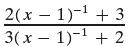
In Problems 75–86, perform the indicated operations and simplify the result. Leave your answer in factored form. 2(x - 1)-¹ +3 3(x-1)-¹ + 2
In Problems 79–126, factor each polynomial completely. If the polynomial cannot be factored, say it is prime. x2 x² 10x + 21
In Problems 77–92, simplify each expression. ∞016 3/2
In Problems 59–94, solve each inequality. Express your answer using set notation or interval notation. Graph the solution set. x(4x + 3) ≤ (2x + 1)²
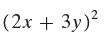
In Problems 67 – 90, multiply the polynomials using the special product formulas. Express your answer as a single polynomial in standard form. (2x + 3y)²
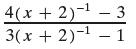
In Problems 75–86, perform the indicated operations and simplify the result. Leave your answer in factored form. 4(x + 2)¹ - 3 3(x + 2)¹1
In Problems 59–94, solve each inequality. Express your answer using set notation or interval notation. Graph the solution set. x(9x 5) (3x - 1)²
In Problems 85–96, simplify each expression.(−4)2
In Problems 77–92, simplify each expression. 27 x!! 8 2/3
In Problems 79–126, factor each polynomial completely. If the polynomial cannot be factored, say it is prime. 4x² 8x + 32
In Problems 67 – 90, multiply the polynomials using the special product formulas. Express your answer as a single polynomial in standard form. (x - 2)³
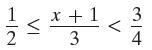
In Problems 59–94, solve each inequality. Express your answer using set notation or interval notation. Graph the solution set. VI x + 1 3 V 314
In Problems 77–92, simplify each expression. 0010 -3/2 (8)
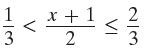
In Problems 59–94, solve each inequality. Express your answer using set notation or interval notation. Graph the solution set. 113 V X +1 2 VI 2/3
In Problems 67 – 90, multiply the polynomials using the special product formulas. Express your answer as a single polynomial in standard form. (x + 1)³
In Problems 79–126, factor each polynomial completely. If the polynomial cannot be factored, say it is prime. 3x² - 12x + 15
In Problems 67 – 90, multiply the polynomials using the special product formulas. Express your answer as a single polynomial in standard form. (2x + 1)³
In Problems 77–92, simplify each expression. 8 1-2/3 27
In Problems 85–96, simplify each expression.−42
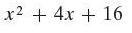
In Problems 79–126, factor each polynomial completely. If the polynomial cannot be factored, say it is prime. x² + 4x + 16
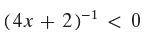
In Problems 59–94, solve each inequality. Express your answer using set notation or interval notation. Graph the solution set. (4x + 2)¹ < 0
In Problems 85–96, simplify each expression.4−2
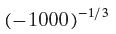
In Problems 77–92, simplify each expression. (-1000)-¹/3
In Problems 67 – 90, multiply the polynomials using the special product formulas. Express your answer as a single polynomial in standard form. (3x - 2)3 X
In Problems 79–126, factor each polynomial completely. If the polynomial cannot be factored, say it is prime. x² + 12x + 36
In Problems 85–96, simplify each expression.−4−2
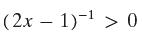
In Problems 59–94, solve each inequality. Express your answer using set notation or interval notation. Graph the solution set. (2x - 1)¹> 0 1)-1
In Problems 77–92, simplify each expression. -25-1/2
In Problems 85–96, simplify each expression.3−6 · 34
In Problems 85–96, simplify each expression.4−2 · 43
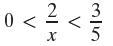
In Problems 59–94, solve each inequality. Express your answer using set notation or interval notation. Graph the solution set. 2 0 < XIN x V 3
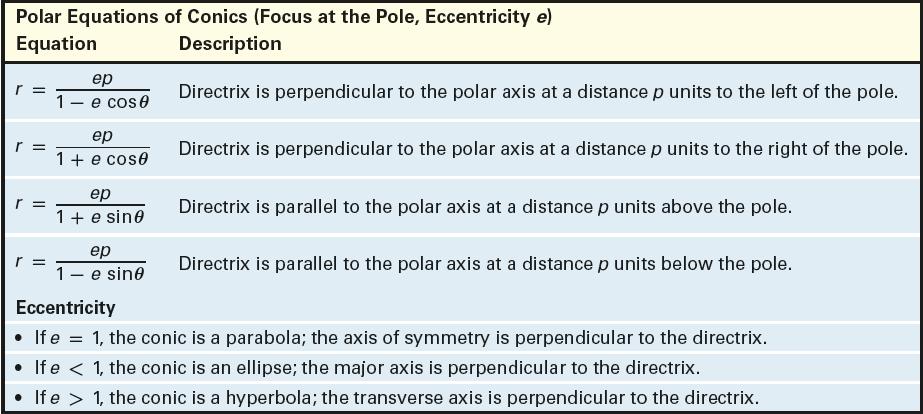
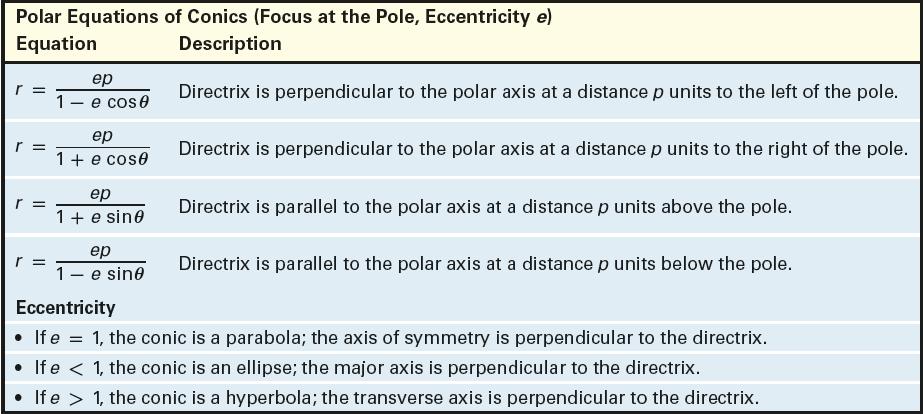
DeriveData from table 5 r = ep 1+ e sin from Table 5.
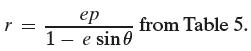
DeriveData from table 5 r = 1 ep e sin from Table 5.
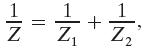
In an AC circuit with two parallel pathways, the total impedance Z, in ohms, satisfies the formulawhere Z1 is the impedance of the first pathway and Z2 is the impedance of the second pathway. Determine the total impedance if the impedances of the two pathways are Z1 = 2 + i ohms and Z2 = 4 − 3i
In Problems 55–68, rationalize the denominator of each expression. Assume that all variables are positive when they appear. -3 √5 + 4
In Problems 49 – 66, multiply the polynomials using the FOIL method. Express your answer as a single polynomial in standard form.(−2x − 3y)(3x + 2y)
In Problems 55–68, rationalize the denominator of each expression. Assume that all variables are positive when they appear. √2 √7 + 2
In Problems 11 – 68, solve each equation. 3x - 5 - √x + 7 = 2
In Problems 55–62, find the LCM of the given polynomials.x3 − x, x3 − 2x2 + x, x3 − 1
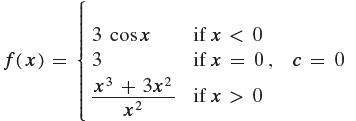
In Problems 45–60, determine whether f is continuous at c. f(x) = = 3 cosx 3 x³ + 3x² x² if x < 0 if x = 0, c = 0 if x > 0
In Problems 49 – 66, multiply the polynomials using the FOIL method. Express your answer as a single polynomial in standard form.(−x − 2)(−2x − 4)
In Problems 55–60, factor by grouping.45x3 − 30x2 + 15x2 − 10x
In Problems 59–94, solve each inequality. Express your answer using set notation or interval notation. Graph the solution set.x − 6 < 1
In Problems 59–62, z = 3 − 4i and w = 8 + 3i. Write each expression in the standard form a + bi.w − w̅
In Problems 55–62, find the LCM of the given polynomials.x − 3, x2 + 3x, x3 − 9x
In Problems 49 – 66, multiply the polynomials using the FOIL method. Express your answer as a single polynomial in standard form.(−3x − 1)(x + 1)
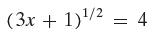
In Problems 11 – 68, solve each equation. (3x + 1)¹/2 = 4
In Problems 61–72, factor each polynomial.3x2 + 4x + 1
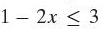
In Problems 59–94, solve each inequality. Express your answer using set notation or interval notation. Graph the solution set. 1-2x ≤ 3
In Problems 55–68, rationalize the denominator of each expression. Assume that all variables are positive when they appear. 2 - √5 2 + 3√5
In Problems 59–62, z = 3 − 4i and w = 8 + 3i. Write each expression in the standard form a + bi.zz̅
In Problems 49 – 66, multiply the polynomials using the FOIL method. Express your answer as a single polynomial in standard form.(−2x − 3)(3 − x)
In Problems 59–62, z = 3 − 4i and w = 8 + 3i. Write each expression in the standard form a + bi. Z - W
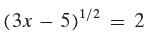
In Problems 11 – 68, solve each equation. (3x - 5)¹/2 = 2
In Problems 55–62, find the LCM of the given polynomials.x2 + 4x + 4, x3 + 2x2 , (x + 2)3
In Problems 61–72, factor each polynomial.2x2 + 3x + 1
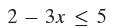
In Problems 59–94, solve each inequality. Express your answer using set notation or interval notation. Graph the solution set. 23x5
In Problems 55–68, rationalize the denominator of each expression. Assume that all variables are positive when they appear. √√3-1 2√3+3
In Problems 61 – 72, find the numbers at which f is continuous. At which numbers is f discontinuous?f (x) = 3x2 + x
In Problems 63–74, perform the indicated operations and simplify the result. Leave your answer in factored form. x2 X 7x + 6 x x²2x24
In Problems 49 – 66, multiply the polynomials using the FOIL method. Express your answer as a single polynomial in standard form.(x − 2y)(x + y)
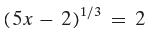
In Problems 11 – 68, solve each equation. (5x – 2)1/3 = 2
In Problems 61–72, factor each polynomial.2z2 + 5z + 3
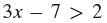
In Problems 59–94, solve each inequality. Express your answer using set notation or interval notation. Graph the solution set. 3x - 7 > 2 V
In Problems 59–68, find the value of each expression if x = 3 and y = −2. |x| X
The impedance Z, in ohms, of a circuit element is defined as the ratio of the phasor voltage V, in volts, across the element to the phasor current I, in amperes, through the elements. That is, Z = V/I. If the voltage across a circuit element is 18 + i volts and the current through the element is 3
In Problems 61 – 72, find the numbers at which f is continuous. At which numbers is f discontinuous?f (x) = −3x3 + 7
In Problems 55–68, rationalize the denominator of each expression. Assume that all variables are positive when they appear. 5 √2-1
In Problems 49 – 66, multiply the polynomials using the FOIL method. Express your answer as a single polynomial in standard form.(2x + 3y)(x − y)
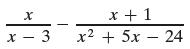
In Problems 63–74, perform the indicated operations and simplify the result. Leave your answer in factored form. x - 3 x + 1 x2 + 5x 24
In Problems 11 – 68, solve each equation. (2x + 1)¹/3 = -1
In Problems 61–72, factor each polynomial.6z2 + 5z + 1
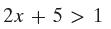
In Problems 59–94, solve each inequality. Express your answer using set notation or interval notation. Graph the solution set. 2x + 5 > 1 V
In Problems 59–68, find the value of each expression if x = 3 and y = −2. Ту У
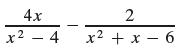
In Problems 63–74, perform the indicated operations and simplify the result. Leave your answer in factored form. 4x x² - 4 2 x²+x-6
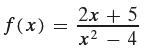
In Problems 61 – 72, find the numbers at which f is continuous. At which numbers is f discontinuous? f(x): = 2x + 5 x² - 4 2 X
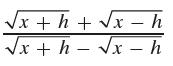
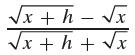
In Problems 55–68, rationalize the denominator of each expression. Assume that all variables are positive when they appear. √x + h + √x = h √x + h = √x - h
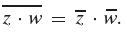
Use z = a + bi and w = c + di to show that Z. W = Z.W.
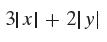
In Problems 59–68, find the value of each expression if x = 3 and y = −2. 31x1 + 2|y|
In Problems 59–94, solve each inequality. Express your answer using set notation or interval notation. Graph the solution set. -3(1-x) < 12
In Problems 11 – 68, solve each equation. x + 1 x² + 2x x + 4 x² + x 2 -3 x² + 3x + 2
In Problems 55–68, rationalize the denominator of each expression. Assume that all variables are positive when they appear. √x + h = √x √x +h+√x
In Problems 63–74, perform the indicated operations and simplify the result. Leave your answer in factored form. 2 6 (x + 2)²(x-1) (x+2)(x-1)²
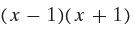
In Problems 67 – 90, multiply the polynomials using the special product formulas. Express your answer as a single polynomial in standard form. (x - 1)(x + 1)
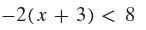
In Problems 59–94, solve each inequality. Express your answer using set notation or interval notation. Graph the solution set. -2(x + 3) < 8
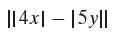
In Problems 59–68, find the value of each expression if x = 3 and y = −2. ||4x|-|5y||
In Problems 61–72, factor each polynomial.3x2 − 10x + 8
In Problems 61 – 72, find the numbers at which f is continuous. At which numbers is f discontinuous?f (x) = 4 csc x
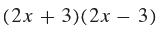
In Problems 67 – 90, multiply the polynomials using the special product formulas. Express your answer as a single polynomial in standard form. (2x + 3)(2x - 3)
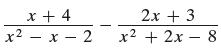
In Problems 63–74, perform the indicated operations and simplify the result. Leave your answer in factored form. x + 4 x²-x-2 2x + 3 x² + 2x 8
In Problems 59–94, solve each inequality. Express your answer using set notation or interval notation. Graph the solution set. 43(1x) ≤ 3
In Problems 69–76, rationalize the numerator of each expression. Assume that all variables are positive when they appear. √11 + 1 2
In Problems 61–72, factor each polynomial.12x4 + 56x3 + 32x2
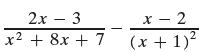
In Problems 63–74, perform the indicated operations and simplify the result. Leave your answer in factored form. 2x - 3 x² + 8x + 7 x 2 2 (x + 1)²
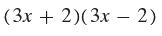
In Problems 67 – 90, multiply the polynomials using the special product formulas. Express your answer as a single polynomial in standard form. (3x + 2)(3x-2)
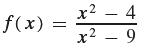
In Problems 61 – 72, find the numbers at which f is continuous. At which numbers is f discontinuous? f(x) || 2 X 4 x2-9
In Problems 61–72, factor each polynomial.21x2 − 98x + 56
In Problems 59–94, solve each inequality. Express your answer using set notation or interval notation. Graph the solution set. 84(2-x) ≤ - 2x
In Problems 69–76, rationalize the numerator of each expression. Assume that all variables are positive when they appear. 5 - √43 3
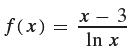
In Problems 61 – 72, find the numbers at which f is continuous. At which numbers is f discontinuous? f(x) = x - 3 In x
Showing 200 - 300
of 29454
1
2
3
4
5
6
7
8
9
10
11
12
13
14
15
Last
Step by Step Answers

 Get 50% OFF
Claim Now
Get 50% OFF
Claim Now