







Question: Given an undirected graph G G G G , the problem is to determine whether or not G G G G is connected. Use an
Given an undirected graph G, the problem is to determine whether or not G is connected. Use an adversary argument to prove that it is necessary to look at all (n2−n)/2 potential edges in the worst case.
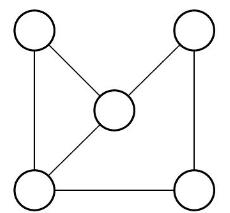
Graph G:
A graph consists of a set of vertices and a set of edges , such that each edge in is a connection between a pair of vertices in The number of vertices is written , and the number of edges is written can range from zero to a maximum of . A graph with relatively few edges is called sparse, while a graph with many edges is called dense. A graph containing all possible edges is said to be complete.
A graph whose edges are not directed is called an undirected graph (as illustrated by Figure 11.1(a)).
Figure 11.1 (a):
Step by Step Solution
3.44 Rating (154 Votes )
There are 3 Steps involved in it
Yes it is necessary to look at all n n 1 2 fracnn12 2nn1 potential edges in the worst case to determ... View full answer

Get step-by-step solutions from verified subject matter experts
 Study Help