







Question: 01 A TCP connection uses the method based on both mean and deviation to estimate the timeout. The initial value of estimated RTT is 80
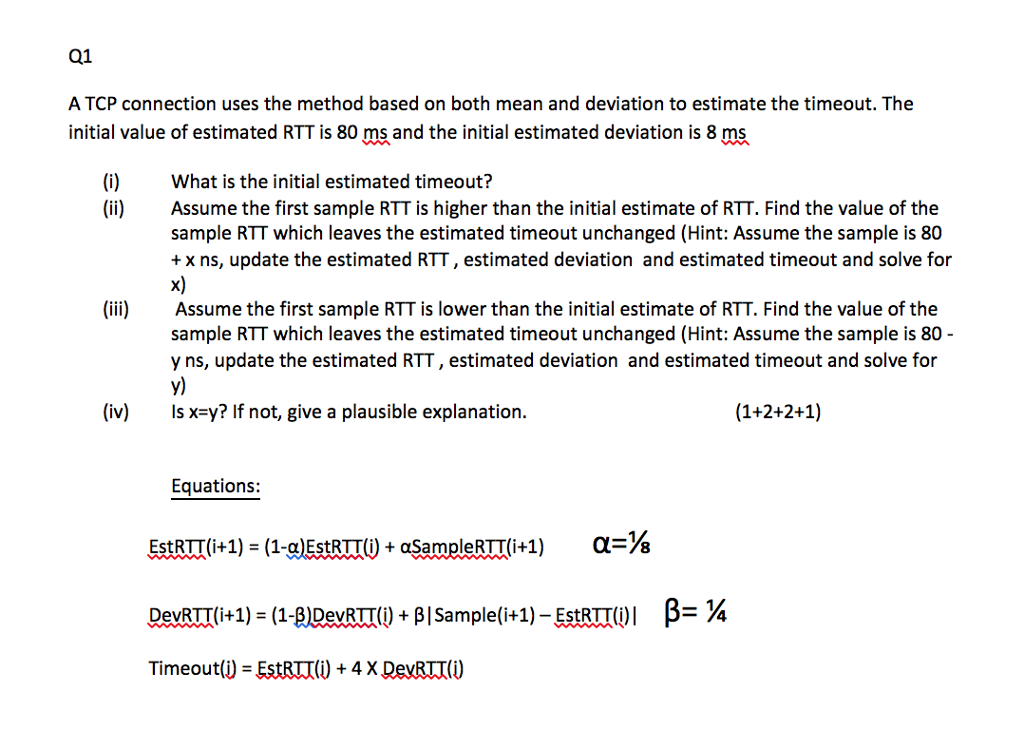
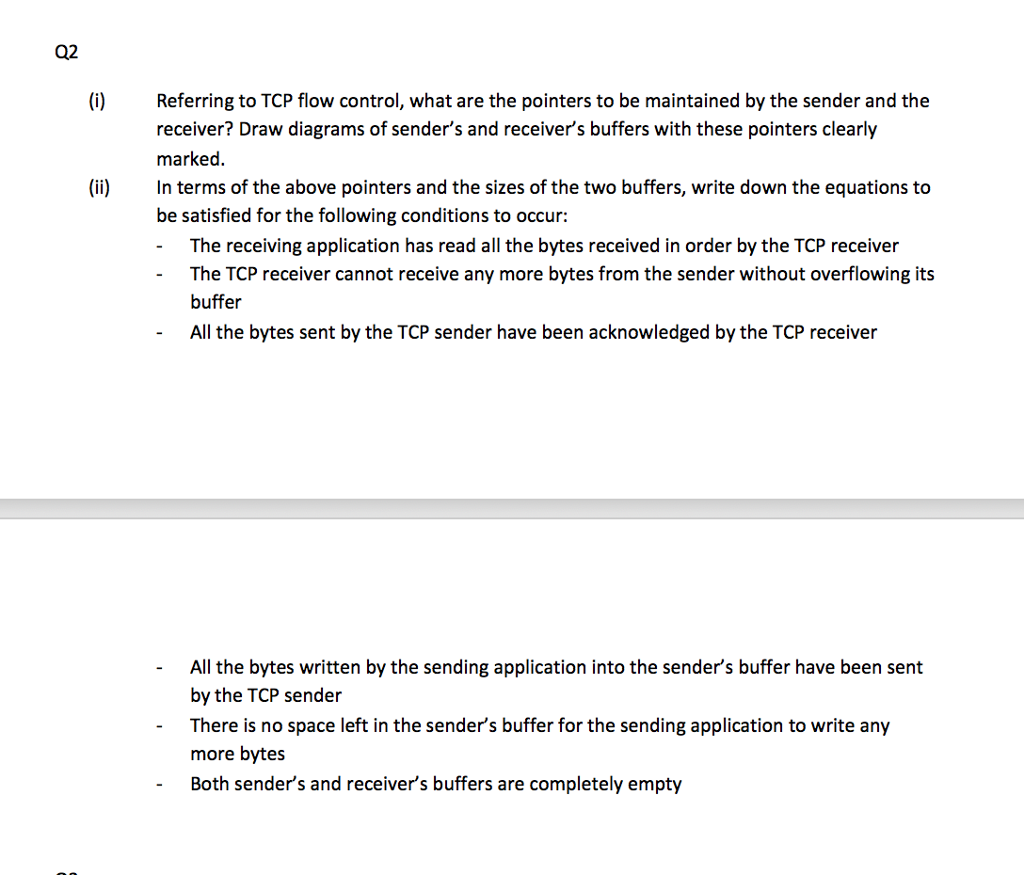
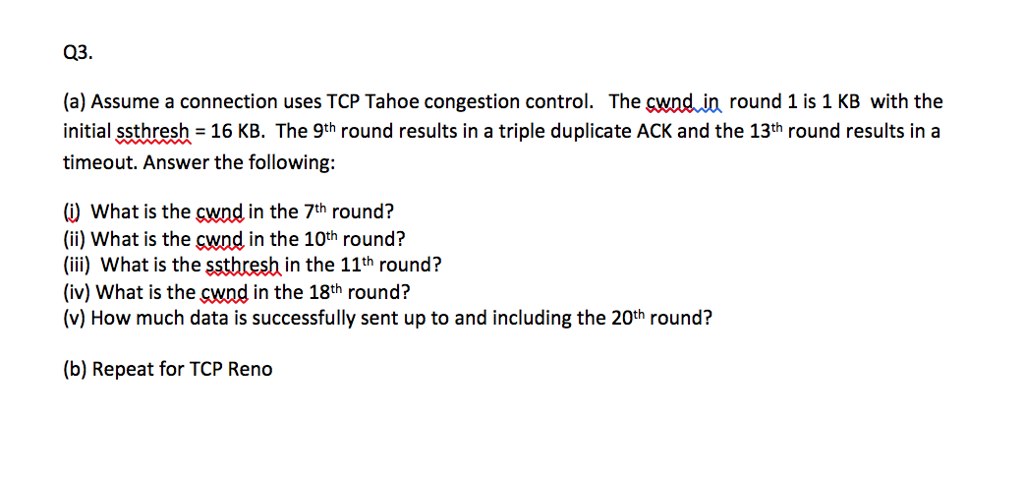
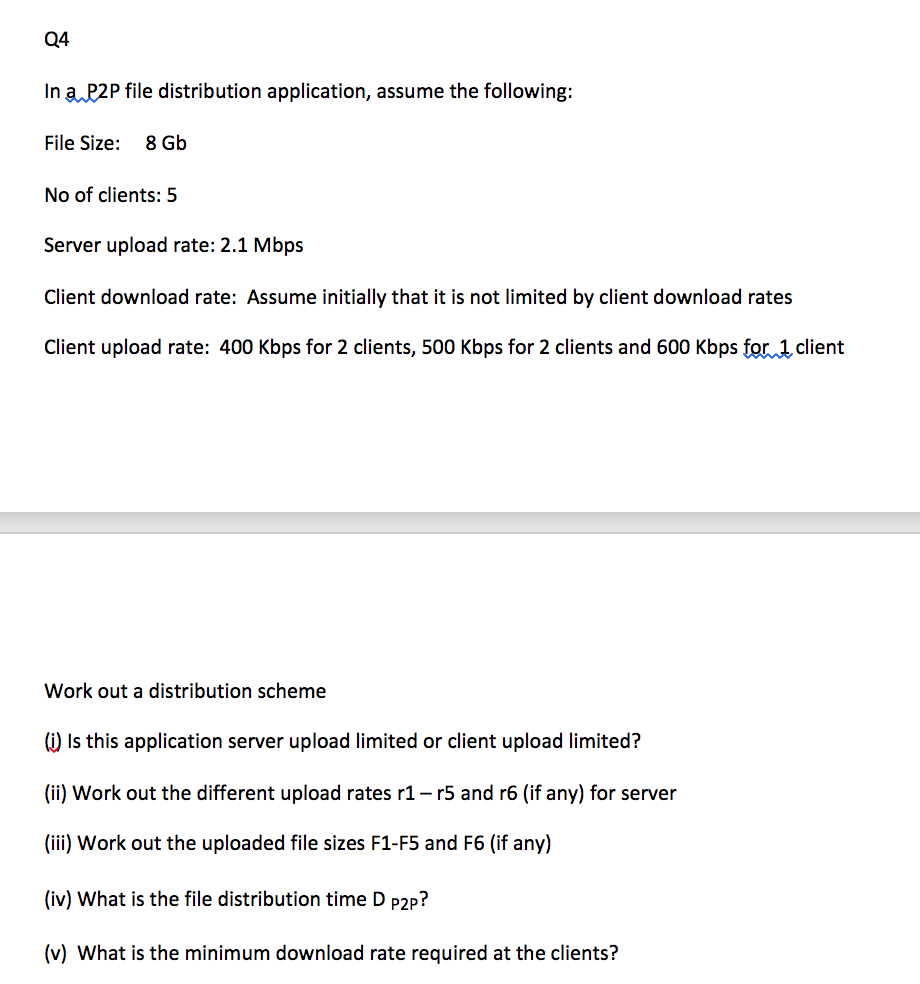
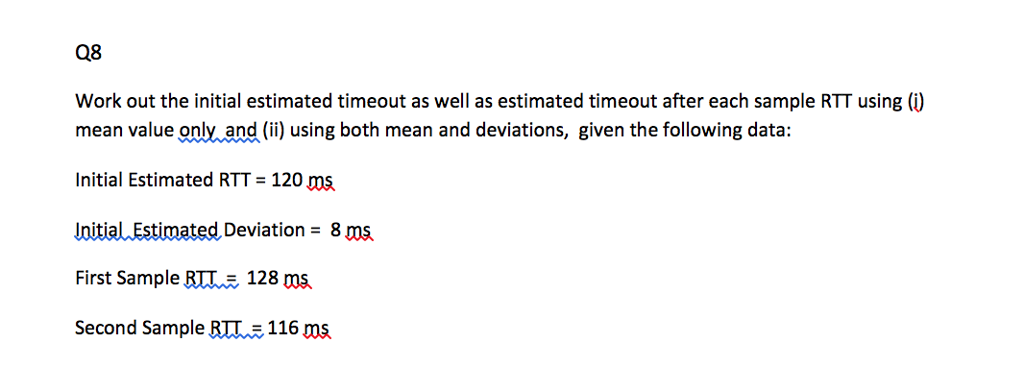
01 A TCP connection uses the method based on both mean and deviation to estimate the timeout. The initial value of estimated RTT is 80 ms and the initial estimated deviation is 8 ms (i) i What is the initial estimated timeout? Assume the first sample RTT is higher than the initial estimate of RTT. Find the value of the sample RTT which leaves the estimated timeout unchanged (Hint: Assume the sample is 80 +x ns, update the estimated RTT, estimated deviation and estimated timeout and solve for x) Assume the first sample RTT is lower than the initial estimate of RTT. Find the value of the sample RTT which leaves the estimated timeout unchanged (Hint: Assume the sample is 80 y ns, update the estimated RTT, estimated deviation and estimated timeout and solve for y) (iv) -y? If not, give a plausible explanation. Equations: EstRT (i+1) = (1-)EstRTT(i) +aSampleRTT(1+1) 5% DevRTT(1+1) : (1-eDevRTT(i) + |Sample(1+1)-EstRTT(i) I Timeout() = EstRTT(i) + 4 x DevRTT(i)
Step by Step Solution
There are 3 Steps involved in it

Get step-by-step solutions from verified subject matter experts
 Study Help