







Question: 1 . 1 4 . Let x 1 ( t ) and x 2 ( t ) be periodic signals with fundamental periods T 1
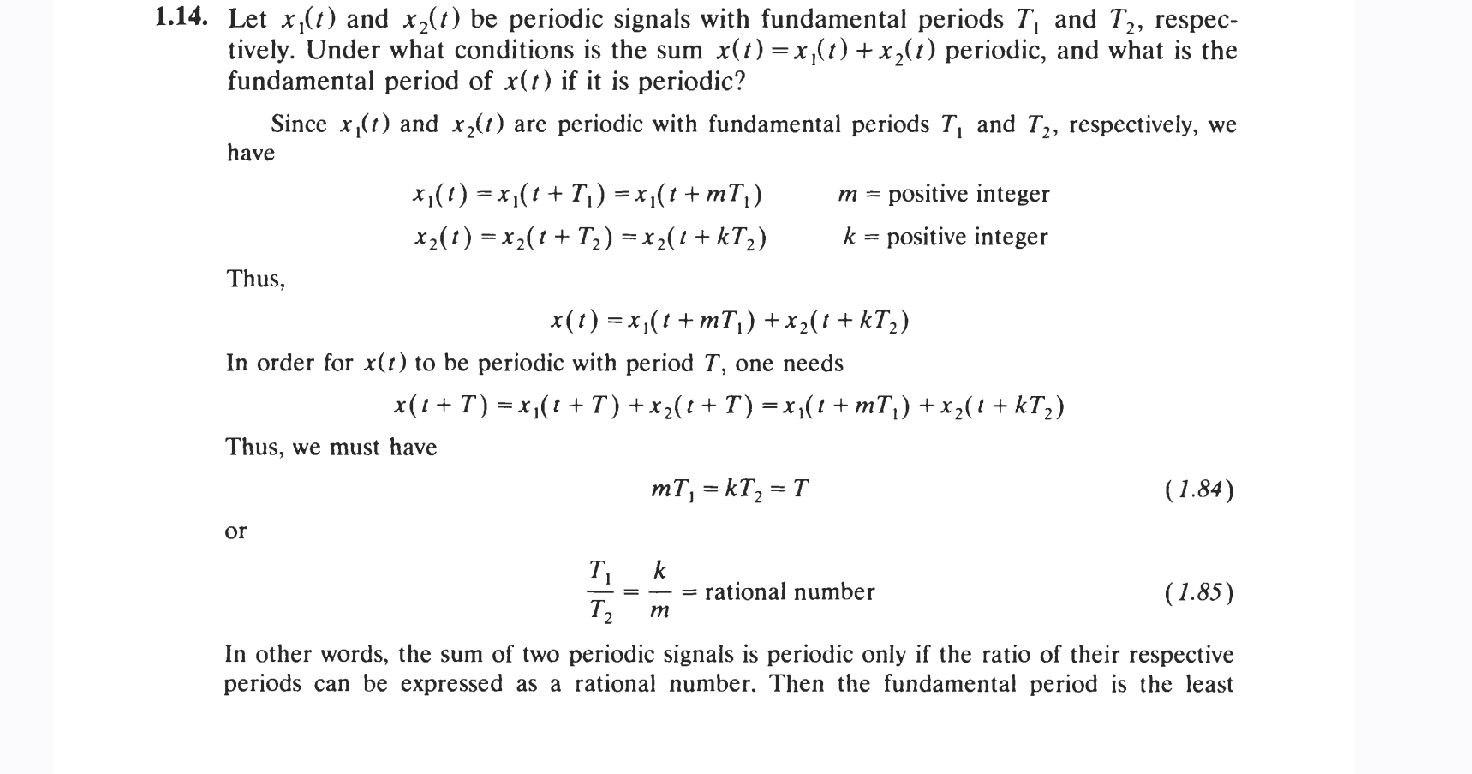
Let and be periodic signals with fundamental periods and respectively. Under what conditions is the sum periodic, and what is the fundamental period of if it is periodic?
Since and are periodic with fundamental periods and respectively, we have
positive integer
positive integer
Thus,
In order for to be periodic with period one needs
Thus, we must have
or
rational number
In other words, the sum of two periodic signals is periodic only if the ratio of their respective periods can be expressed as a rational number. Then the fundamental period is the least
Step by Step Solution
There are 3 Steps involved in it
1 Expert Approved Answer
Step: 1 Unlock

Question Has Been Solved by an Expert!
Get step-by-step solutions from verified subject matter experts
Step: 2 Unlock
Step: 3 Unlock
 Study Help