







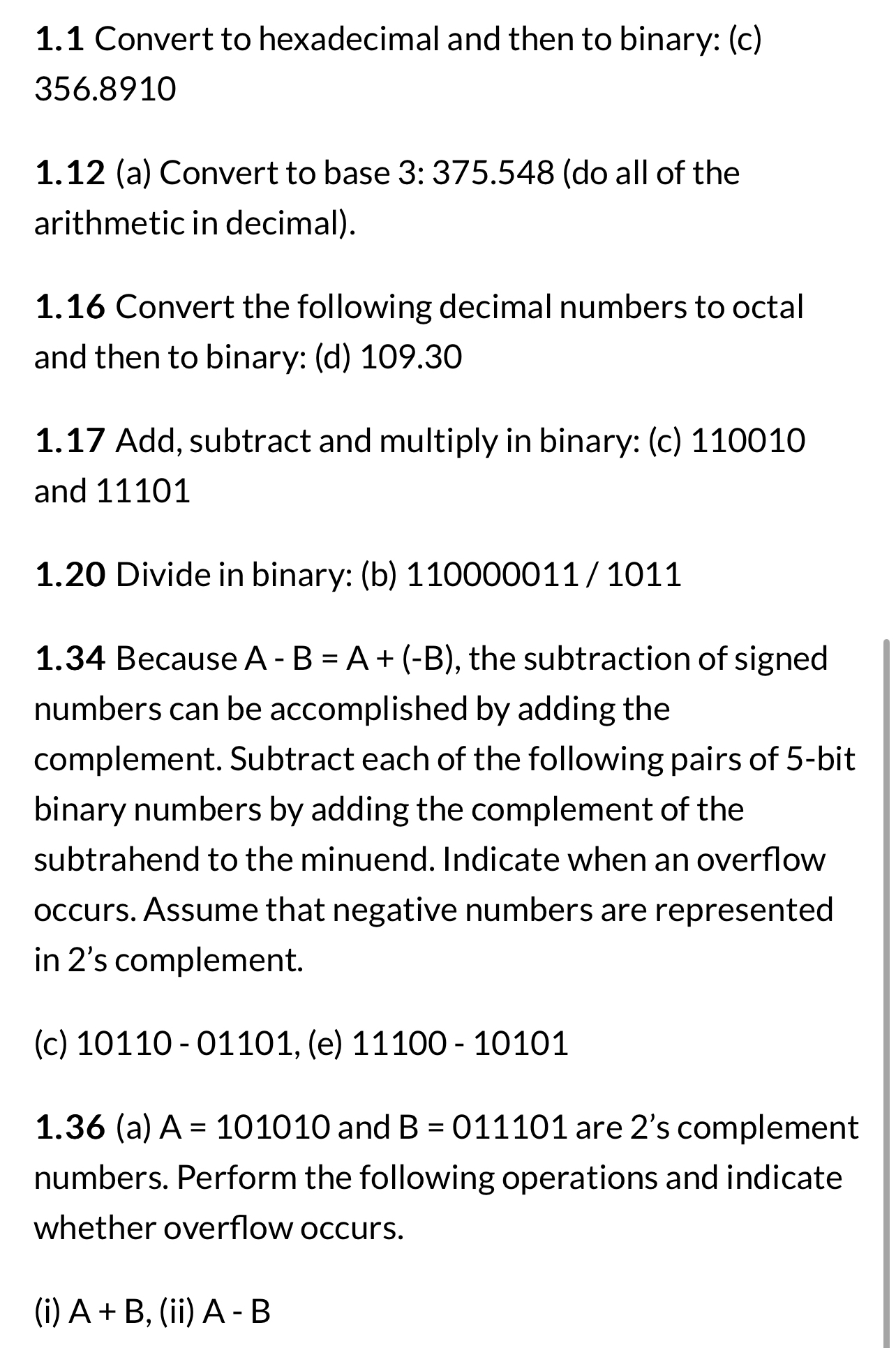
Question: 1 . 1 Convert to hexadecimal and then to binary: ( c ) 3 5 6 . 8 9 1 0 1 . 1 2
Convert to hexadecimal and then to binary: c
a Convert to base : do all of the
arithmetic in decimal
Convert the following decimal numbers to octal
and then to binary: d
Add, subtract and multiply in binary: c
and
Divide in binary: b
Because the subtraction of signed
numbers can be accomplished by adding the
complement. Subtract each of the following pairs of bit
binary numbers by adding the complement of the
subtrahend to the minuend. Indicate when an overflow
occurs. Assume that negative numbers are represented
in s complement.
ce
a and are s complement
numbers. Perform the following operations and indicate
whether overflow occurs.
iii
Step by Step Solution
There are 3 Steps involved in it
1 Expert Approved Answer
Step: 1 Unlock

Question Has Been Solved by an Expert!
Get step-by-step solutions from verified subject matter experts
Step: 2 Unlock
Step: 3 Unlock
 Study Help