



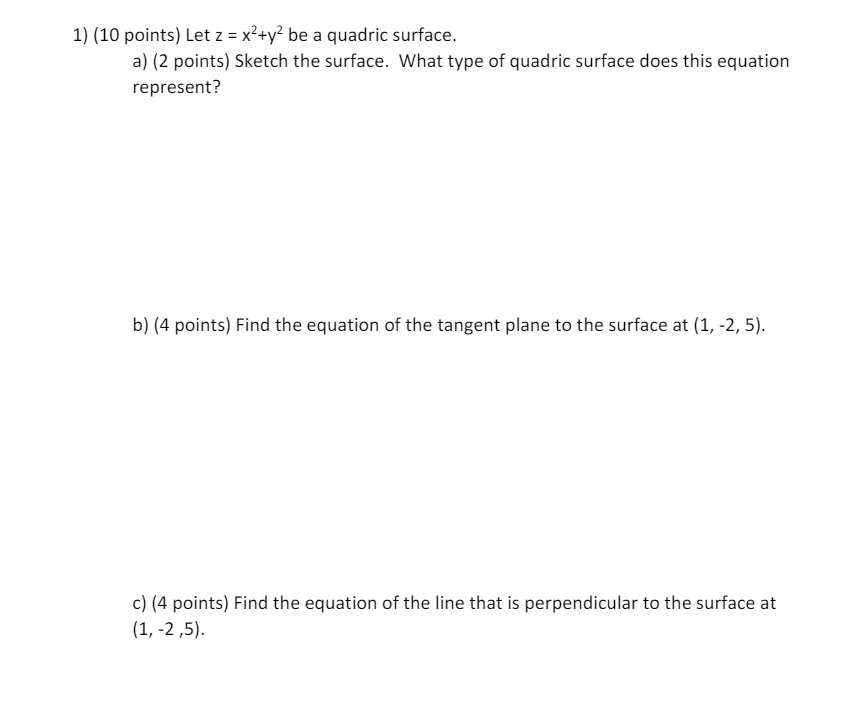
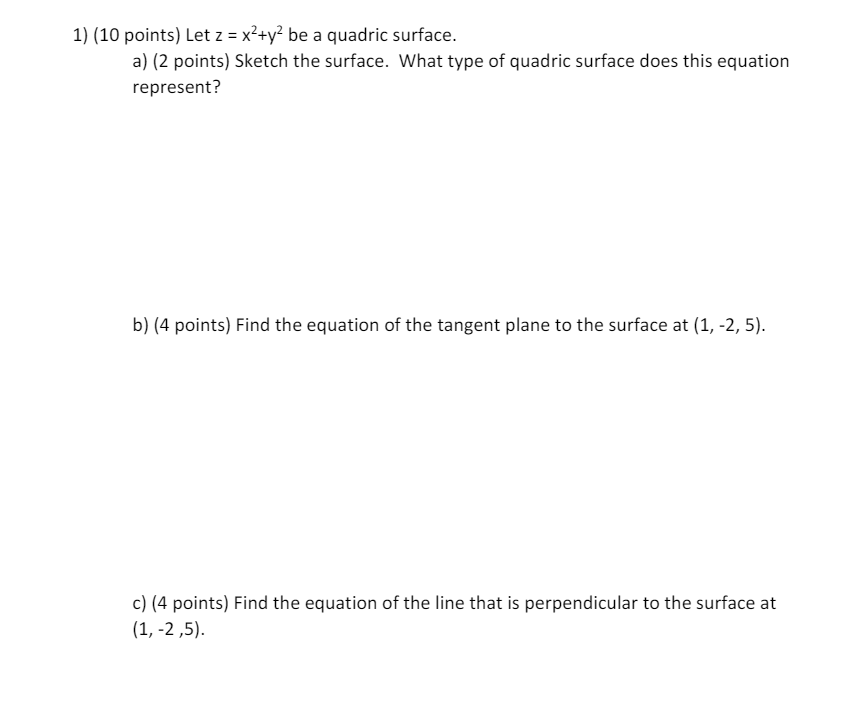
Question: 1) (10 points) Let z = x>+y? be a quadric surface. a) (2 points) Sketch the surface. What type of quadric surface does this equation
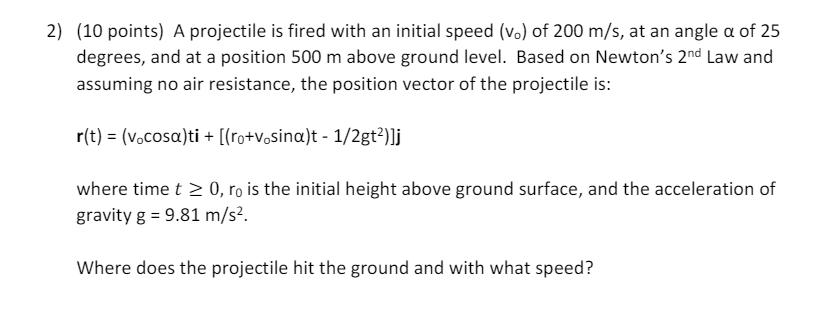
![is: r(t) = (vocosa)ti + [(ro+vesina)t - 1/2gt?)]j where time t =](https://s3.amazonaws.com/si.experts.images/answers/2024/06/6676ce00764cc_0166676ce006320e.jpg)
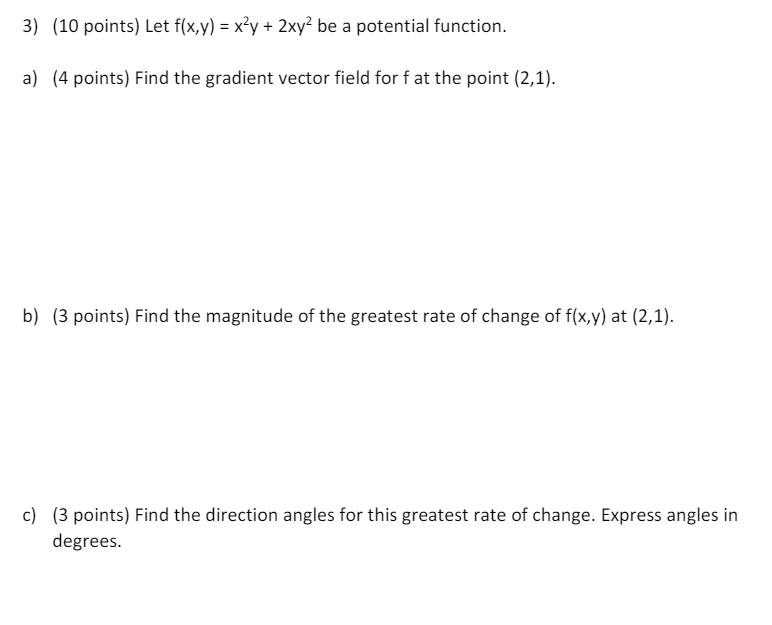
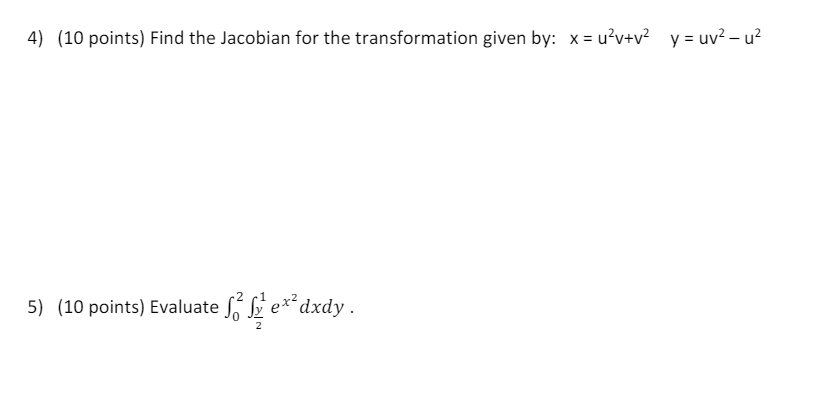
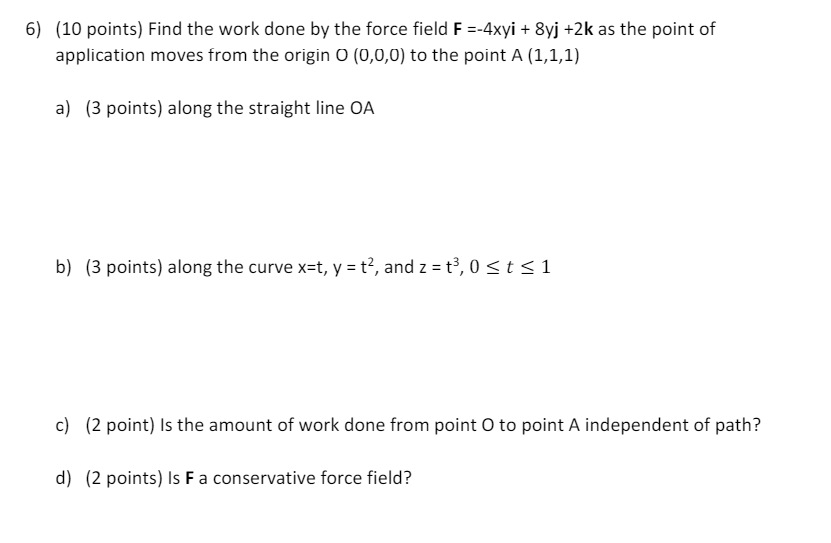
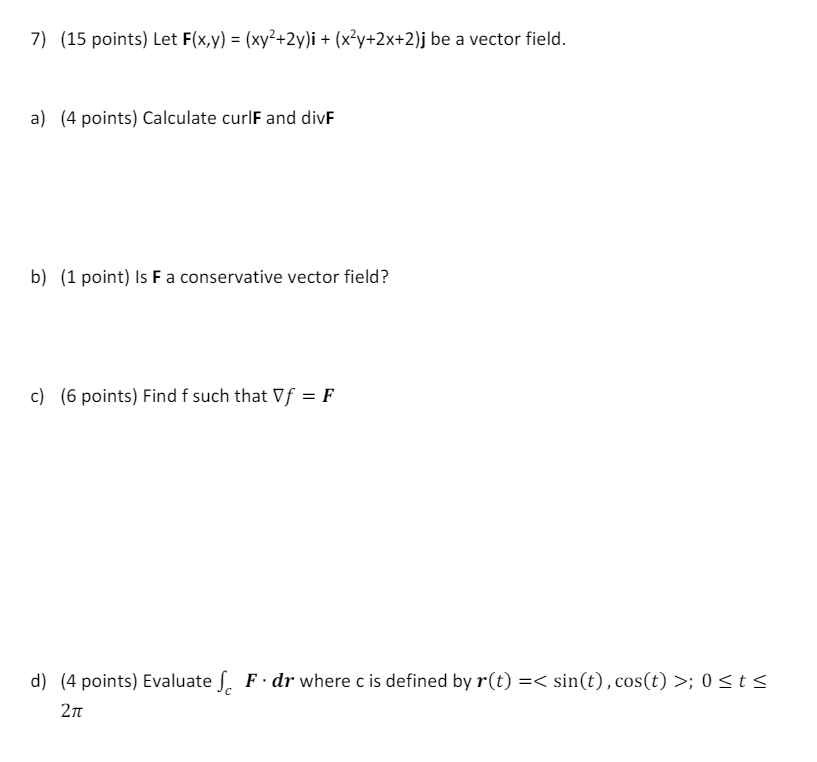
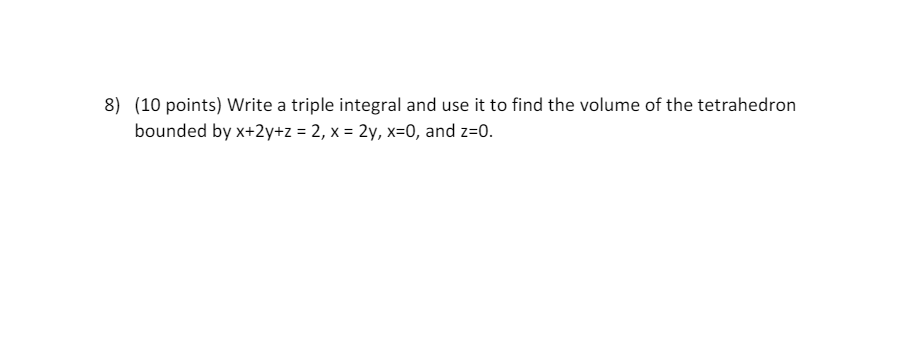
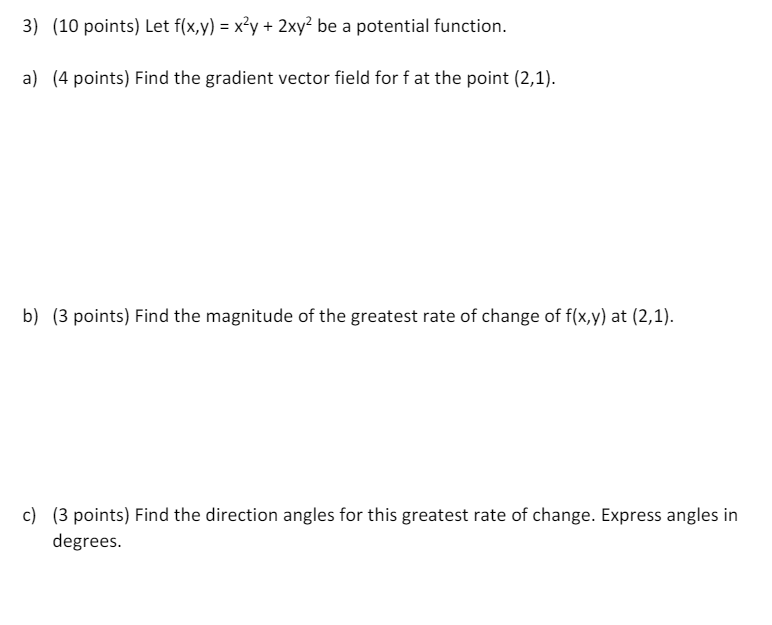
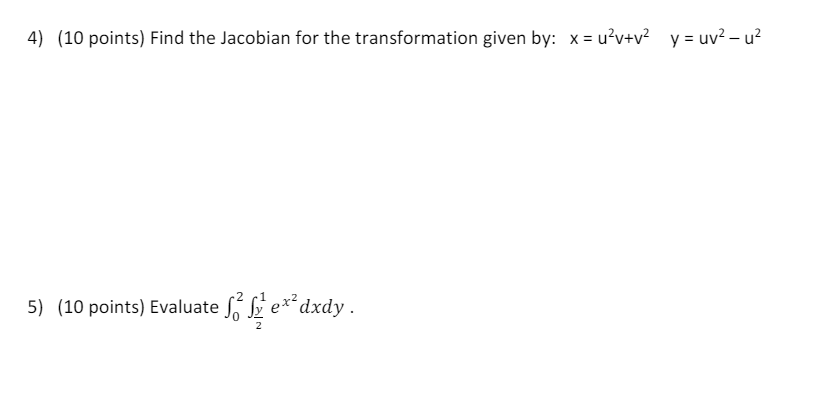
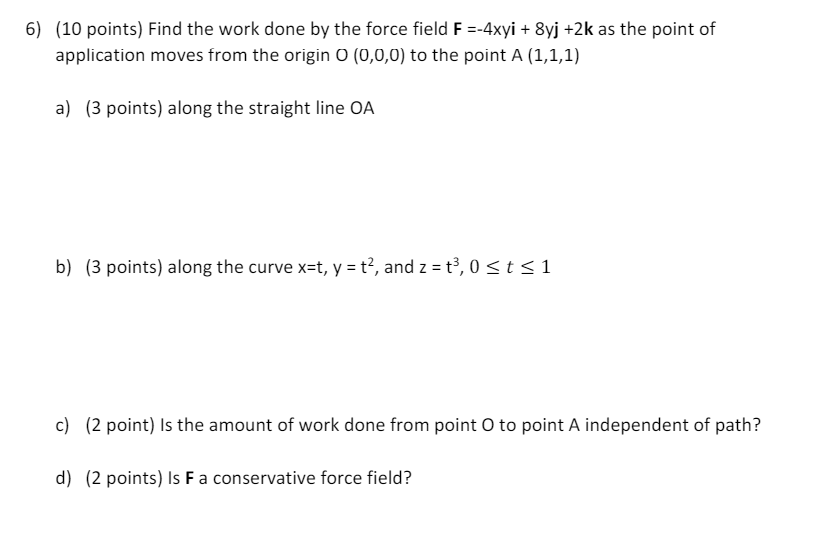
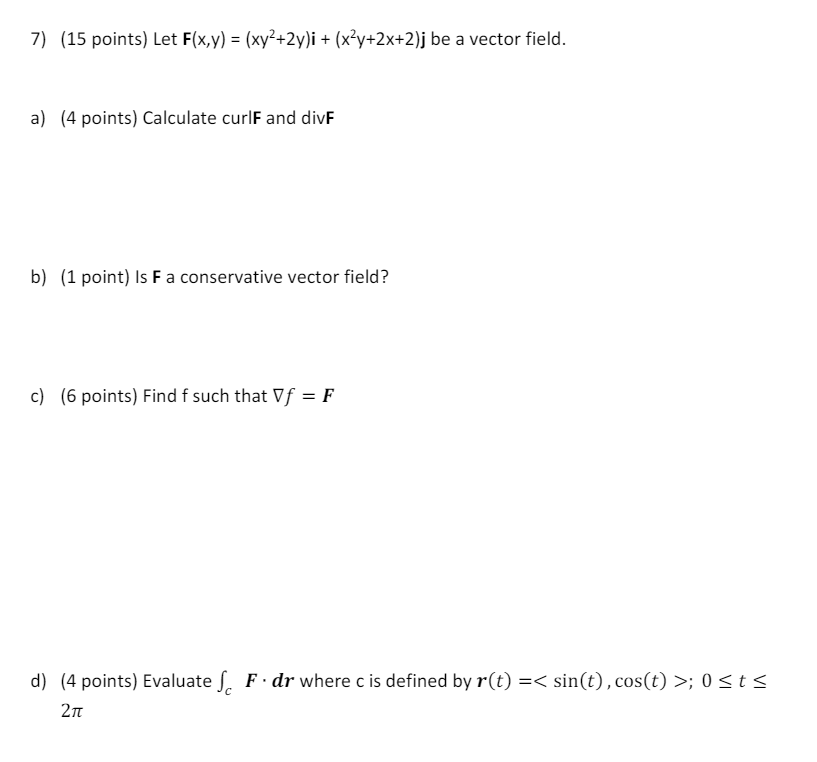
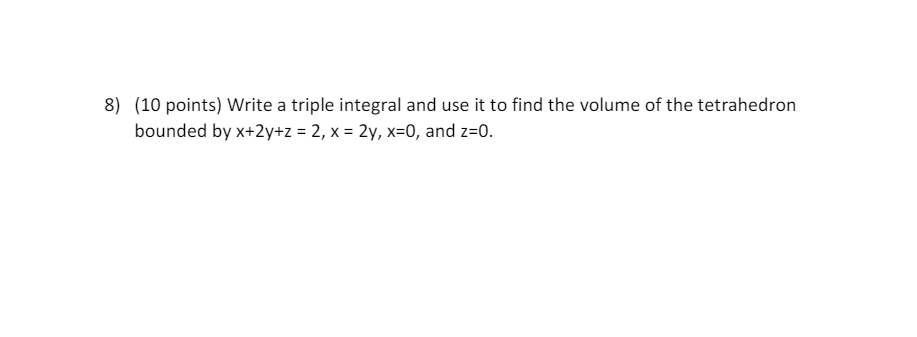
1) (10 points) Let z = x>+y? be a quadric surface. a) (2 points) Sketch the surface. What type of quadric surface does this equation represent? b) (4 points) Find the equation of the tangent plane to the surface at (1, -2, 5). c) (4 points) Find the equation of the line that is perpendicular to the surface at (1,-2,5). 2) (10 points) A projectile is fired with an initial speed (v,) of 200 m/s, at an angle a of 25 degrees, and at a position 500 m above ground level. Based on Newton's 2" Law and assuming no air resistance, the position vector of the projectile is: r(t) = (vocosa)ti + [(ro+vesina)t - 1/2gt?)]j where time t = 0, ry is the initial height above ground surface, and the acceleration of gravity g = 9.81 m/s%. Where does the projectile hit the ground and with what speed? 3) (10 points) Let f(x,y) = x'y + 2xy? be a potential function. a) (4 points) Find the gradient vector field for f at the point (2,1). b) (3 points) Find the magnitude of the greatest rate of change of f(x,y) at (2,1). c) (3 points) Find the direction angles for this greatest rate of change. Express angles in degrees. \f6) (10 points) Find the work done by the force field F =-4xyi + 8yj +2k as the point of application moves from the origin O (0,0,0) to the point A (1,1,1) a) (3 points) along the straight line OA b) (3 points) along the curve x=t,y=t%,andz=t3,0
Step by Step Solution
There are 3 Steps involved in it

Get step-by-step solutions from verified subject matter experts