







Question: 1) 2) 3) Does Corbin likely have a defect in his innate or adaptive immune cells? Which particular cell(s) and immune function is likely
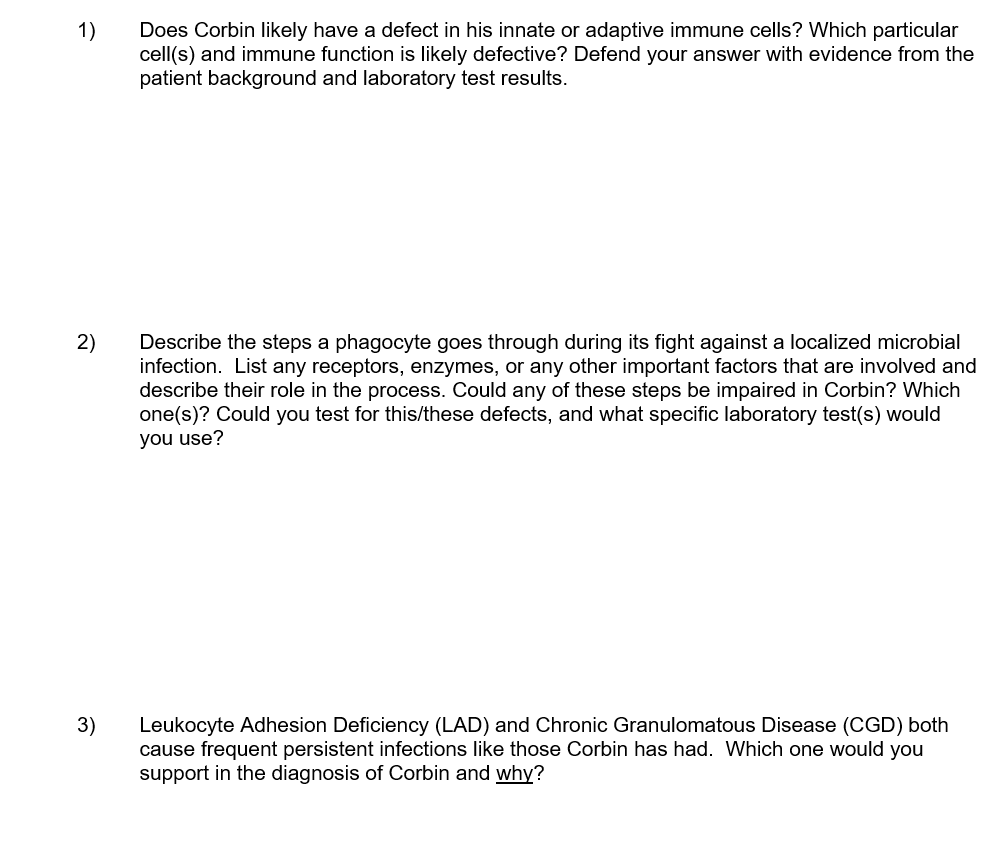
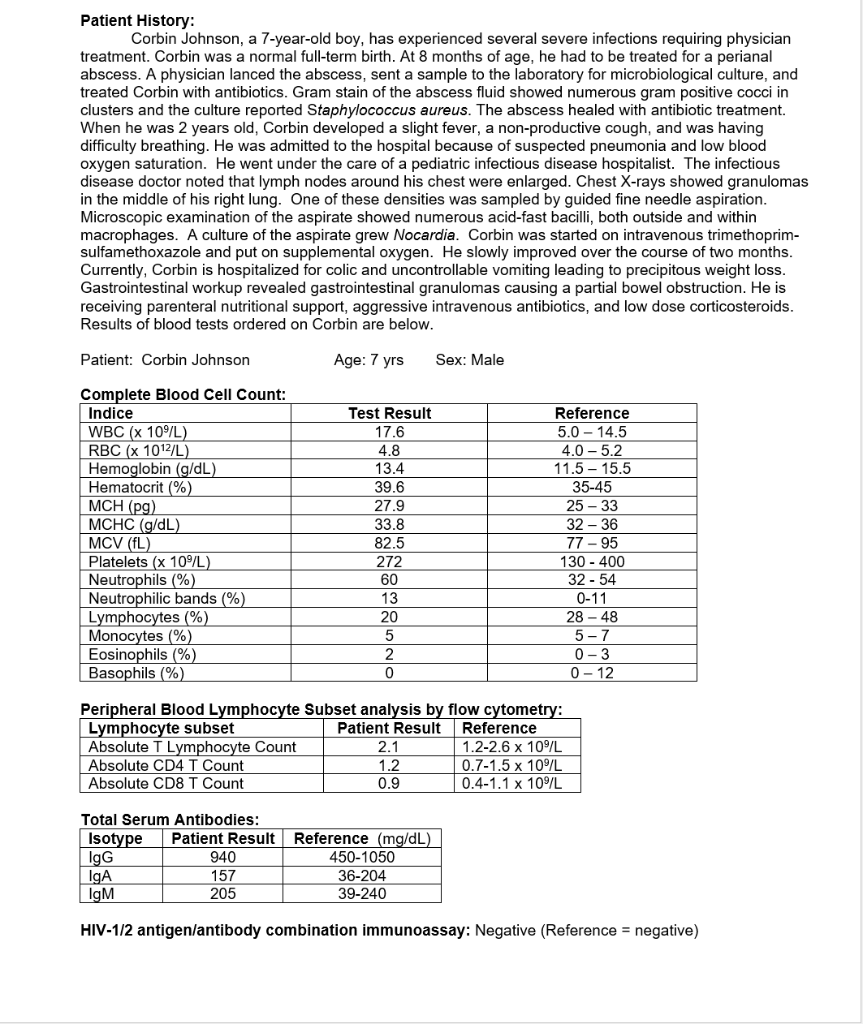
1) 2) 3) Does Corbin likely have a defect in his innate or adaptive immune cells? Which particular cell(s) and immune function is likely defective? Defend your answer with evidence from the patient background and laboratory test results. Describe the steps a phagocyte goes through during its fight against a localized microbial infection. List any receptors, enzymes, or any other important factors that are involved and describe their role in the process. Could any of these steps be impaired in Corbin? Which one(s)? Could you test for this/these defects, and what specific laboratory test(s) would you use? Leukocyte Adhesion Deficiency (LAD) and Chronic Granulomatous Disease (CGD) both cause frequent persistent infections like those Corbin has had. Which one would you support in the diagnosis of Corbin and why? Patient History: Corbin Johnson, a 7-year-old boy, has experienced several severe infections requiring physician treatment. Corbin was a normal full-term birth. At 8 months of age, he had to be treated for a perianal abscess. A physician lanced the abscess, sent a sample to the laboratory for microbiological culture, and treated Corbin with antibiotics. Gram stain of the abscess fluid showed numerous gram positive cocci in clusters and the culture reported Staphylococcus aureus. The abscess healed with antibiotic treatment. When he was 2 years old, Corbin developed a slight fever, a non-productive cough, and was having difficulty breathing. He was admitted to the hospital because of suspected pneumonia and low blood oxygen saturation. He went under the care of a pediatric infectious disease hospitalist. The infectious disease doctor noted that lymph nodes around his chest were enlarged. Chest X-rays showed granulomas in the middle of his right lung. One of these densities was sampled by guided fine needle aspiration. Microscopic examination of the aspirate showed numerous acid-fast bacilli, both outside and within macrophages. A culture of the aspirate grew Nocardia. Corbin was started on intravenous trimethoprim- sulfamethoxazole and put on supplemental oxygen. He slowly improved over the course of two months. Currently, Corbin is hospitalized for colic and uncontrollable vomiting leading to precipitous weight loss. Gastrointestinal workup revealed gastrointestinal granulomas causing a partial bowel obstruction. He is receiving parenteral nutritional support, aggressive intravenous antibiotics, and low dose corticosteroids. Results of blood tests ordered on Corbin are below. Age: 7 yrs Patient: Corbin Johnson Complete Blood Cell Count: Indice WBC (x 10/L) RBC (x 1012/L) Hemoglobin (g/dL) Hematocrit (%) MCH (pg) MCHC (g/dL) MCV (fL) Platelets (x 10/L) Neutrophils (%) Neutrophilic bands (%) Lymphocytes (%) Monocytes (%) Eosinophils (%) Basophils (%) Test Result 17.6 4.8 13.4 39.6 940 157 205 27.9 33.8 82.5 272 60 13 20 5 2 0 2.1 1.2 0.9 Sex: Male Peripheral Blood Lymphocyte Subset analysis by flow cytometry: Lymphocyte subset Patient Result Absolute T Lymphocyte Count Absolute CD4 T Count Absolute CD8 T Count Reference 5.0 14.5 4.0-5.2 11.5-15.5 35-45 450-1050 36-204 39-240 130 - 400 32-54 0-11 25-33 32 - 36 77-95 Reference 1.2-2.6 x 10⁹/L 0.7-1.5 x 10/L 0.4-1.1 x 10/L 28 48 Total Serum Antibodies: Isotype Patient Result Reference (mg/dL) IgG IgA IgM HIV-1/2 antigen/antibody combination immunoassay: Negative (Reference = negative) 5-7 0-3 0-12
Step by Step Solution
3.52 Rating (162 Votes )
There are 3 Steps involved in it
1 Based on the patient history and laboratory test results it is likely that Corbin has a defect in his adaptive immune cells specifically in his T lymphocytes The evidence supporting this conclusion ... View full answer

Get step-by-step solutions from verified subject matter experts
 Study Help