







Question: 1. (2 pts) Assuming we are using the Many-to-One multithreading model in a multi-processor environment. We can achieve Computational Speedup by breaking a process down
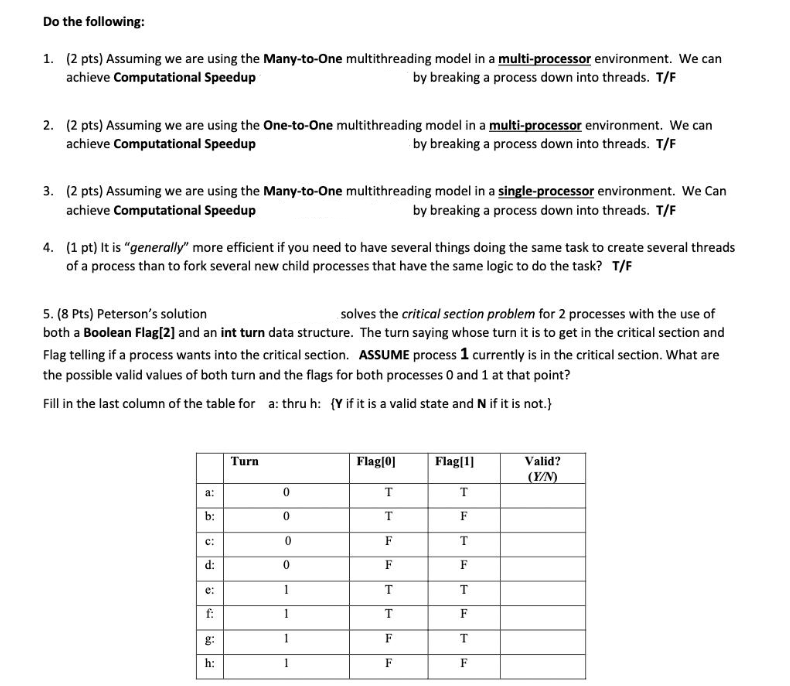
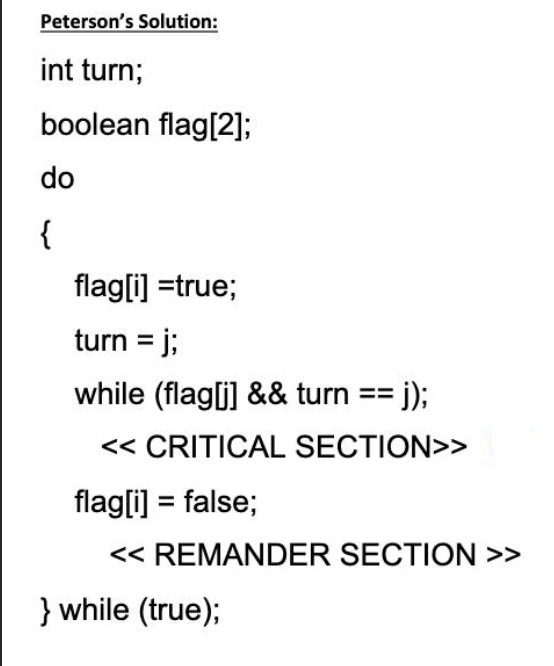
1. (2 pts) Assuming we are using the Many-to-One multithreading model in a multi-processor environment. We can achieve Computational Speedup by breaking a process down into threads. T/F 2. (2 pts) Assuming we are using the One-to-One multithreading model in a multi-processor environment. We can achieve Computational Speedup by breaking a process down into threads. T/F 3. (2 pts) Assuming we are using the Many-to-One multithreading model in a single-processor environment. We Can achieve Computational Speedup by breaking a process down into threads. T/F 4. (1 pt) It is "generally" more efficient if you need to have several things doing the same task to create several threads of a process than to fork several new child processes that have the same logic to do the task? T/F 5. (8 Pts) Peterson's solution solves the critical section problem for 2 processes with the use of both a Boolean Flag[2] and an int turn data structure. The turn saying whose turn it is to get in the critical section and Flag telling if a process wants into the critical section. ASSUME process 1 currently is in the critical section. What are the possible valid values of both turn and the flags for both processes 0 and 1 at that point? Fill in the last column of the table for a: thru h:{Y if it is a valid state and N if it is not. } Peterson's Solution: int turn; boolean flag[2]; do \{ flag[i] =true; turn = j; while (flag[j] \&\& turn == j); CRITICAL SECTION >> flag[i] = false; > \} while (true)
Step by Step Solution
There are 3 Steps involved in it

Get step-by-step solutions from verified subject matter experts
 Study Help