



Question: 1. a. C Refer to the article in Topic 1 , Totally Uncharted Territory' - As Universities Look to Reopen, Health Concerns Grow of Water
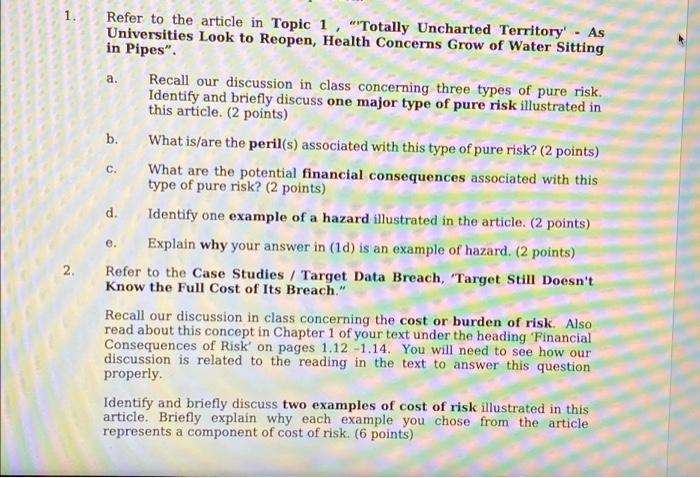
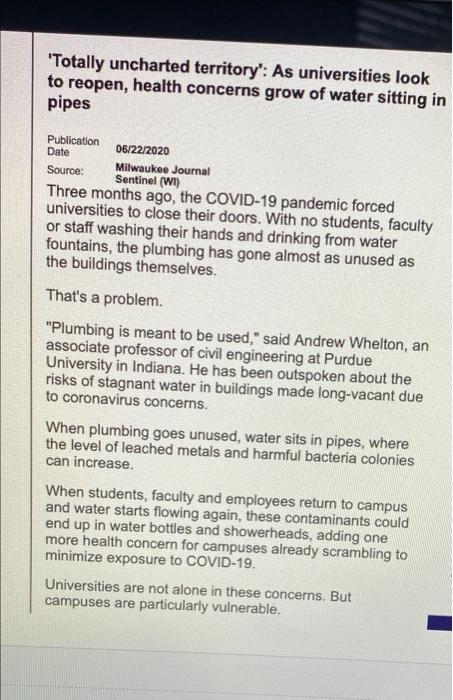
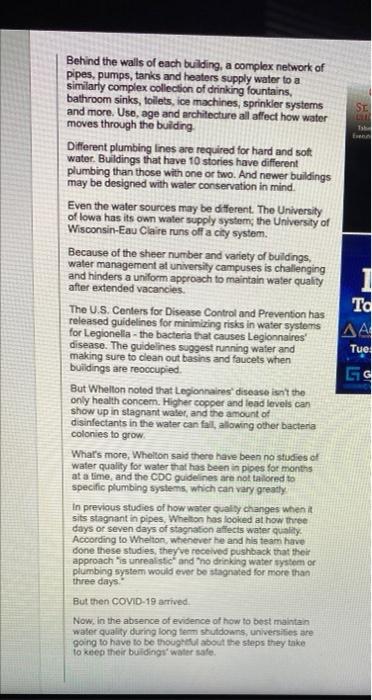
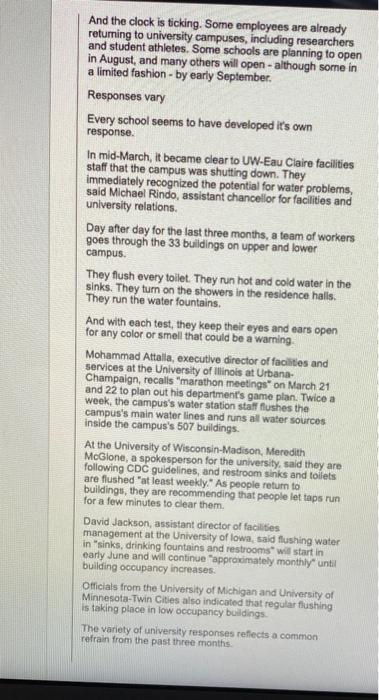
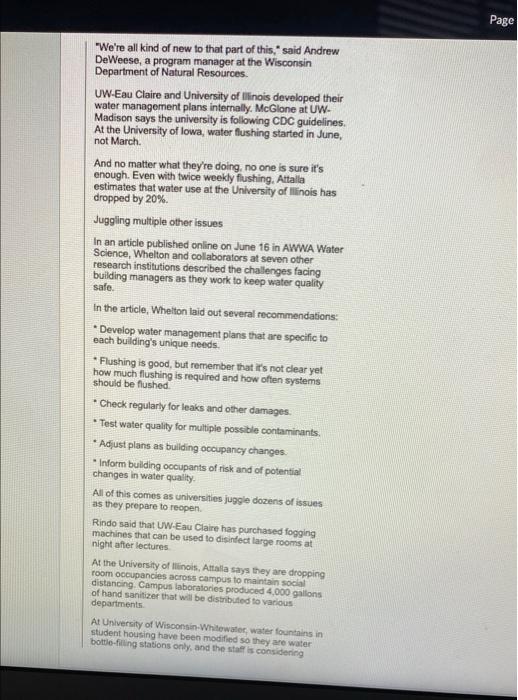
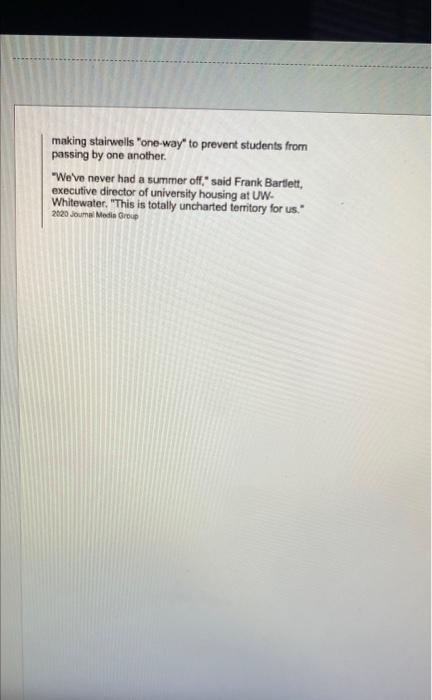
1. a. C Refer to the article in Topic 1 , "Totally Uncharted Territory' - As Universities Look to Reopen, Health Concerns Grow of Water Sitting in Pipes". Recall our discussion in class concerning three types of pure risk. Identify and briefly discuss one major type of pure risk illustrated in this article. (2 points) b. What is/are the peril(s) associated with this type of pure risk? (2 points) What are the potential financial consequences associated with this type of pure risk? (2 points) d. Identify one example of a hazard illustrated in the article. (2 points) Explain why your answer in (1d) is an example of hazard. (2 points) Refer to the Case Studies / Target Data Breach, 'Target Still Doesn't Know the Full Cost of Its Breach." Recall our discussion in class concerning the cost or burden of risk. Also read about this concept in Chapter 1 of your text under the heading 'Financial Consequences of Risk on pages 1.12 -1.14. You will need to see how our discussion is related to the reading in the text to answer this question properly Identify and briefly discuss two examples of cost of risk illustrated in this article. Briefly explain why each example you chose from the article represents a component of cost of risk. (6 points) e. 2 'Totally uncharted territory': As universities look to reopen, health concerns grow of water sitting in pipes Publication Date 06/22/2020 Milwaukee Journal Source: Sentinel (WT) Three months ago, the COVID-19 pandemic forced universities to close their doors. With no students, faculty or staff washing their hands and drinking from water fountains, the plumbing has gone almost as unused as the buildings themselves. That's a problem "Plumbing is meant to be used," said Andrew Whelton, an associate professor of civil engineering at Purdue University in Indiana. He has been outspoken about the risks of stagnant water in buildings made long-vacant due to coronavirus concerns. When plumbing goes unused, water sits in pipes, where the level of leached metals and harmful bacteria colonies can increase. When students, faculty and employees return to campus and water starts flowing again, these contaminants could end up in water bottles and showerheads, adding one more health concern for campuses already scrambling to minimize exposure to COVID-19. Universities are not alone in these concerns. But campuses are particularly vulnerable. ST Tube Tue Behind the walls of each building, a complex network of pipes, pumps, tanks and heaters supply water to a similarly complex collection of drinking fountains, bathroom sinks, toilets, ice machines, sprinkler systems and more. Use, age and architecture all affect how water moves through the buiding Different plumbing lines are required for hard and soft water. Buildings that have 10 stories have different plumbing than those with one or two. And newer buildings may be designed with water conservation in mind. Even the water sources may be different. The University of lowa has its own water supply system the University of Wisconsin-Eau Claire runs off a city system. Because of the sheer number and variety of buildings. water management at university campuses is challenging and hinders a uniform approach to maintain water quality after extended vacancies The U.S. Centers for Disease Control and Prevention has released guidelines for minimizing risks in water systems for Legionella - the bacteria that causes Legionnaires disease. The guidelines suggest running water and making sure to clean out basins and faucets when buildings are reoccupied But Whelton noted that Legionnaires disease isn't the only health concer. Higher copper and lead levels can show up in stagnant water, and the amount of disinfectants in the water can fall, allowing other bacteria colonies to grow What's more, Whelton said there have been na studies of water quality for water that has been in pipes for months at a time, and the CDC guidelines are not tailored to specific plumbing systems, which can vary greatly In previous studies of how water quality changes when it sits stagnant in pipes, Whelton has looked at how three days or seven days of stagnation affects water quality According to Whelton, whenever he and his team have done these studies, they've received pushback that their approach is unrealistic and no drinking water system or plumbing system would ever be stagnated for more than three days." But then COVID-19 arrived Now, in the absence of evidence of how to best maintain water quality during long term shutdowns, universities are going to have to be thoughtful about the steps they take to keep their buldings water safe. And the clock is ticking. Some employees are already returning to university campuses, including researchers and student athletes. Some schools are planning to open in August, and many others will open- although some in a limited fashion - by early September Responses vary Every school seems to have developed it's own response. In mid-March, it became clear to UW-Eau Claire facilities staff that the campus was shutting down. They immediately recognized the potential for water problems, said Michael Rindo, assistant chancellor for facilities and university relations. Day after day for the last three months, a team of workers goes through the 33 buildings on upper and lower campus They flush every toilet. They run hot and cold water in the sinks. They turn on the showers in the residence halls. They run the water fountains. And with each test, they keep their eyes and ears open for any color or smell that could be a warning Mohammad Attalla, executive director of facilities and services at the University of Illinois at Urbana Champaign, recalls "marathon meetings on March 21 and 22 to plan out his department's game plan. Twice a week, the campus's water station staff flushes the campus's main water lines and runs al water sources inside the campus's 507 buildings. At the University of Wisconsin-Madison, Meredith McGlone, a spokesperson for the university, said they are following CDC guidelines, and restroom sinks and toilets are flushed at least weekly." As people return to buildings, they are recommending that people let taps run for a few minutes to clear them. David Jackson, assistant director of facilities management at the University of lowa, said flushing water in "sinks, drinking fountains and restrooms will start in early June and will continue "approximately monthly until building occupancy increases. Officials from the University of Michigan and University of Minnesota-Twin Cities also indicated that regular flushing is taking place in low occupancy buildings The variety of university responses reflects a common refrain from the past three months Page "We're all kind of new to that part of this," said Andrew DeWeese, a program manager at the Wisconsin Department of Natural Resources UW.Eau Claire and University of Illinois developed their water management plans internally. McGlone at UW- Madison says the university is following CDC guidelines At the University of lowa, water flushing started in June, not March And no matter what they're doing, no one is sure it's enough. Even with twice weekly flushing, Attalle estimates that water use at the University of Illinois has dropped by 20%. Juggling multiple other issues In an article published online on June 16 in AWWA Water Science, Whelton and collaborators at seven other research institutions described the challenges facing building managers as they work to keep water quality safe. in the article, Whelton laid out several recommendations * Develop water management plans that are specific to each building's unique needs. * Flushing is good, but remember that it's not clear yet how much flushing is required and how often systems should be flushed * Check regularly for leaks and other damages. * Test water quality for multiple possible contaminants. * Adjust plans as building occupancy changes Inform building occupants of risk and of potential changes in water quality All of this comes as universities juggle dozens of issues as they prepare to reopen Rindo said that UW-Eau Claire has purchased fogging machines that can be used to disinfect large rooms at night after lectures At the University of Minois, Antalia says they are dropping room occupancies across campus to maintain social distancing Campus laboratories produced 4,000 gallons of hand sanitizer that will be distributed to various departments At University of Wisconsin-Whitewater, water fountains in student housing have been modified so they are water bottle-filling stations only, and the staff is considering making stairwells "one-way" to prevent students from passing by one another "We've never had a summer off," said Frank Bartlett, executive director of university housing at UW- Whitewater. "This is totally uncharted territory for us." 2020 Journal Media Group 1. a. C Refer to the article in Topic 1 , "Totally Uncharted Territory' - As Universities Look to Reopen, Health Concerns Grow of Water Sitting in Pipes". Recall our discussion in class concerning three types of pure risk. Identify and briefly discuss one major type of pure risk illustrated in this article. (2 points) b. What is/are the peril(s) associated with this type of pure risk? (2 points) What are the potential financial consequences associated with this type of pure risk? (2 points) d. Identify one example of a hazard illustrated in the article. (2 points) Explain why your answer in (1d) is an example of hazard. (2 points) Refer to the Case Studies / Target Data Breach, 'Target Still Doesn't Know the Full Cost of Its Breach." Recall our discussion in class concerning the cost or burden of risk. Also read about this concept in Chapter 1 of your text under the heading 'Financial Consequences of Risk on pages 1.12 -1.14. You will need to see how our discussion is related to the reading in the text to answer this question properly Identify and briefly discuss two examples of cost of risk illustrated in this article. Briefly explain why each example you chose from the article represents a component of cost of risk. (6 points) e. 2 'Totally uncharted territory': As universities look to reopen, health concerns grow of water sitting in pipes Publication Date 06/22/2020 Milwaukee Journal Source: Sentinel (WT) Three months ago, the COVID-19 pandemic forced universities to close their doors. With no students, faculty or staff washing their hands and drinking from water fountains, the plumbing has gone almost as unused as the buildings themselves. That's a problem "Plumbing is meant to be used," said Andrew Whelton, an associate professor of civil engineering at Purdue University in Indiana. He has been outspoken about the risks of stagnant water in buildings made long-vacant due to coronavirus concerns. When plumbing goes unused, water sits in pipes, where the level of leached metals and harmful bacteria colonies can increase. When students, faculty and employees return to campus and water starts flowing again, these contaminants could end up in water bottles and showerheads, adding one more health concern for campuses already scrambling to minimize exposure to COVID-19. Universities are not alone in these concerns. But campuses are particularly vulnerable. ST Tube Tue Behind the walls of each building, a complex network of pipes, pumps, tanks and heaters supply water to a similarly complex collection of drinking fountains, bathroom sinks, toilets, ice machines, sprinkler systems and more. Use, age and architecture all affect how water moves through the buiding Different plumbing lines are required for hard and soft water. Buildings that have 10 stories have different plumbing than those with one or two. And newer buildings may be designed with water conservation in mind. Even the water sources may be different. The University of lowa has its own water supply system the University of Wisconsin-Eau Claire runs off a city system. Because of the sheer number and variety of buildings. water management at university campuses is challenging and hinders a uniform approach to maintain water quality after extended vacancies The U.S. Centers for Disease Control and Prevention has released guidelines for minimizing risks in water systems for Legionella - the bacteria that causes Legionnaires disease. The guidelines suggest running water and making sure to clean out basins and faucets when buildings are reoccupied But Whelton noted that Legionnaires disease isn't the only health concer. Higher copper and lead levels can show up in stagnant water, and the amount of disinfectants in the water can fall, allowing other bacteria colonies to grow What's more, Whelton said there have been na studies of water quality for water that has been in pipes for months at a time, and the CDC guidelines are not tailored to specific plumbing systems, which can vary greatly In previous studies of how water quality changes when it sits stagnant in pipes, Whelton has looked at how three days or seven days of stagnation affects water quality According to Whelton, whenever he and his team have done these studies, they've received pushback that their approach is unrealistic and no drinking water system or plumbing system would ever be stagnated for more than three days." But then COVID-19 arrived Now, in the absence of evidence of how to best maintain water quality during long term shutdowns, universities are going to have to be thoughtful about the steps they take to keep their buldings water safe. And the clock is ticking. Some employees are already returning to university campuses, including researchers and student athletes. Some schools are planning to open in August, and many others will open- although some in a limited fashion - by early September Responses vary Every school seems to have developed it's own response. In mid-March, it became clear to UW-Eau Claire facilities staff that the campus was shutting down. They immediately recognized the potential for water problems, said Michael Rindo, assistant chancellor for facilities and university relations. Day after day for the last three months, a team of workers goes through the 33 buildings on upper and lower campus They flush every toilet. They run hot and cold water in the sinks. They turn on the showers in the residence halls. They run the water fountains. And with each test, they keep their eyes and ears open for any color or smell that could be a warning Mohammad Attalla, executive director of facilities and services at the University of Illinois at Urbana Champaign, recalls "marathon meetings on March 21 and 22 to plan out his department's game plan. Twice a week, the campus's water station staff flushes the campus's main water lines and runs al water sources inside the campus's 507 buildings. At the University of Wisconsin-Madison, Meredith McGlone, a spokesperson for the university, said they are following CDC guidelines, and restroom sinks and toilets are flushed at least weekly." As people return to buildings, they are recommending that people let taps run for a few minutes to clear them. David Jackson, assistant director of facilities management at the University of lowa, said flushing water in "sinks, drinking fountains and restrooms will start in early June and will continue "approximately monthly until building occupancy increases. Officials from the University of Michigan and University of Minnesota-Twin Cities also indicated that regular flushing is taking place in low occupancy buildings The variety of university responses reflects a common refrain from the past three months Page "We're all kind of new to that part of this," said Andrew DeWeese, a program manager at the Wisconsin Department of Natural Resources UW.Eau Claire and University of Illinois developed their water management plans internally. McGlone at UW- Madison says the university is following CDC guidelines At the University of lowa, water flushing started in June, not March And no matter what they're doing, no one is sure it's enough. Even with twice weekly flushing, Attalle estimates that water use at the University of Illinois has dropped by 20%. Juggling multiple other issues In an article published online on June 16 in AWWA Water Science, Whelton and collaborators at seven other research institutions described the challenges facing building managers as they work to keep water quality safe. in the article, Whelton laid out several recommendations * Develop water management plans that are specific to each building's unique needs. * Flushing is good, but remember that it's not clear yet how much flushing is required and how often systems should be flushed * Check regularly for leaks and other damages. * Test water quality for multiple possible contaminants. * Adjust plans as building occupancy changes Inform building occupants of risk and of potential changes in water quality All of this comes as universities juggle dozens of issues as they prepare to reopen Rindo said that UW-Eau Claire has purchased fogging machines that can be used to disinfect large rooms at night after lectures At the University of Minois, Antalia says they are dropping room occupancies across campus to maintain social distancing Campus laboratories produced 4,000 gallons of hand sanitizer that will be distributed to various departments At University of Wisconsin-Whitewater, water fountains in student housing have been modified so they are water bottle-filling stations only, and the staff is considering making stairwells "one-way" to prevent students from passing by one another "We've never had a summer off," said Frank Bartlett, executive director of university housing at UW- Whitewater. "This is totally uncharted territory for us." 2020 Journal Media Group
Step by Step Solution
There are 3 Steps involved in it

Get step-by-step solutions from verified subject matter experts