





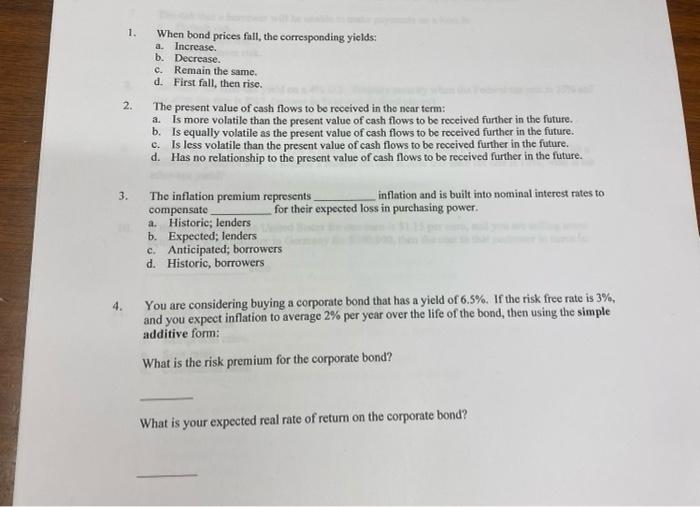
Question: 1. a. c. When bond prices fall, the corresponding yields: Increase b. Decrease. Remain the same. d. First fall, then rise. The present value of
1. a. c. When bond prices fall, the corresponding
1. a. c. When bond prices fall, the corresponding yields: Increase b. Decrease. Remain the same. d. First fall, then rise. The present value of cash flows to be received in the near term: Is more volatile than the present value of cash flows to be received further in the future. b. Is equally volatile as the present value of cash flows to be received further in the future. c. Is less volatile than the present value of cash flows to be received further in the future. d. Has no relationship to the present value of cash flows to be received further in the future. 2. a. 3. The inflation premium represents inflation and is built into nominal interest rates to compensate for their expected loss in purchasing power a. Historic; lenders b. Expected; lenders c. Anticipated; borrowers d. Historic, borrowers 4. You are considering buying a corporate bond that has a yield of 6.5%. If the risk free rate is 3%, and you expect inflation to average 2% per year over the life of the bond, then using the simple additive form: What is the risk premium for the corporate bond? What is your expected real rate of return on the corporate bond

Step by Step Solution

There are 3 Steps involved in it

1 Expert Approved Answer
Step: 1 Unlock blur-text-image

Question Has Been Solved by an Expert!

Get step-by-step solutions from verified subject matter experts

Step: 2 Unlock
Step: 3 Unlock

Students Have Also Explored These Related General Management Questions!