



Question: (1) A monopolist with cost function C(q) = (q 8)3 + 188:; + 512 sells in a market with demand g = 24 10/50. Note
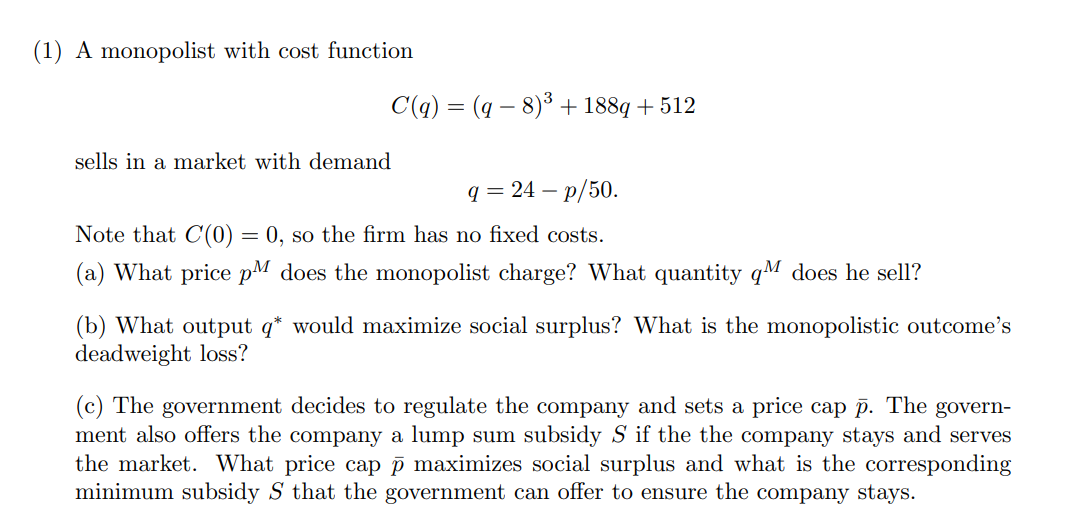
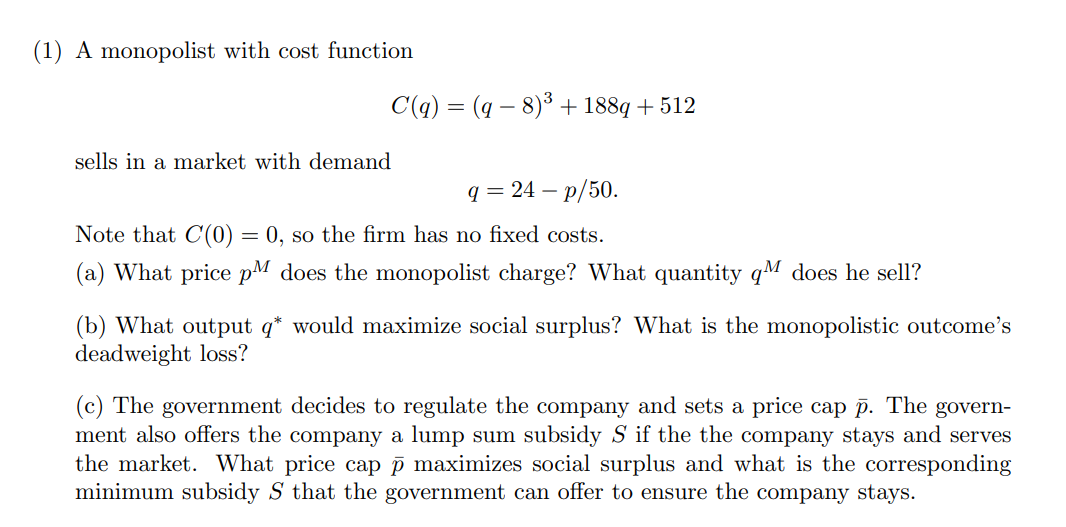
(1) A monopolist with cost function C(q) = (q 8)3 + 188:; + 512 sells in a market with demand g = 24 10/50. Note that 0(0) : 0, so the rm has no xed costs. (a) What price 37\" does the monopolist charge? 1What quantity QM does he sell? (1)) 1What output q\" would maximize social surplus? "What is the monopolistic outcome's deadweight loss? (c) The government decides to regulate the company and sets a price cap 3'). The govern- ment also offers the company a lump sum subsidy S if the the company stays and serves the market. What price cap 35 maximizes social surplus and what is the corresponding minimum subsidy S that the gOVernment can offer to ensure the company stays
Step by Step Solution
There are 3 Steps involved in it

Get step-by-step solutions from verified subject matter experts