







Question: 1) A. Using the Product Forecasting Information that has been provided from FY2017 through FY2020 (four years), calculate the measures of forecast accuracy (MFE, MAD,
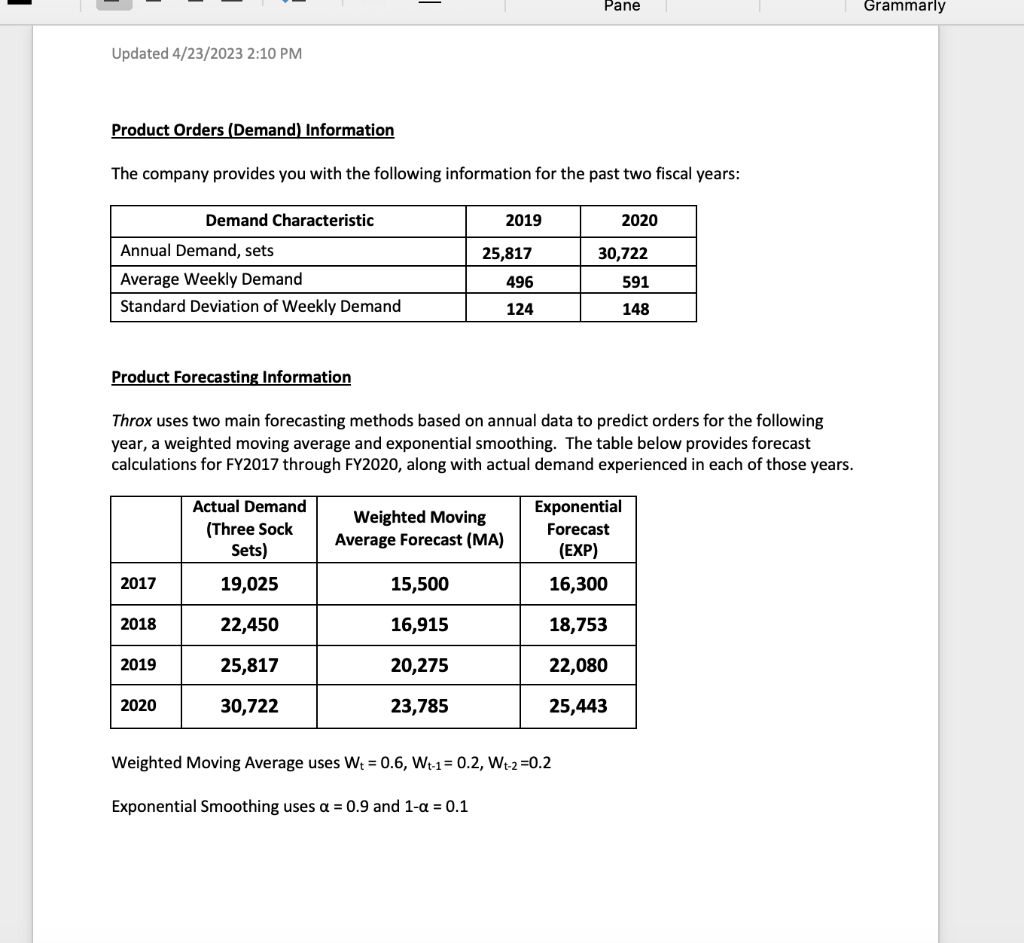
1) A. Using the Product Forecasting Information that has been provided from FY2017 through FY2020 (four years), calculate the measures of forecast accuracy (MFE, MAD, and MAPE) for the Weighted Moving Average (MA) and the Exponential Smoothing (EXP) approaches to forecasting.
B. What are the values of MFE, MAD, and MAPE for each of these two approaches to forecasting (MA and EXP)? Which of the approaches is more accurate?
C. Do these forecasts seem adequate for the purposes of decision making? Why or why not?
2) A. Develop forecasts for FY2021 using the two forecasting methods currently employed by Throx.
B. What are the forecast values that you calculated for each? Please be sure to show work.
C. Based on your assessments of forecast accuracy from Q1, which of the forecasts would be more appropriate to support decisions you may need to make?
Are there other considerations that you would recommend to Throx.
Product Orders (Demand) Information The company provides you with the following information for the past two fiscal years: Product Forecasting Information Throx uses two main forecasting methods based on annual data to predict orders for the following year, a weighted moving average and exponential smoothing. The table below provides forecast calculations for FY2017 through FY2020, along with actual demand experienced in each of those years. Weighted Moving Average uses Wt=0.6,Wt1=0.2,Wt2=0.2 Exponential Smoothing uses =0.9 and 1=0.1
Step by Step Solution
There are 3 Steps involved in it

Get step-by-step solutions from verified subject matter experts
 Study Help