



Question: 1. After you read about the Amanda Knox case (and potentially view the film - optional), explain the differences between the trial process in
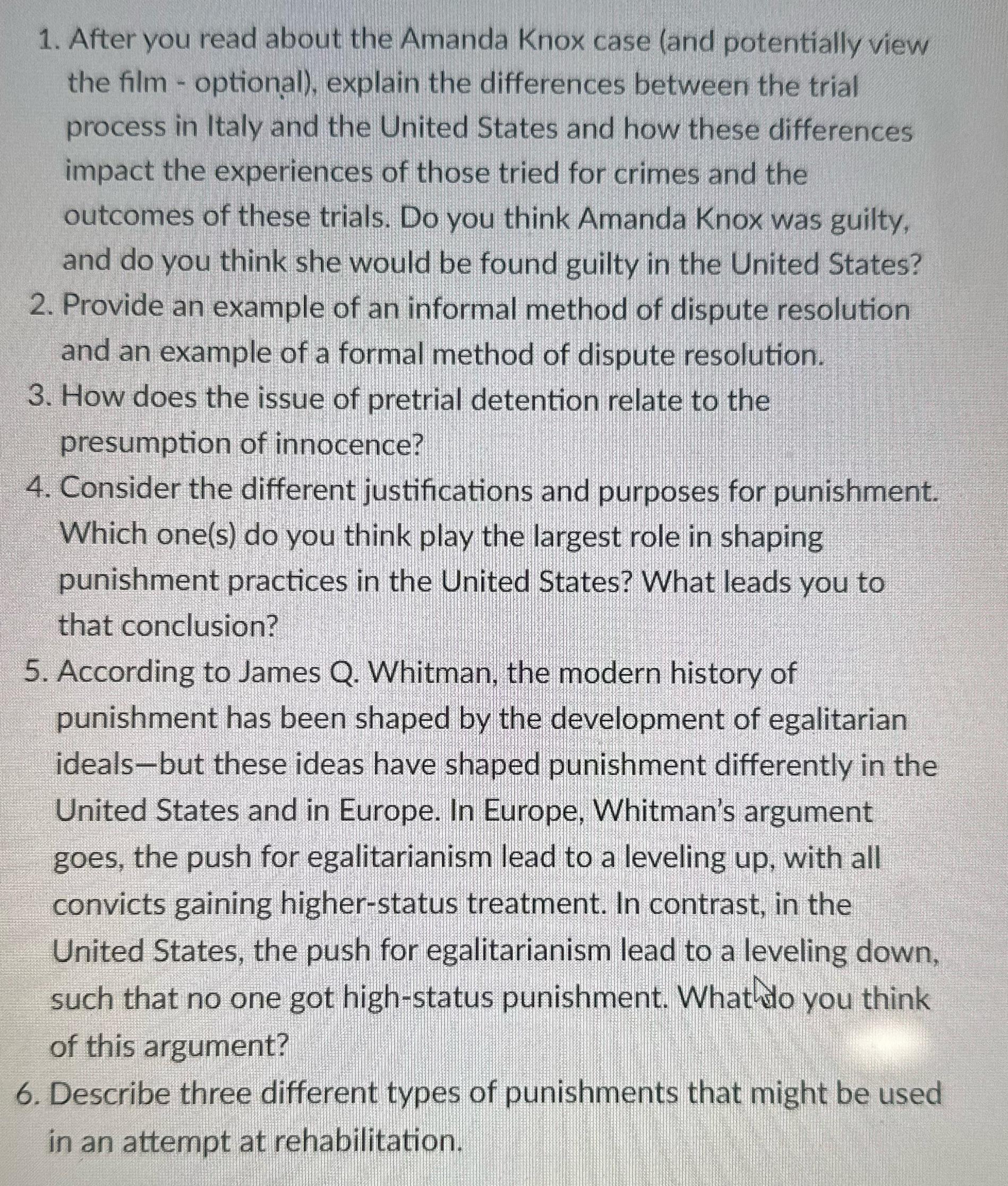
1. After you read about the Amanda Knox case (and potentially view the film - optional), explain the differences between the trial process in Italy and the United States and how these differences impact the experiences of those tried for crimes and the outcomes of these trials. Do you think Amanda Knox was guilty, and do you think she would be found guilty in the United States? 2. Provide an example of an informal method of dispute resolution and an example of a formal method of dispute resolution. 3. How does the issue of pretrial detention relate to the presumption of innocence? 4. Consider the different justifications and purposes for punishment. Which one(s) do you think play the largest role in shaping punishment practices in the United States? What leads you to that conclusion? 5. According to James Q. Whitman, the modern history of punishment has been shaped by the development of egalitarian ideals-but these ideas have shaped punishment differently in the United States and in Europe. In Europe, Whitman's argument goes, the push for egalitarianism lead to a leveling up, with all convicts gaining higher-status treatment. In contrast, in the United States, the push for egalitarianism lead to a leveling down, such that no one got high-status punishment. What do of this argument? o you think 6. Describe three different types of punishments that might be used in an attempt at rehabilitation.
Step by Step Solution
There are 3 Steps involved in it
The trial process in Italy differs significantly from that in the United States particularly in terms of legal procedures rules of evidence and judicial practices In Italy trials are conducted by a pa... View full answer

Get step-by-step solutions from verified subject matter experts