







Question: 1. Are there any risks that have been ignored by the project team? 2. What advice would you give the CIO and his team on
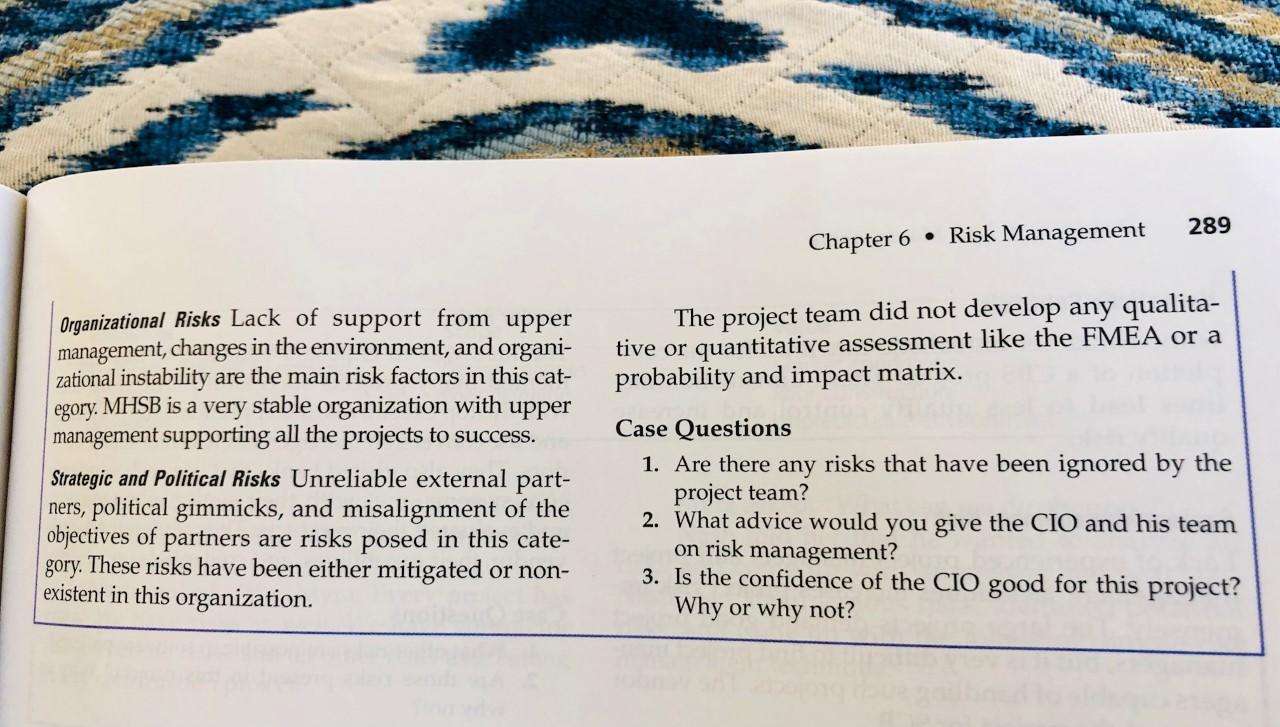
1. Are there any risks that have been ignored by the project team?
2. What advice would you give the CIO and his team on risk management?
3. Is the confidence of the CIO good for this project? Why or why not?
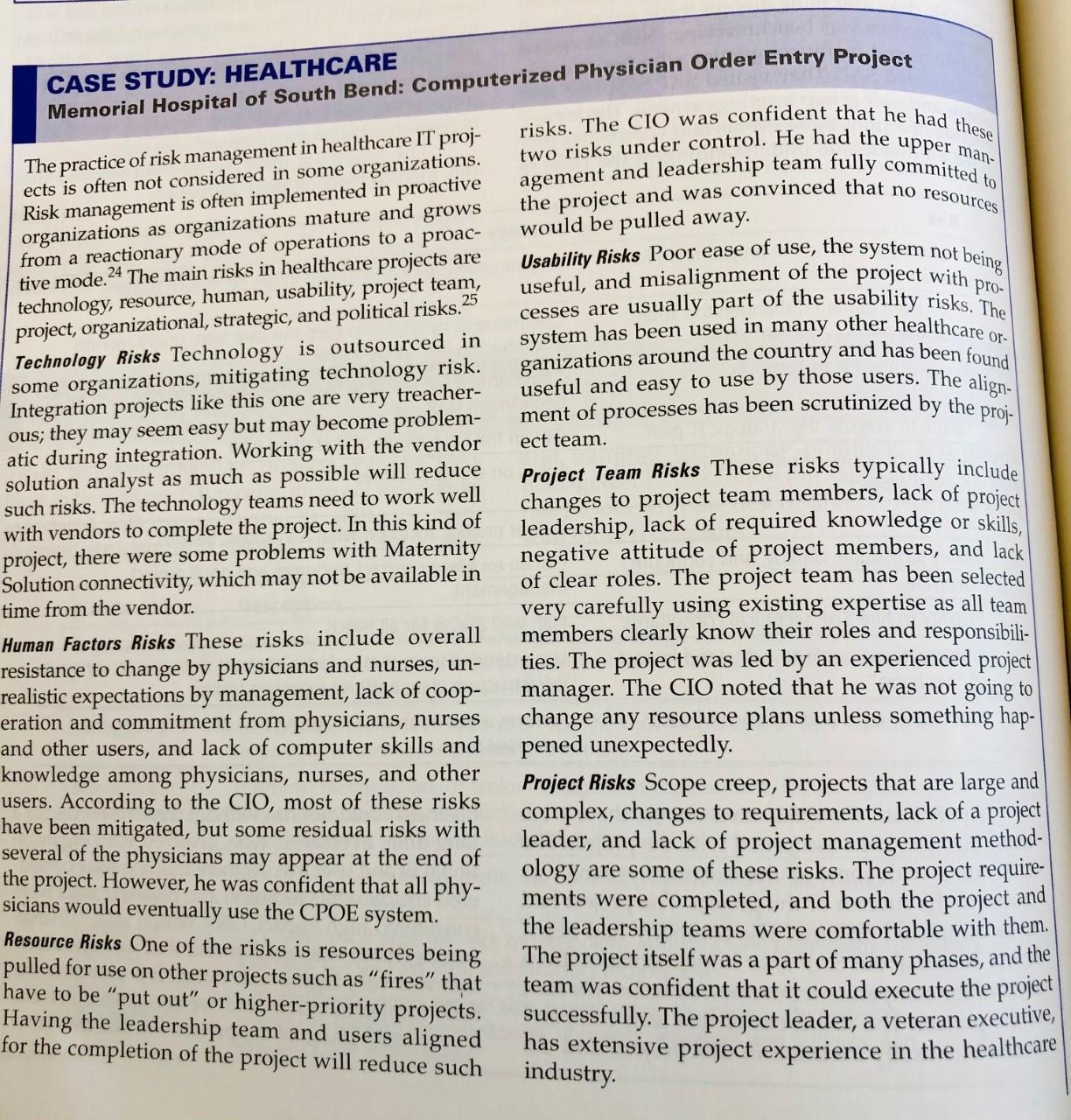
25 risks. The CIO was confident that he had these two risks under control. He had the upper man- agement and leadership team fully committed to the project and was convinced that no resources Usability Risks Poor ease of use, the system not being system has been used in many other healthcare or- ganizations around the country and has been found useful and easy to use by those users. The align- ment of processes has been scrutinized by the proj- CASE STUDY: HEALTHCARE Memorial Hospital of South Bend: Computerized Physician Order Entry Project The practice of risk management in healthcare IT proj- ects is often not considered in some organizations. Risk management is often implemented in proactive organizations as organizations mature and grows would be pulled away. from a reactionary mode of operations to a proac- tive mode 24 The main risks in healthcare projects are useful, and misalignment of the project with technology, resource, human, usability, project team, project, organizational, strategic, and political risks.? cesses are usually part of the usability risks . The Technology Risks Technology is outsourced in some organizations, mitigating technology risk. Integration projects like this one are very treacher- ous; they may seem easy but may become problem- ect team. atic during integration. Working with the vendor solution analyst as much as possible will reduce Project Team Risks These risks typically include such risks. The technology teams need to work well changes to project team members, lack of project with vendors to complete the project. In this kind of leadership, lack of required knowledge or skills, project, there were some problems with Maternity negative attitude of project members, and lack Solution connectivity, which may not be available in of clear roles. The project team has been selected time from the vendor. very carefully using existing expertise as all team Human Factors Risks These risks include overall members clearly know their roles and responsibili- resistance to change by physicians and nurses, un ties. The project was led by an experienced project realistic expectations by management, lack of coop manager. The CIO noted that he was not going to eration and commitment from physicians, nurses change any resource plans unless something hap- and other users, and lack of computer skills and pened unexpectedly. knowledge among physicians, nurses, and other users. According to the CIO, most of these risks Project Risks Scope creep, projects that are large and have been mitigated, but some residual risks with complex, changes to requirements, lack of a project several of the physicians may appear at the end of leader, and lack of project management method- the project. However, he was confident that all phy- ology are some of these risks. The project require- sicians would eventually use the CPOE system. ments were completed, and both the project and Resource Risks One of the risks is resources being the leadership teams were comfortable with them. pulled for use on other projects such as "fires" that The project itself was a part of many phases, and the have to be "put out" or higher-priority projects. team was confident that it could execute the project Having the leadership team and users aligned successfully. The project leader, a veteran executive, for the completion of the project will reduce such has extensive project experience in the healthcare industry. 289 Chapter 6 Risk Management The project team did not develop any qualita- tive or quantitative assessment like the FMEA or a probability and impact matrix. Organizational Risks Lack of support from upper management, changes in the environment, and organi- zational instability are the main risk factors in this cat- egory. MHSB is a very stable organization with upper management supporting all the projects to success. Strategic and Political Risks Unreliable external part- ners, political gimmicks, and misalignment of the objectives of partners are risks posed in this cate- gory. These risks have been either mitigated or non- existent in this organization. Case Questions 1. Are there any risks tha have been ignored by the project team? 2. What advice would you give the CIO and his team on risk management? 3. Is the confidence of the CIO good for this project? Why or why notStep by Step Solution
There are 3 Steps involved in it
1 Expert Approved Answer
Step: 1 Unlock

Question Has Been Solved by an Expert!
Get step-by-step solutions from verified subject matter experts
Step: 2 Unlock
Step: 3 Unlock
 Study Help