







Question: 1. Basic Concepts Match the terms relating to the basic terminology and concepts of corporate finance on the left with the descriptions of the terms
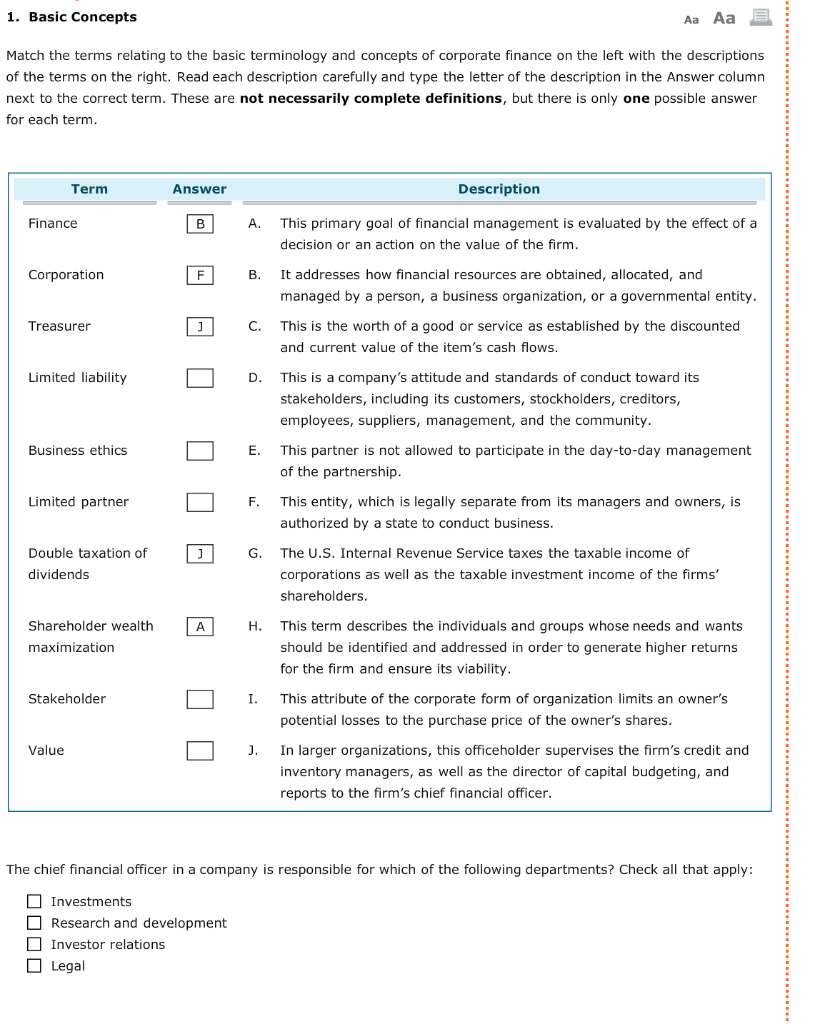
1. Basic Concepts Match the terms relating to the basic terminology and concepts of corporate finance on the left with the descriptions of the terms on the right. Read each description carefully and type the letter of the description in the Answer column next to the correct term. These are not necessarily complete definitions, but there is only one possible answer for each term. Term Answer Description Finance B A. This primary goal of financial management is evaluated by the effect of a decision or an action on the value of the firm. Corporation F B. It addresses how financial resources are obtained, allocated, and managed by a person, a business organization, or a governmental entity. Treasurer C. This is the worth of a good or service as established by the discounted and current value of the item's cash flows. Limited liability D. This is a company's attitude and standards of conduct toward its stakeholders, including its customers, stockholders, creditors, employees, suppliers, management, and the community. Business ethics E. This partner is not allowed to participate in the day-to-day management of the partnership. This entity, which is legally separate from its managers and owners, is authorized by a state to conduct business. Limited partner F. G. Double taxation of dividends The U.S. Internal Revenue Service taxes the taxable income of corporations as well as the taxable investment income of the firms' shareholders. A H. Shareholder wealth maximization This term describes the individuals and groups whose needs and wants should be identified and addressed in order to generate higher returns for the firm and ensure its viability. This attribute of the corporate form of organization limits an owner's potential losses to the purchase price of the owner's shares. Stakeholder I. Value J. In larger organizations, this officeholder supervises the firm's credit and inventory managers, as well as the director of capital budgeting, and reports to the firm's chief financial officer. The chief financial officer in a company is responsible for which of the following departments? Check all that apply: Investments 0 Research and development Investor relations Legal 1. Basic Concepts Match the terms relating to the basic terminology and concepts of corporate finance on the left with the descriptions of the terms on the right. Read each description carefully and type the letter of the description in the Answer column next to the correct term. These are not necessarily complete definitions, but there is only one possible answer for each term. Term Answer Description Finance B A. This primary goal of financial management is evaluated by the effect of a decision or an action on the value of the firm. Corporation F B. It addresses how financial resources are obtained, allocated, and managed by a person, a business organization, or a governmental entity. Treasurer C. This is the worth of a good or service as established by the discounted and current value of the item's cash flows. Limited liability D. This is a company's attitude and standards of conduct toward its stakeholders, including its customers, stockholders, creditors, employees, suppliers, management, and the community. Business ethics E. This partner is not allowed to participate in the day-to-day management of the partnership. This entity, which is legally separate from its managers and owners, is authorized by a state to conduct business. Limited partner F. G. Double taxation of dividends The U.S. Internal Revenue Service taxes the taxable income of corporations as well as the taxable investment income of the firms' shareholders. A H. Shareholder wealth maximization This term describes the individuals and groups whose needs and wants should be identified and addressed in order to generate higher returns for the firm and ensure its viability. This attribute of the corporate form of organization limits an owner's potential losses to the purchase price of the owner's shares. Stakeholder I. Value J. In larger organizations, this officeholder supervises the firm's credit and inventory managers, as well as the director of capital budgeting, and reports to the firm's chief financial officer. The chief financial officer in a company is responsible for which of the following departments? Check all that apply: Investments 0 Research and development Investor relations Legal
Step by Step Solution
There are 3 Steps involved in it

Get step-by-step solutions from verified subject matter experts
 Study Help