



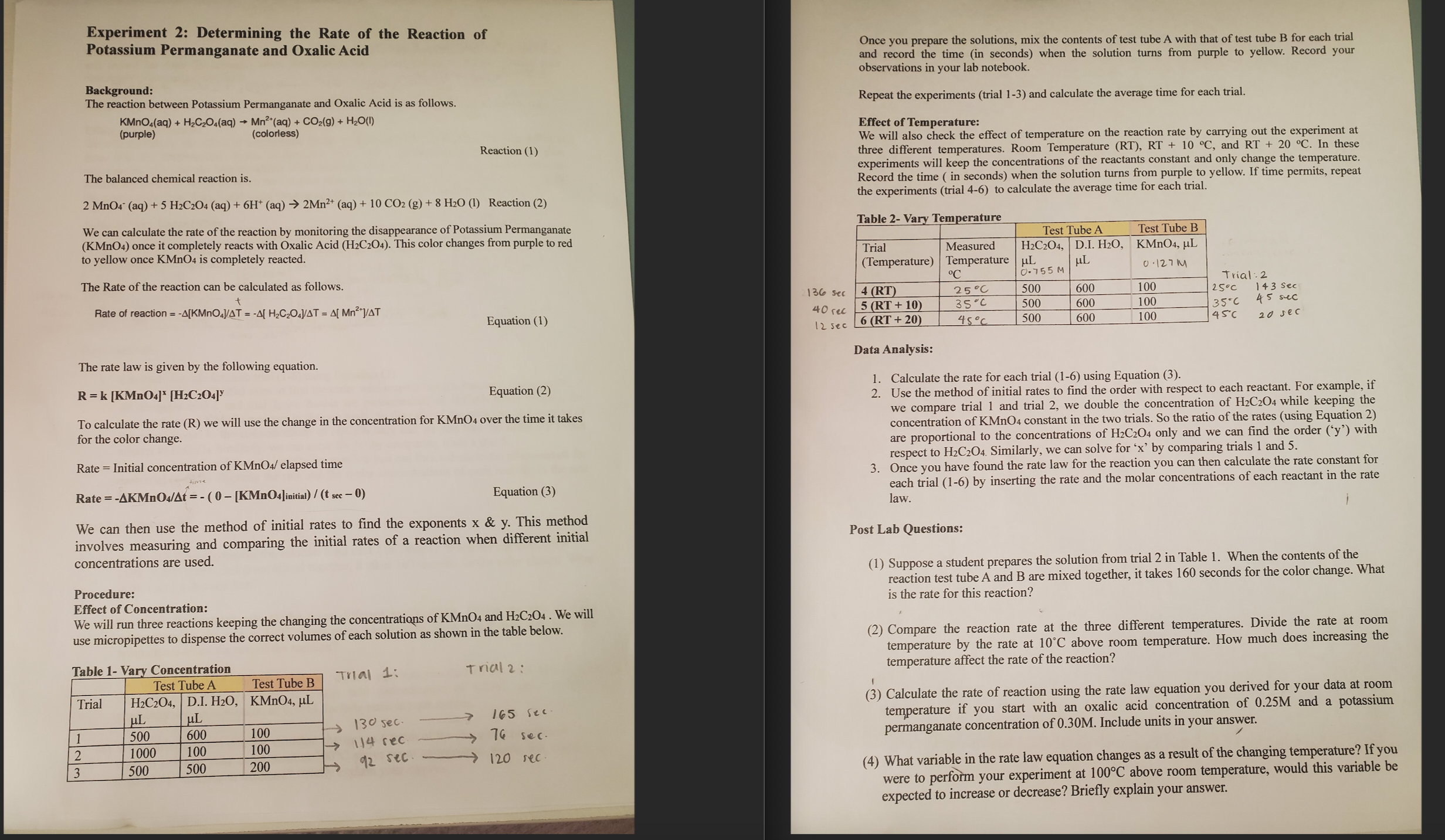
Question: 1 . Calculate the rate for each trial ( 1 - 6 ) using Equation ( 3 ) . 2 . Use the method of
Calculate the rate for each trial using Equation
Use the method of initial rates to find the order with respect to each reactant. For example, if we compare trial and trial we double the concentration of HCO while keeping the concentration of KMnO constant in the two trials. So the ratio of the rates using Equation are proportional to the concentrations of HCO only and we can find the order y with respect to HCO Similarly, we can solve for x by comparing trials and
Once you have found the rate law for the reaction you can then calculate the rate constant for each trial by inserting the rate and the molar concentrations of each reactant in the rate law.
Step by Step Solution
There are 3 Steps involved in it
1 Expert Approved Answer
Step: 1 Unlock

Question Has Been Solved by an Expert!
Get step-by-step solutions from verified subject matter experts
Step: 2 Unlock
Step: 3 Unlock