



Question: 1. Calculating inflation using a simple price index Consider a fictional price index, the College Student Price Index (CSPI), based on a typical college student's
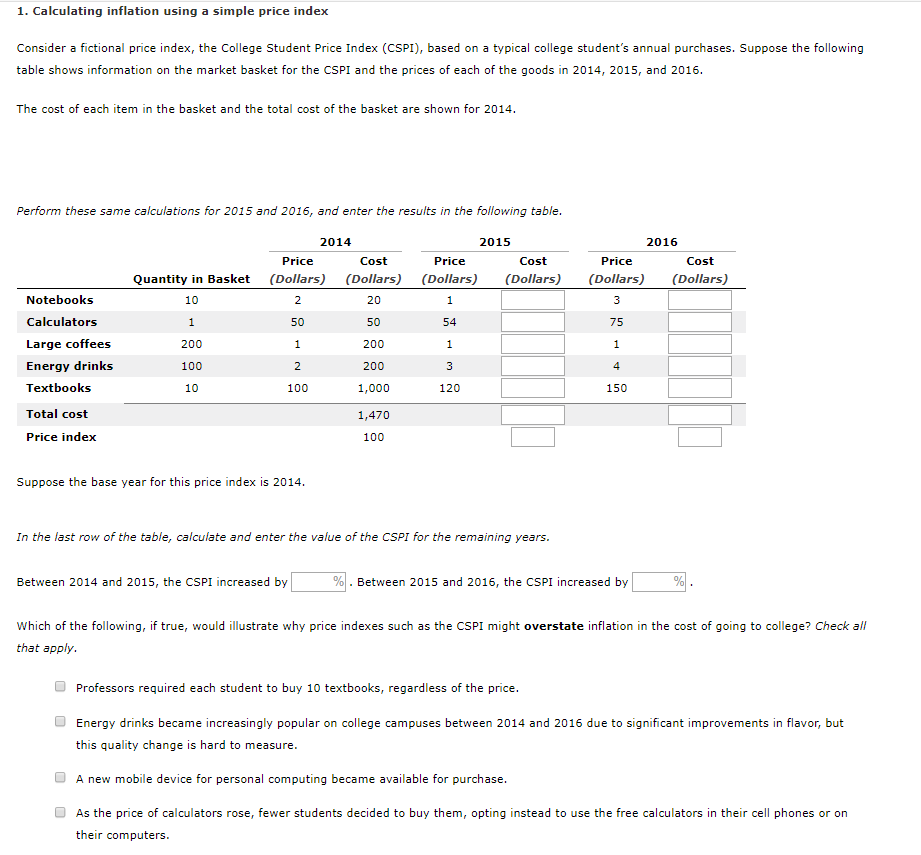
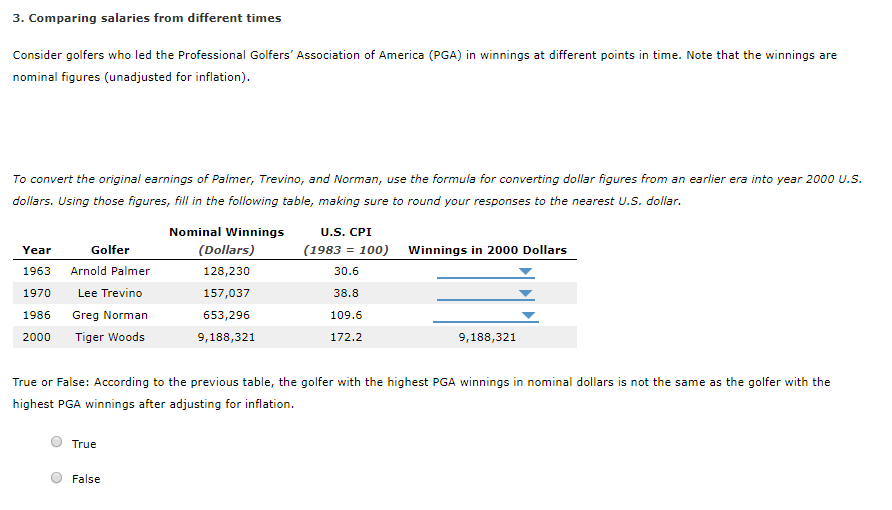
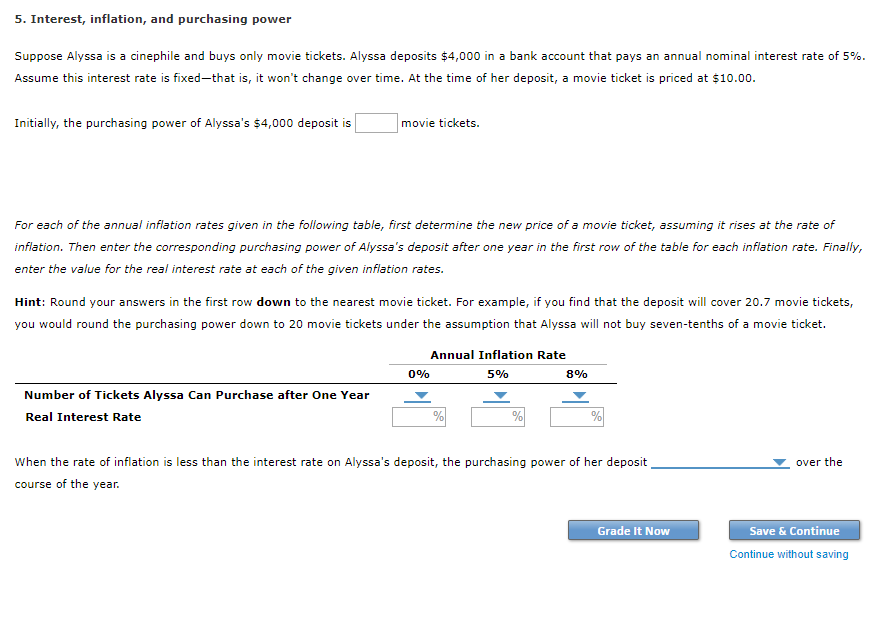
1. Calculating inflation using a simple price index Consider a fictional price index, the College Student Price Index (CSPI), based on a typical college student's annual purchases. Suppose the following table shows information on the market basket for the CSPI and the prices of each of the goods in 2014, 2015, and 2016. The cost of each item in the basket and the total cost of the basket are shown for 2014. Perform these same calculations for 2015 and 2016, and enter the results in the following table. 2014 Price Cost (Dollars) (Dollars) 2015 Price Cost (Dollars) (Dollars) 2016 Price Cost (Dollars) (Dollars) Quantity in Basket 20 1 50 54 Notebooks Calculators Large coffees Energy drinks Textbooks Total cost 50 50 200 200 1,000 100 10 120 1,470 100 Price index Suppose the base year for this price index is 2014. In the last row of the table, calculate and enter the value of the CSPI for the remaining years. Between 2014 and 2015, the CSPI increased by %. Between 2015 and 2016, the CSPI increased by %. Which of the following, if true, would illustrate why price indexes such as the CSPI might overstate inflation in the cost of going to college? Check all that apply. Professors required each student to buy 10 textbooks, regardless of the price. Energy drinks became increasingly popular on college campuses between 2014 and 2016 due to significant improvements in flavor, but this quality change is hard to measure. A new mobile device for personal computing became available for purchase. As the price of calculators rose, fewer students decided to buy them, opting instead to use the free calculators in their cell phones or on their computers. 3. Comparing salaries from different times Consider golfers who led the Professional Golfers' Association of America (PGA) in winnings at different points in time. Note that the winnings are nominal figures (unadjusted for inflation). To convert the original earnings of Palmer, Trevino, and Norman, use the formula for converting dollar figures from an earlier era into year 2000 U.S. dollars. Using those figures, fill in the following table, making sure to round your responses to the nearest U.S. dollar. Winnings in 2000 Dollars Year 1963 1970 1986 2000 Golfer Arnold Palmer Lee Trevino Greg Norman Tiger Woods Nominal Winnings (Dollars) 128,230 157,037 653,296 9,188,321 U.S. CPI (1983 = 100) 30.6 38.8 109.6 172.2 9,188,321 True or False: According to the previous table, the golfer with the highest PGA winnings in nominal dollars is not the same as the golfer with the highest PGA winnings after adjusting for inflation. O True False 5. Interest, inflation, and purchasing power Suppose Alyssa is a cinephile and buys only movie tickets. Alyssa deposits $4,000 in a bank account that pays an annual nominal interest rate of 5%. Assume this interest rate is fixed-that is, it won't change over time. At the time of her deposit, a movie ticket is priced at $10.00. Initially, the purchasing power of Alyssa's $4,000 deposit is movie tickets. For each of the annual inflation rates given in the following table, first determine the new price of a movie ticket, assuming it rises at the rate of inflation. Then enter the corresponding purchasing power of Alyssa's deposit after one year in the first row of the table for each inflation rate. Finally, enter the value for the real interest rate at each of the given inflation rates. Hint: Round your answers in the first row down to the nearest movie ticket. For example, if you find that the deposit will cover 20.7 movie tickets, you would round the purchasing power down to 20 movie tickets under the assumption that Alyssa will not buy seven-tenths of a movie ticket. Annual Inflation Rate 5% 8 0% % Number of Tickets Alyssa Can Purchase after One Year Real Interest Rate over the When the rate of inflation is less than the interest rate on Alyssa's deposit, the purchasing power of her deposit course of the year. Grade It Now Save & Continue Continue without saving 1. Calculating inflation using a simple price index Consider a fictional price index, the College Student Price Index (CSPI), based on a typical college student's annual purchases. Suppose the following table shows information on the market basket for the CSPI and the prices of each of the goods in 2014, 2015, and 2016. The cost of each item in the basket and the total cost of the basket are shown for 2014. Perform these same calculations for 2015 and 2016, and enter the results in the following table. 2014 Price Cost (Dollars) (Dollars) 2015 Price Cost (Dollars) (Dollars) 2016 Price Cost (Dollars) (Dollars) Quantity in Basket 20 1 50 54 Notebooks Calculators Large coffees Energy drinks Textbooks Total cost 50 50 200 200 1,000 100 10 120 1,470 100 Price index Suppose the base year for this price index is 2014. In the last row of the table, calculate and enter the value of the CSPI for the remaining years. Between 2014 and 2015, the CSPI increased by %. Between 2015 and 2016, the CSPI increased by %. Which of the following, if true, would illustrate why price indexes such as the CSPI might overstate inflation in the cost of going to college? Check all that apply. Professors required each student to buy 10 textbooks, regardless of the price. Energy drinks became increasingly popular on college campuses between 2014 and 2016 due to significant improvements in flavor, but this quality change is hard to measure. A new mobile device for personal computing became available for purchase. As the price of calculators rose, fewer students decided to buy them, opting instead to use the free calculators in their cell phones or on their computers. 3. Comparing salaries from different times Consider golfers who led the Professional Golfers' Association of America (PGA) in winnings at different points in time. Note that the winnings are nominal figures (unadjusted for inflation). To convert the original earnings of Palmer, Trevino, and Norman, use the formula for converting dollar figures from an earlier era into year 2000 U.S. dollars. Using those figures, fill in the following table, making sure to round your responses to the nearest U.S. dollar. Winnings in 2000 Dollars Year 1963 1970 1986 2000 Golfer Arnold Palmer Lee Trevino Greg Norman Tiger Woods Nominal Winnings (Dollars) 128,230 157,037 653,296 9,188,321 U.S. CPI (1983 = 100) 30.6 38.8 109.6 172.2 9,188,321 True or False: According to the previous table, the golfer with the highest PGA winnings in nominal dollars is not the same as the golfer with the highest PGA winnings after adjusting for inflation. O True False 5. Interest, inflation, and purchasing power Suppose Alyssa is a cinephile and buys only movie tickets. Alyssa deposits $4,000 in a bank account that pays an annual nominal interest rate of 5%. Assume this interest rate is fixed-that is, it won't change over time. At the time of her deposit, a movie ticket is priced at $10.00. Initially, the purchasing power of Alyssa's $4,000 deposit is movie tickets. For each of the annual inflation rates given in the following table, first determine the new price of a movie ticket, assuming it rises at the rate of inflation. Then enter the corresponding purchasing power of Alyssa's deposit after one year in the first row of the table for each inflation rate. Finally, enter the value for the real interest rate at each of the given inflation rates. Hint: Round your answers in the first row down to the nearest movie ticket. For example, if you find that the deposit will cover 20.7 movie tickets, you would round the purchasing power down to 20 movie tickets under the assumption that Alyssa will not buy seven-tenths of a movie ticket. Annual Inflation Rate 5% 8 0% % Number of Tickets Alyssa Can Purchase after One Year Real Interest Rate over the When the rate of inflation is less than the interest rate on Alyssa's deposit, the purchasing power of her deposit course of the year. Grade It Now Save & Continue Continue without saving
Step by Step Solution
There are 3 Steps involved in it

Get step-by-step solutions from verified subject matter experts