







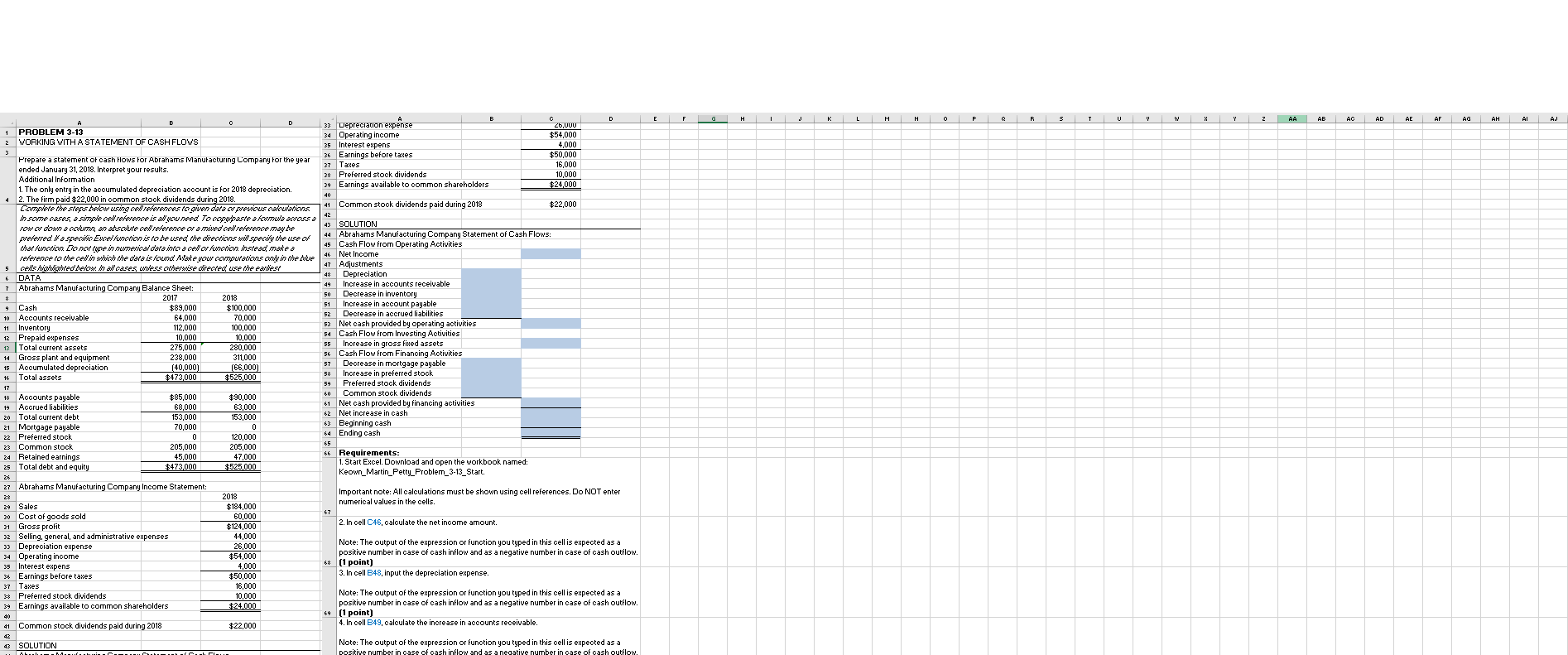
Question: 1 Complete the steps below using cell references to given data or previous calculations. In some cases, a simple cell reference is all you need.
Complete the steps below using cell references to given data or previous calculations. In some cases, a simple cell reference is all you need. To copypaste a formula across a row or down a column, an absolute cell reference or a mixed cell reference may be preferred. If a specific Excel function is to be used, the directions will specify the use of that function. Do not type in numerical data into a cell or function. Instead, make a reference to the cell in which the data is found. Make your computations only in the blue cells highlighted below. In all cases, unless otherwise directed, use the earliest appearance of the data in your formulas, usually the Given Data section.
Start Excel. Download and open the workbook named: KeownMartinPettyProblemStart.
Important note: All calculations must be shown using cell references. Do NOT enter numerical values in the cells.
In cell C calculate the net income amount.
Note: The output of the expression or function you typed in this cell is expected as a positive number in case of cash inflow and as a negative number in case of cash outflow.
In cell B input the depreciation expense.
Note: The output of the expression or function you typed in this cell is expected as a positive number in case of cash inflow and as a negative number in case of cash outflow.
In cell B calculate the increase in accounts receivable.
Note: The output of the expression or function you typed in this cell is expected as a positive number in case of cash inflow and as a negative number in case of cash outflow.
In cell B calculate the decrease in inventory.
Note: The output of the expression or function you typed in this cell is expected as a positive number in case of cash inflow and as a negative number in case of cash outflow.
In cell B calculate the increase in account payable.
Note: The output of the expression or function you typed in this cell is expected as a positive number in case of cash inflow and as a negative number in case of cash outflow.
In cell B calculate the decrease in accrued liabilities.
Note: The output of the expression or function you typed in this cell is expected as a positive number in case of cash inflow and as a negative number in case of cash outflow.
In cell C input the function SUM to calculate the net cash provided by operating activities.
Note: The output of the expression or function you typed in this cell is expected as a positive number in case of cash inflow and as a negative number in case of cash outflow.
In cell C calculate the increase in gross fixed assets.
Note: The output of the expression or function you typed in this cell is expected as a positive number in case of cash inflow and as a negative number in case of cash outflow.
In cell B calculate the decrease in mortgage payable.
Note: The output of the expression or function you typed in this cell is expected as a positive number in case of cash inflow and as a negative number in case of cash outflow.
In cell B calculate the increase in preferred stock.
Note: The output of the expression or function you typed in this cell is expected as a positive number in case of cash inflow and as a negative number in case of cash outflow.
In cell B input the preferred stock dividends.
Note: The output of the expression or function you typed in this cell is expected as a positive number in case of cash inflow and as a negative number in case of cash outflow.
In cell B input the common stock dividends.
Note: The output of the expression or function you typed in this cell is expected as a positive number in case of cash inflow and as a negative number in case of cash outflow.
In cell C input the function SUM to calculate the net cash provided by financing activities.
Note: The output of the expression or function you typed in this cell is expected as a positive number in case of cash inflow and as a negative number in case of cash outflow.
In cell C calculate the net increase in cash.
Note: The output of the expression or function you typed in this cell is expected as a positive number in case of cash inflow and as a negative number in case of cash outflow.
In cell C input the beginning cash.
Note: The output of the expression or function you typed in this cell is expected as a positive number in case of cash inflow and as a negative number in case of cash outflow.
In cell C calculate the ending cash.
Note: The output of the expression or function you typed in this cell is expected as a positive number in case of cash inflow and as a negative number in case of cash outflow.
Step by Step Solution
There are 3 Steps involved in it
1 Expert Approved Answer
Step: 1 Unlock

Question Has Been Solved by an Expert!
Get step-by-step solutions from verified subject matter experts
Step: 2 Unlock
Step: 3 Unlock
 Study Help