







Question: 1. Computations and Analysis Now we will analyze the data you collected, by computing the mean, range, and percent error. Even if everything goes well
1.
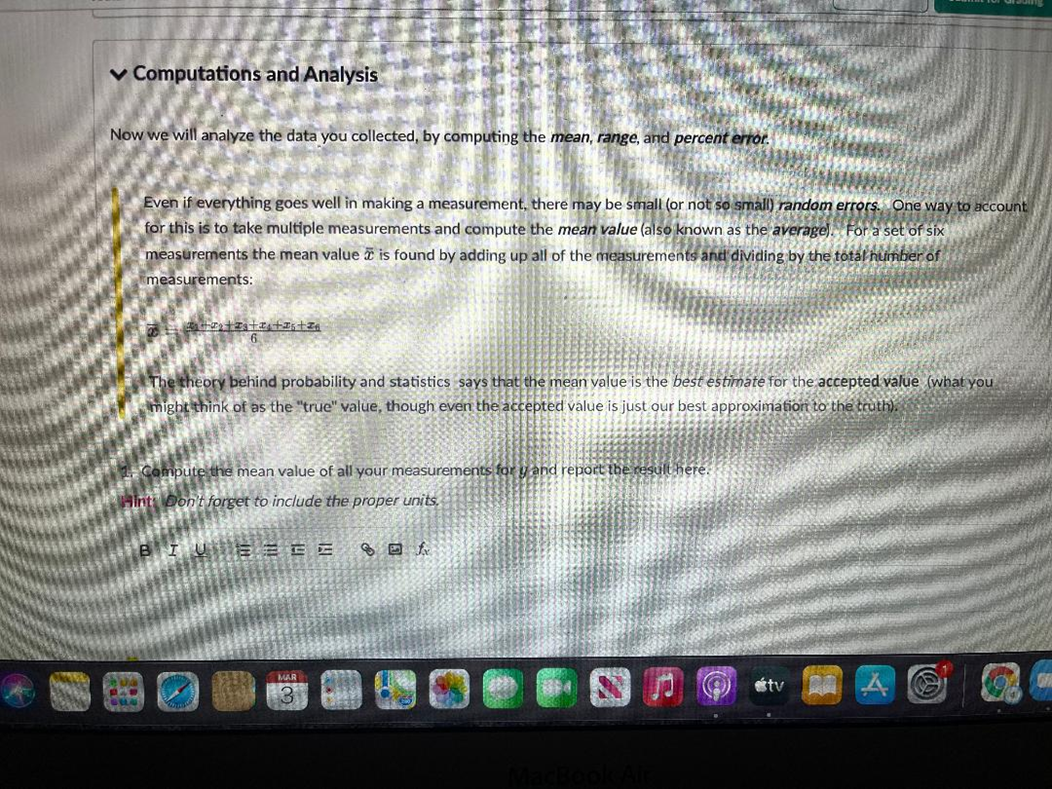
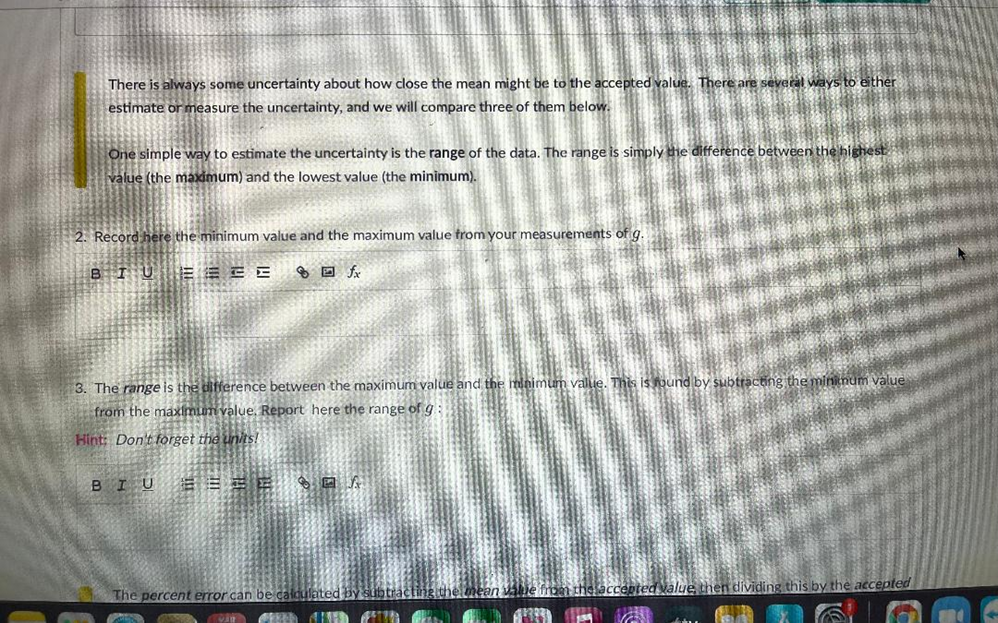
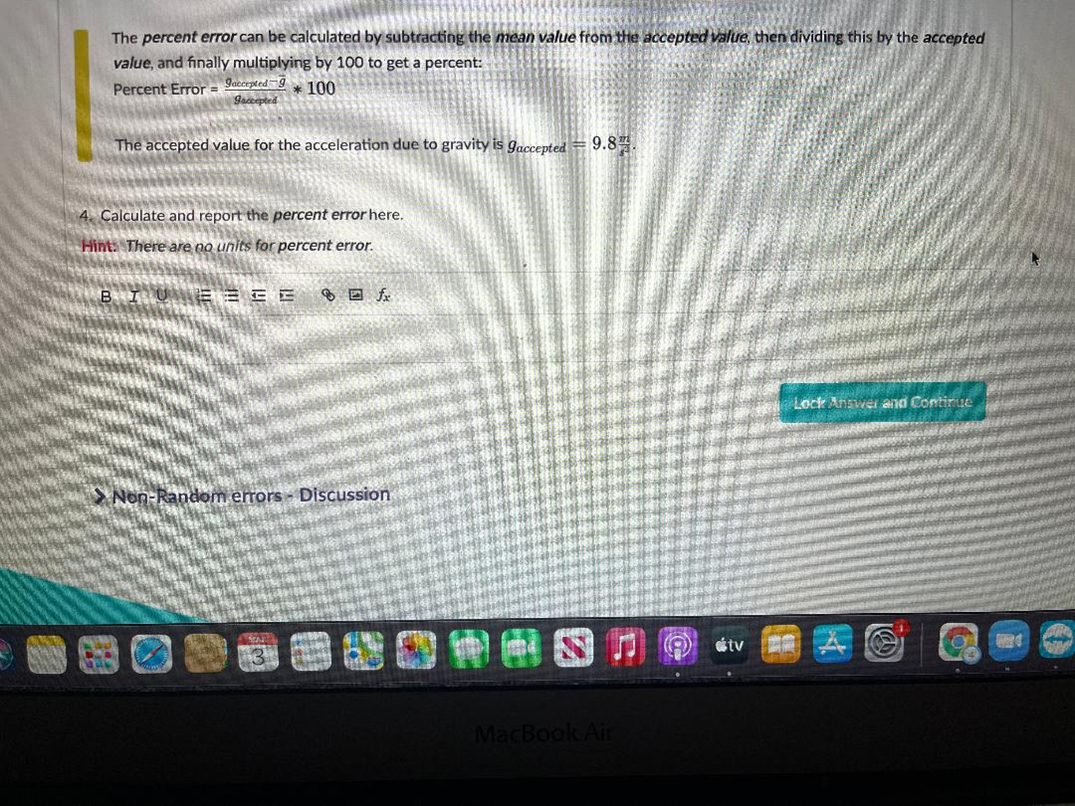
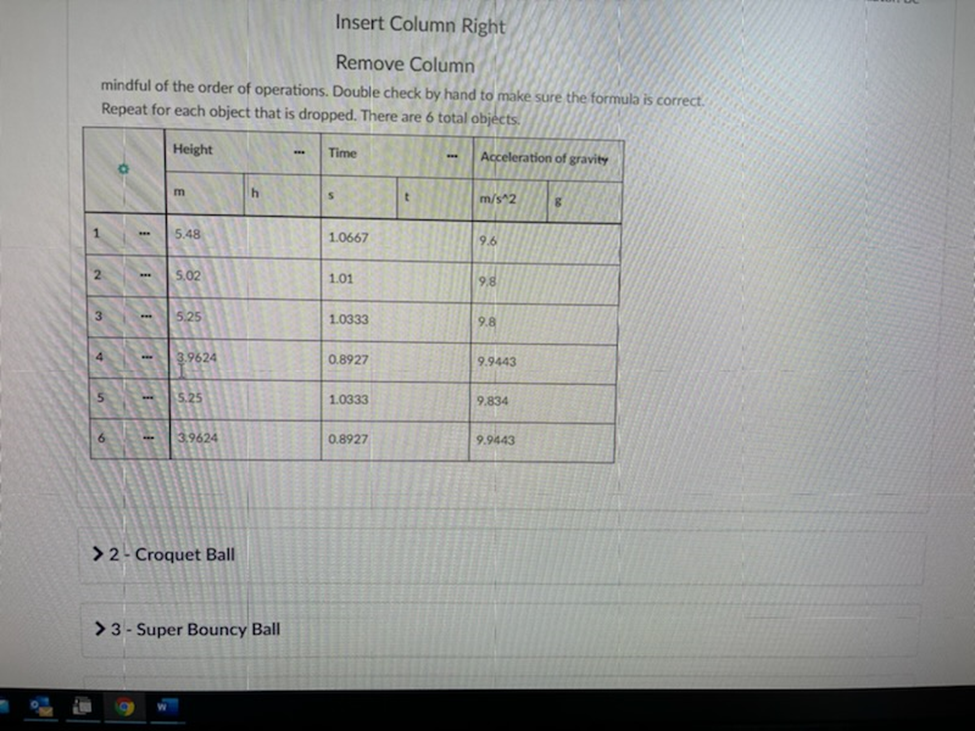
Computations and Analysis Now we will analyze the data you collected, by computing the mean, range, and percent error. Even if everything goes well in making a measurement, there may be small (or not so small) random errors. One way to account for this is to take multiple measurements and compute the mean value (also known as the average). For a set of six measurements the mean value T is found by adding up all of the measurements and dividing by the total number of measurements: The theory behind probability and statistics says that the mean value is the best estimate for the accepted value (what you might think of as the "true" value, though even the accepted value is just our best approximation to the truth). compute the mean value of all your measurements f report the result here. hints Don't forget to include the proper units. tv 4There is always some uncertainty about how close the mean might be to the accepted value. There are several ways to either estimate or measure the uncertainty, and we will compare three of them below. One simple way to estimate the uncertainty is the range of the data. The range is simply the difference between the highest value (the maximum) and the lowest value (the minimum). 2. Record here the minimum value and the maximum value from your measurements of g. BIU EEEE Of 3. The range is the difference between the maximum value and the minimum value. This is found by subtracting the minimum value from the maximum value, Report here the range of g : Hint: Don't forget the units! BIU The percent error can be calculated the accepted value then dividing this by the acceptedThe percent error can be calculated by subtracting the mean value from the accepted value, then dividing this by the accepted value, and finally multiplying by 100 to get a percent: Percent Error = Jaccrated 9 * 100 gaccepted The accepted value for the acceleration due to gravity is gaccepted - 9.8. 4. Calculate and report the percent error here. Hint. There are no units for percent error. BLUECEOOf Lock Answer and Continue > Non-Random errors - Discussion MacBook AirInsert Column Right Remove Column mindful of the order of operations. Double check by hand to make sure the formula is correct Repeat for each object that is dropped. There are 6 total objects. Height Time Acceleration of gravity m m/s*2 5.48 1.0667 9.6 5.02 1.01 5.25 1.0333 3.9624 0.8927 9.9443 1.0333 9.834 0.8927 9.9443 > 2 - Croquet Ball > 3 - Super Bouncy Ball 9
Step by Step Solution
There are 3 Steps involved in it

Get step-by-step solutions from verified subject matter experts
 Study Help