







Question: 1. Construct grammar for the below 'English' statement. Given an alphabet ={a,b}, generate a grammar that represents strings that start with a when it ends
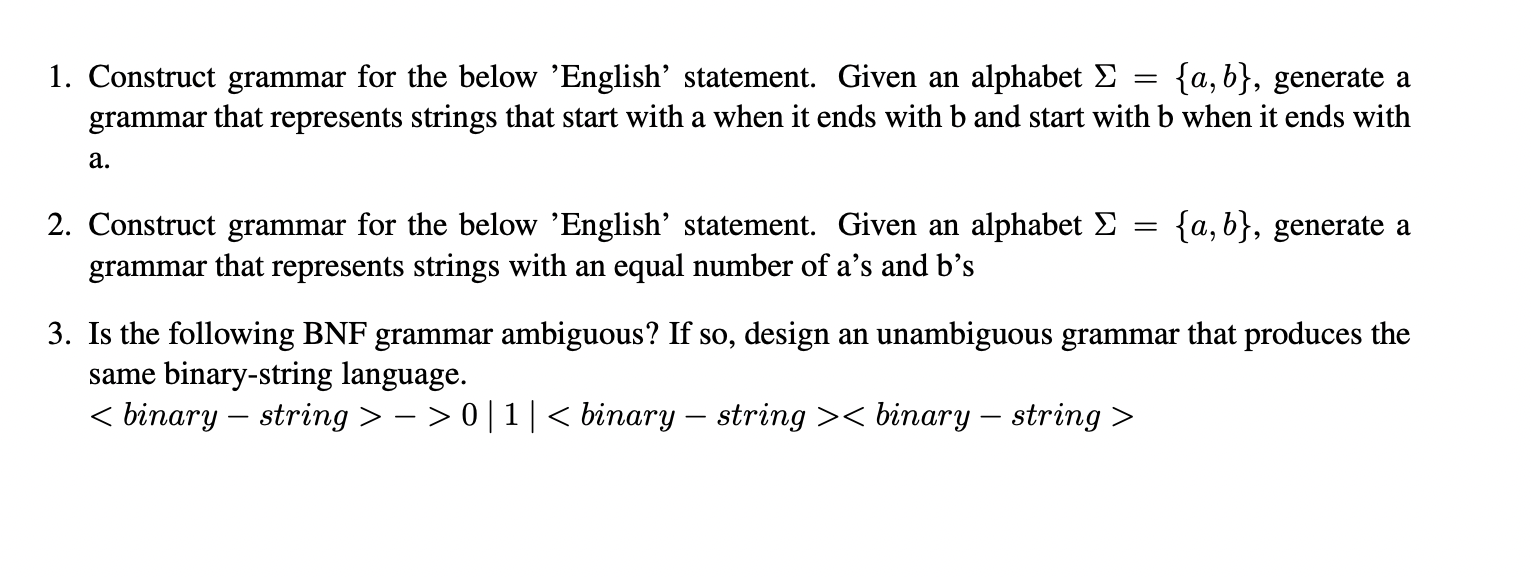
1. Construct grammar for the below 'English' statement. Given an alphabet ={a,b}, generate a grammar that represents strings that start with a when it ends with b and start with b when it ends with a. 2. Construct grammar for the below 'English' statement. Given an alphabet ={a,b}, generate a grammar that represents strings with an equal number of a's and b's 3. Is the following BNF grammar ambiguous? If so, design an unambiguous grammar that produces the same binary-string language.
Step by Step Solution
There are 3 Steps involved in it
1 Expert Approved Answer
Step: 1 Unlock

Question Has Been Solved by an Expert!
Get step-by-step solutions from verified subject matter experts
Step: 2 Unlock
Step: 3 Unlock
 Study Help