







Question: 1. Develop an estimated regression equation with price as the dependent variable; age as the independent variable (yes, you did this for the previous problem
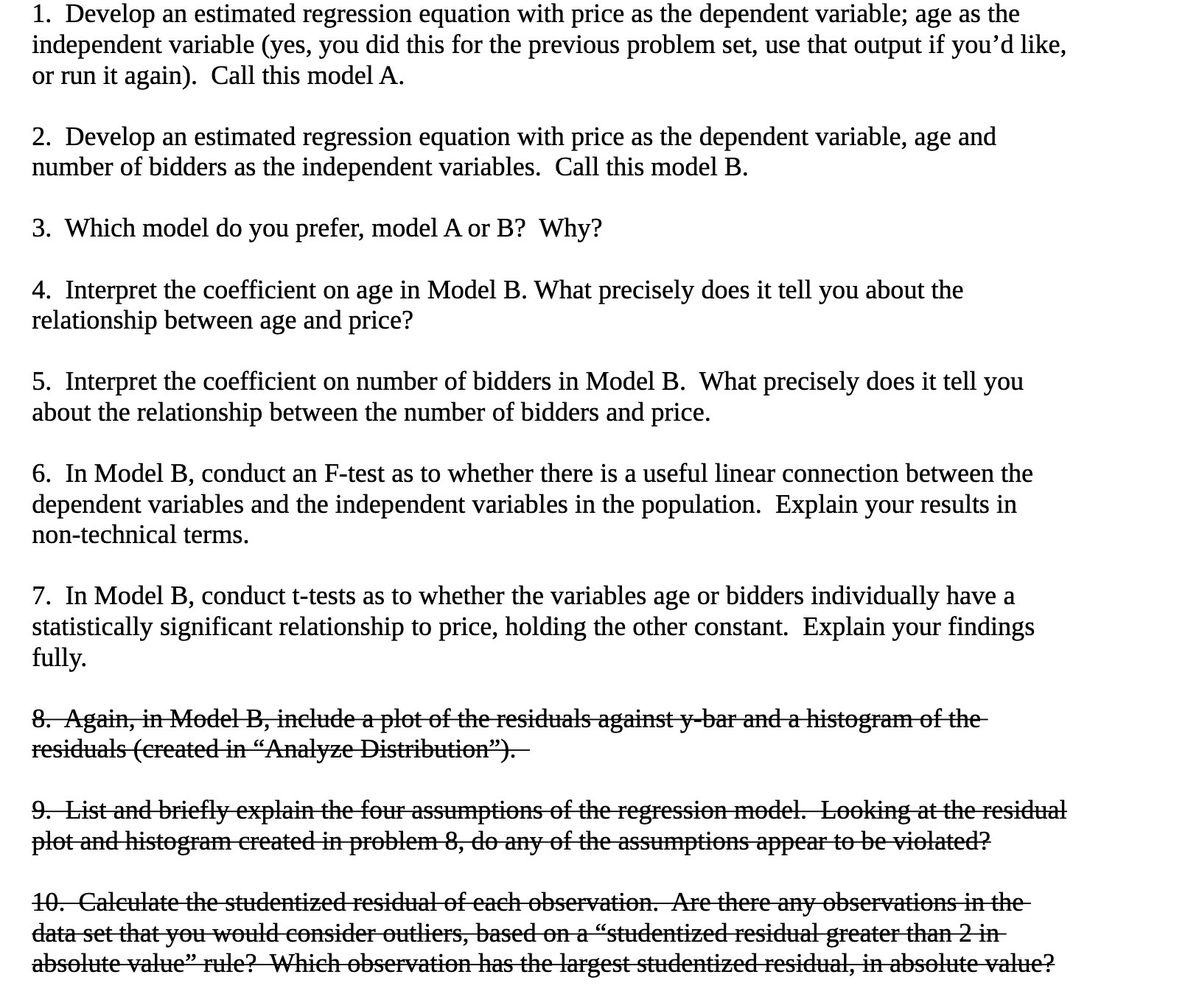
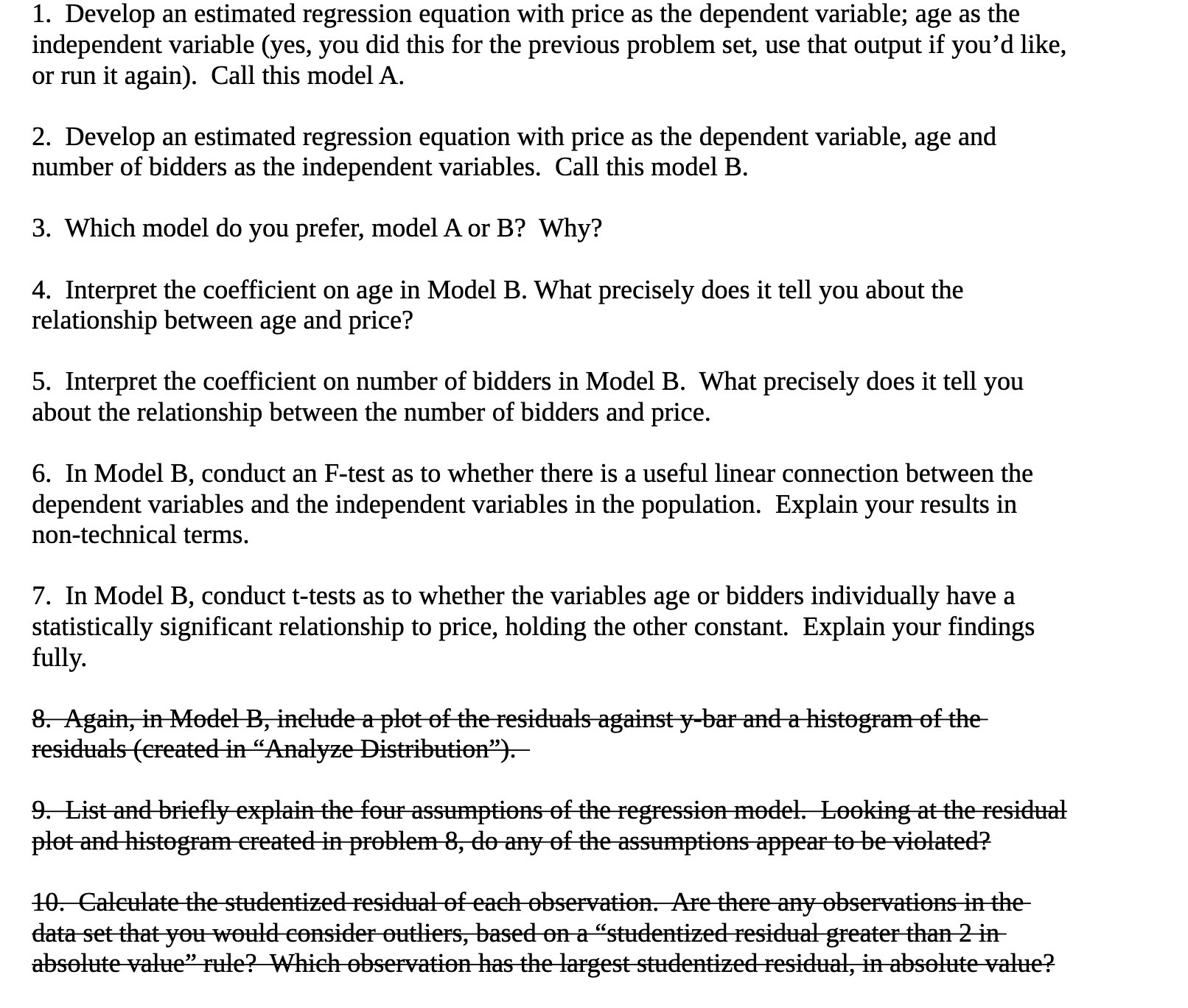
1. Develop an estimated regression equation with price as the dependent variable; age as the independent variable (yes, you did this for the previous problem set, use that output if you'd like, or run it again). Call this model A. 2. Develop an estimated regression equation with price as the dependent variable, age and number of bidders as the independent variables. Call this model B. 3. Which model do you prefer, model A or B? Why? 4. Interpret the coefficient on age in Model B. What precisely does it tell you about the relationship between age and price? 5. Interpret the coefficient on number of bidders in Model B. What precisely does it tell you about the relationship between the number of bidders and price. 6. In Model B, conduct an F-test as to whether there is a useful linear connection between the dependent variables and the independent variables in the population. Explain your results in non-technical terms. 7. In Model B, conduct t-tests as to whether the variables age or bidders individually have a statistically significant relationship to price, holding the other constant. Explain your findings fully. 8. Again, in Model B, include a plot of the residuals against y-bar and a histogram of the- residuals (created in "Analyze Distribution"). 9. List and briefly explain the four assumptions of the regression model. Looking at the residual plot and histogram created in problem 8, do any of the assumptions appear to be violated? 10. Calculate the studentized residual of each observation. Are there any observations in the- data set that you would consider outliers, based on a "studentized residual greater than 2 in- absolute value" rule? Which observation has the largest studentized residual, in absolute value
Step by Step Solution
There are 3 Steps involved in it

Get step-by-step solutions from verified subject matter experts
 Study Help