







Question: 1. Five processes P1, P2, P3, P4 and P5 arrived in this order at the same time with the following CPU burst. a. Draw the
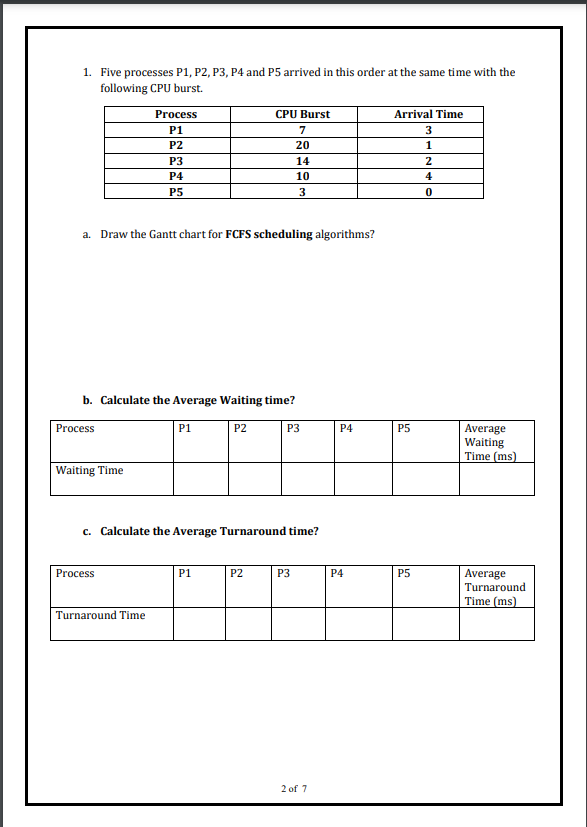
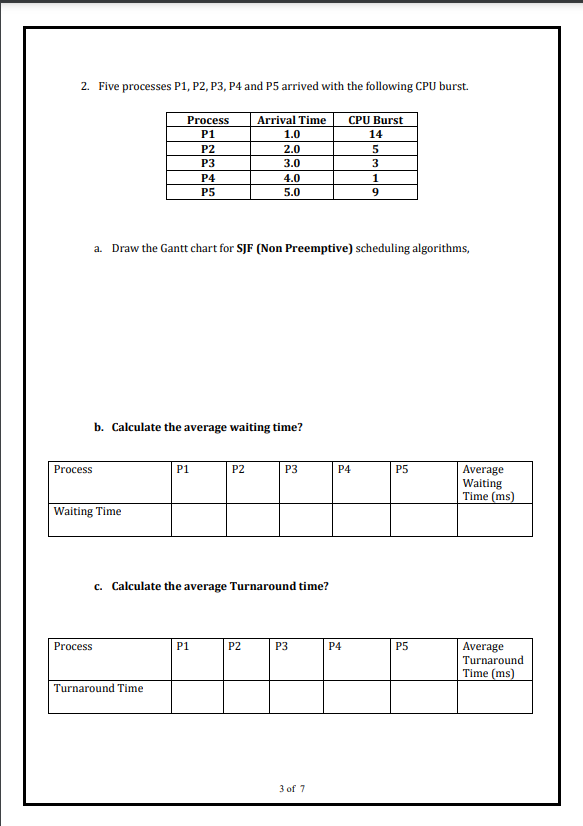
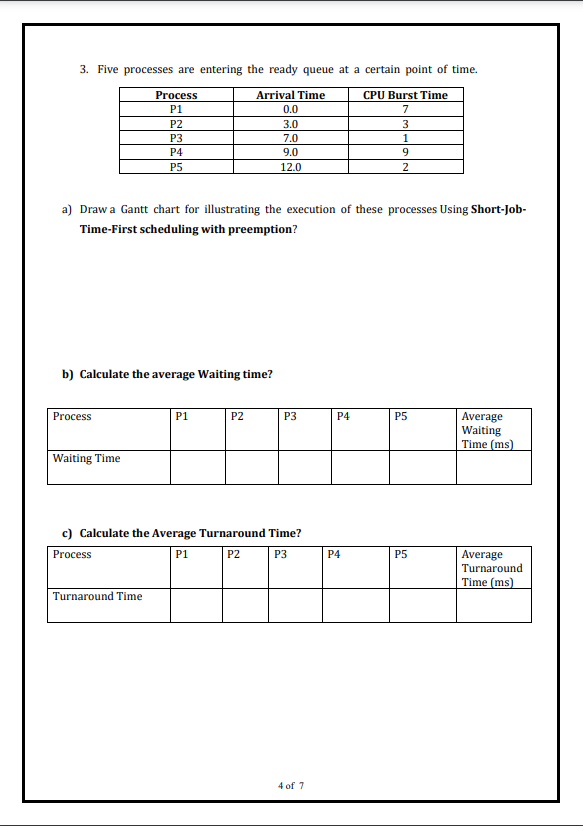
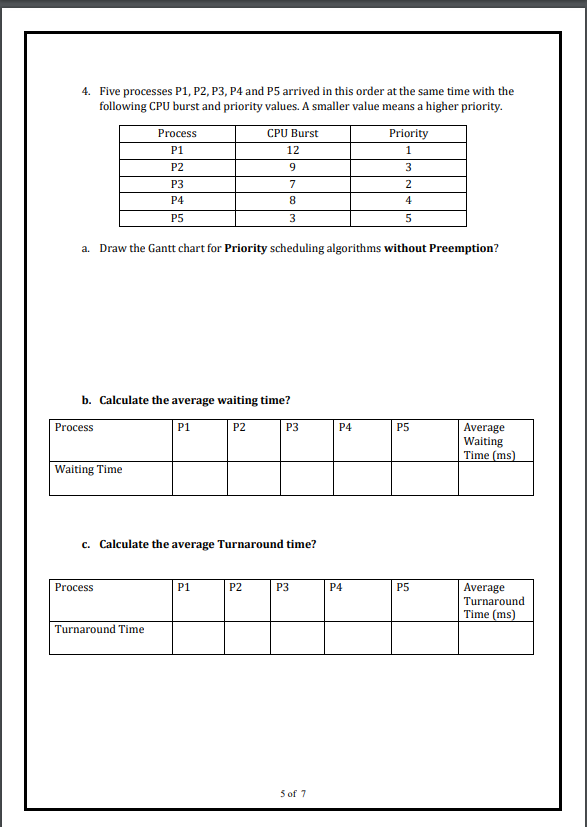
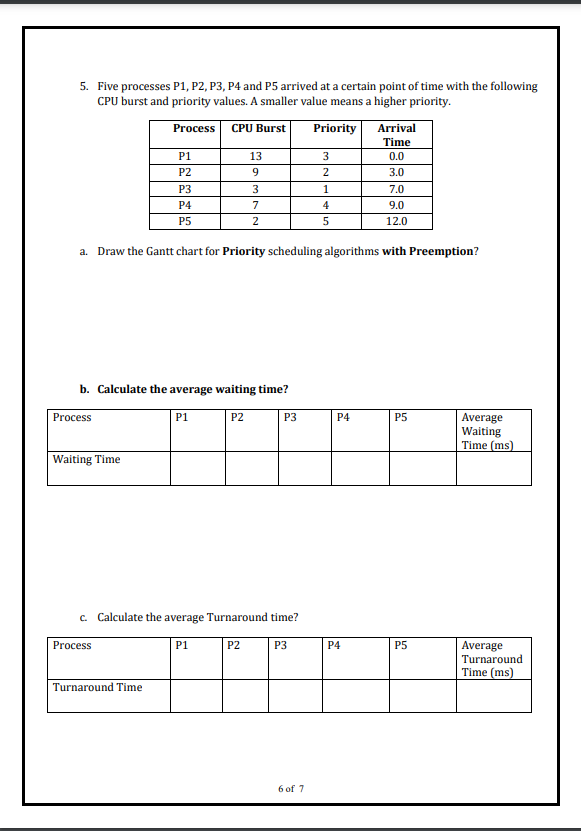
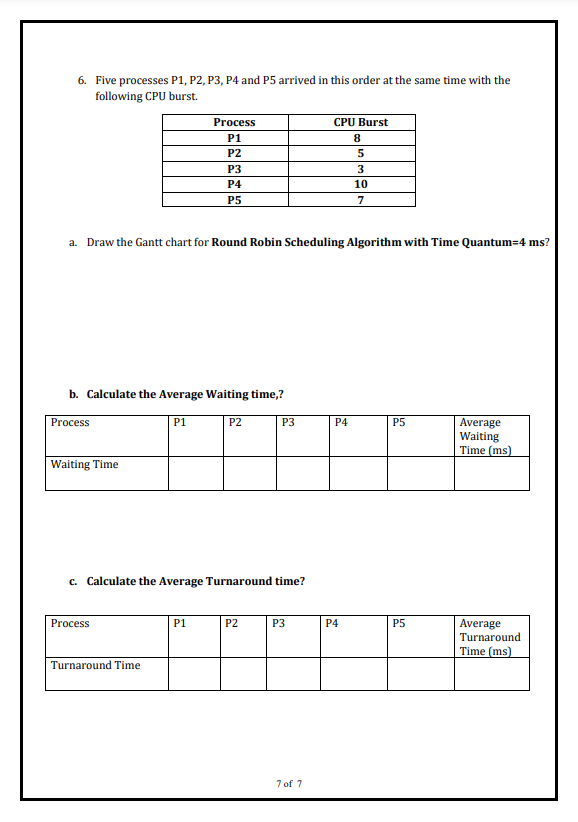
1. Five processes P1, P2, P3, P4 and P5 arrived in this order at the same time with the following CPU burst. a. Draw the Gantt chart for FCFS scheduling algorithms? b. Calculate the Average Waiting time? c. Calculate the Average Turnaround time? 2. Five processes P1, P2, P3, P4 and P5 arrived with the following CPU burst. a. Draw the Gantt chart for SJF (Non Preemptive) scheduling algorithms, b. Calculate the average waiting time? c. Calculate the average Turnaround time? 3. Five processes are entering the ready queue at a certain point of time. a) Draw a Gantt chart for illustrating the execution of these processes Using Short-JobTime-First scheduling with preemption? b) Calculate the average Waiting time? c) Calculate the Average Turnaround Time? 4. Five processes P1, P2, P3, P4 and P5 arrived in this order at the same time with the following CPU burst and priority values. A smaller value means a higher priority. a. Draw the Gantt chart for Priority scheduling algorithms without Preemption? b. Calculate the average waiting time? c. Calculate the average Turnaround time? 5. Five processes P1, P2, P3, P4 and P5 arrived at a certain point of time with the following CPU burst and priority values. A smaller value means a higher priority. a. Draw the Gantt chart for Priority scheduling algorithms with Preemption? b. Calculate the average waiting time? c. Calculate the average Turnaround time? 6. Five processes P1, P2, P3, P4 and P5 arrived in this order at the same time with the following CPU burst
Step by Step Solution
There are 3 Steps involved in it

Get step-by-step solutions from verified subject matter experts
 Study Help